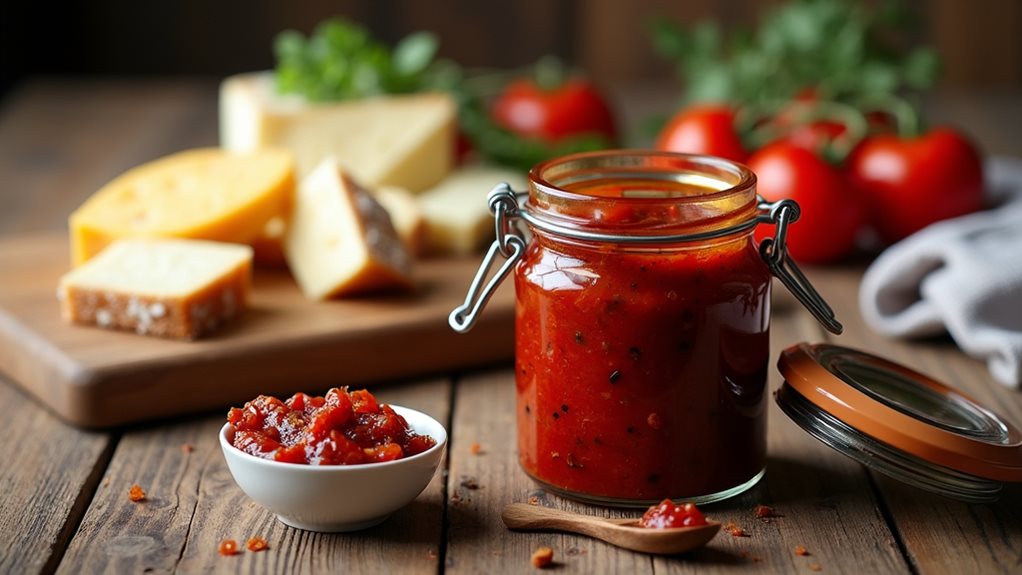

I’ve been making tomato chutney for years, and I’m convinced it’s one of the most underrated condiments in home kitchens today. This vibrant, versatile sauce combines sweet, tangy, and spicy notes that transform ordinary meals into memorable experiences. Whether you’re looking to enhance grilled meats, add complexity to a cheese board, or simply find a new way to use summer’s tomato bounty, this chutney delivers remarkable flavor with minimal effort. The best part? The taste only improves with time.
Key Takeaways
- Tomato chutney balances sweet, tangy, and spicy flavors that complement a variety of dishes.
- It’s made with tomatoes, onions, vinegar, sugar, and a blend of aromatic spices like mustard seeds and cinnamon.
- The condiment has a versatile culinary use, pairing well with cheeses, grilled meats, and sandwiches.
- Preparation involves cooking tomatoes with onions and spices for about an hour until thickened.
- When refrigerated properly, tomato chutney can last up to three months.
Why You’ll Love this Zesty Tomato Chutney
When you’re looking for a versatile condiment that transforms ordinary meals into extraordinary culinary experiences, this tomato chutney delivers on all fronts.
The balanced combination of sweet, tangy, and spicy flavors creates a perfect accompaniment to cheeses, grilled meats, or sandwiches.
I love how this recipe strikes the perfect harmony between sugar and vinegar, while the mustard seeds, cayenne, and warm spices add complexity without overwhelming heat.
The dried currants provide delightful bursts of sweetness throughout each bite.
What’s particularly wonderful about this chutney is its impressive shelf life—it keeps for up to three months when properly refrigerated.
This means I can make a batch and enjoy it through an entire season of meals.
What Ingredients are in Zesty Tomato Chutney?
This zesty tomato chutney recipe combines sweet, tangy, and spicy flavors that’ll make your taste buds dance. It’s the perfect accompaniment to cheese platters, grilled meats, or as a spread on sandwiches. The best part? It keeps for months in the fridge, getting more flavorful with time.
- 28-32 oz. can whole tomatoes with juice, chopped
- 1 large onion, chopped
- Zest of 1 lemon, minced
- 1/2 cup sugar
- 1/2 cup cider vinegar
- 1/3 cup dried currants
- 1 1/2 teaspoons mustard seeds
- 1/2 teaspoon salt
- 1/4 teaspoon cayenne
- 1/4 teaspoon allspice
- 1/4 teaspoon cinnamon
When shopping for ingredients, quality matters. Try to find whole canned tomatoes without added preservatives or excessive sodium. The dried currants add a lovely texture and subtle sweetness, but if you can’t find them, raisins can work in a pinch. And don’t skip the mustard seeds—they pop delightfully when you bite into the chutney, creating little bursts of flavor that really make this recipe special.
How to Make this Zesty Tomato Chutney
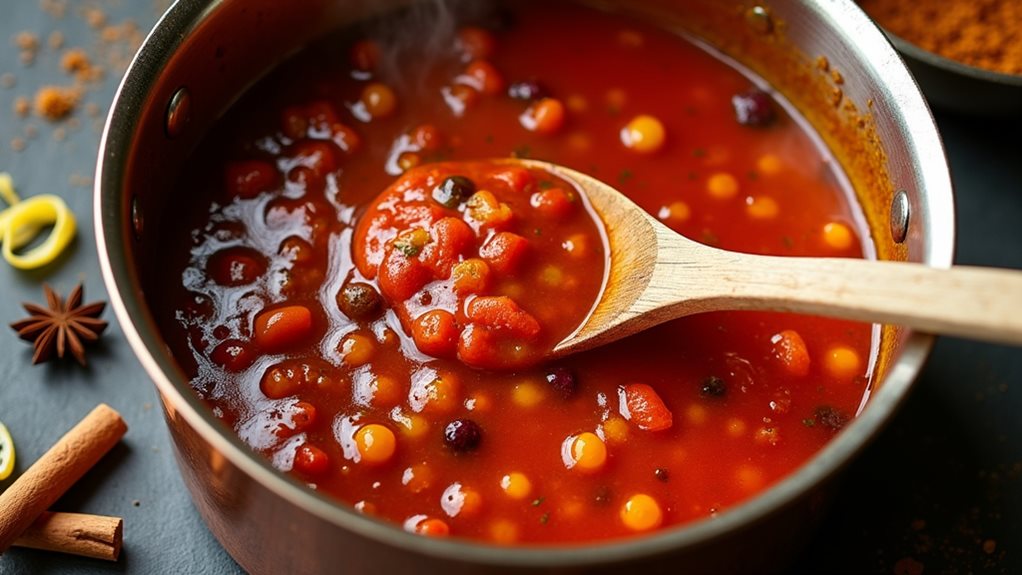
Making tomato chutney is wonderfully simple, and the results are absolutely worth the hour you’ll spend simmering this aromatic mixture. Start by gathering all your ingredients—this is one of those recipes where prep is minimal but flavor is maximal.
Combine a 28-32 oz. can of whole tomatoes with juice (chopped up) with one large chopped onion in a saucepan. Add the zest of 1 lemon (minced finely), 1/2 cup sugar, and 1/2 cup cider vinegar, which gives the chutney its characteristic tang.
Now for the smaller but equally important elements that really make this chutney sing. Toss in 1/3 cup dried currants for little bursts of sweetness, along with 1 1/2 teaspoons mustard seeds for texture and pop. The spice blend—1/2 teaspoon salt, 1/4 teaspoon cayenne, 1/4 teaspoon allspice, and 1/4 teaspoon cinnamon—creates that perfect balance of warmth and heat.
Cook everything over moderate heat for 30 minutes, giving it an occasional stir. The kitchen will smell absolutely divine, like a spice market on a warm day. Then reduce the heat to low and let it simmer for another 30 minutes, still stirring occasionally, until the mixture thickens and reduces to about 2 1/2 cups of glossy, flavorful chutney.
What I love about this recipe is how the ingredients transform during that hour of cooking. The tomatoes break down, the onions soften completely, and everything melds into a thick, fragrant spread that’s equally at home alongside cheese, spread on sandwiches, or served with grilled meats.
For even more precision with temperature-sensitive recipes, a premium sous vide machine can help maintain perfect consistency in your kitchen adventures beyond chutneys.
Once it’s done, just transfer to jars and let it cool completely before refrigerating. The recipe notes it keeps for up to three months chilled and covered—though in my house, it rarely lasts more than a few weeks before we’ve devoured every last spoonful.
Zesty Tomato Chutney Substitutions and Variations
While the classic recipe creates a perfectly balanced tomato chutney, you’ll find endless possibilities for customizing this versatile condiment to suit your taste preferences or accommodate what’s in your pantry.
I often substitute raisins or chopped dates for currants when I’m running low, and brown sugar works beautifully in place of white for a deeper molasses flavor.
For heat variations, I’ll swap cayenne with fresh jalapeños or a dash of red pepper flakes.
Don’t have cider vinegar? White wine vinegar or even rice vinegar will work, though each imparts a slightly different character.
I’ve also successfully incorporated diced bell peppers, grated ginger, or a tablespoon of freshly grated turmeric for color and health benefits.
Consider adding a teaspoon of cumin seeds alongside the mustard seeds for an Indian-inspired twist.
What to Serve with Zesty Tomato Chutney
Because of its vibrant flavor profile that balances sweet, tangy, and spicy notes, zesty tomato chutney pairs beautifully with a wide variety of foods across multiple cuisines.
I’ve found it’s particularly exceptional alongside grilled meats, especially lamb chops and chicken thighs, where the acidity cuts through richness perfectly.
Don’t limit yourself to meat pairings, though. This versatile condiment enhances cheese boards dramatically—try it with aged cheddar or creamy brie for a memorable contrast.
I also love spreading it on sandwiches or serving it with samosas and other Indian snacks.
For unexpected applications, I’ll sometimes dollop it onto scrambled eggs or use it as a glaze for roasted vegetables.
The allspice and cinnamon notes in the recipe complement autumn vegetables like butternut squash particularly well.
Final Thoughts
After exploring the versatility of this traditional condiment, I’ve come to appreciate how tomato chutney transcends its humble ingredients to become something truly special in any kitchen.
The beauty of this recipe lies in its balance—sweet, tangy, and spicy notes melding together during that hour-long simmer into something greater than the sum of its parts.
What I love most about homemade chutney is how it connects us to culinary traditions while allowing for personal interpretation.
Whether you’re serving it alongside curries, spreading it on sandwiches, or pairing it with cheese, this tomato chutney brings brightness to any meal.
Much like caramelized onions in French cuisine, tomato chutney demonstrates how simple ingredients transform through slow cooking into something remarkably complex in flavor.
I encourage you to make this recipe your own.
Adjust the heat, play with the spices, and discover why this condiment has endured across generations and cultures.