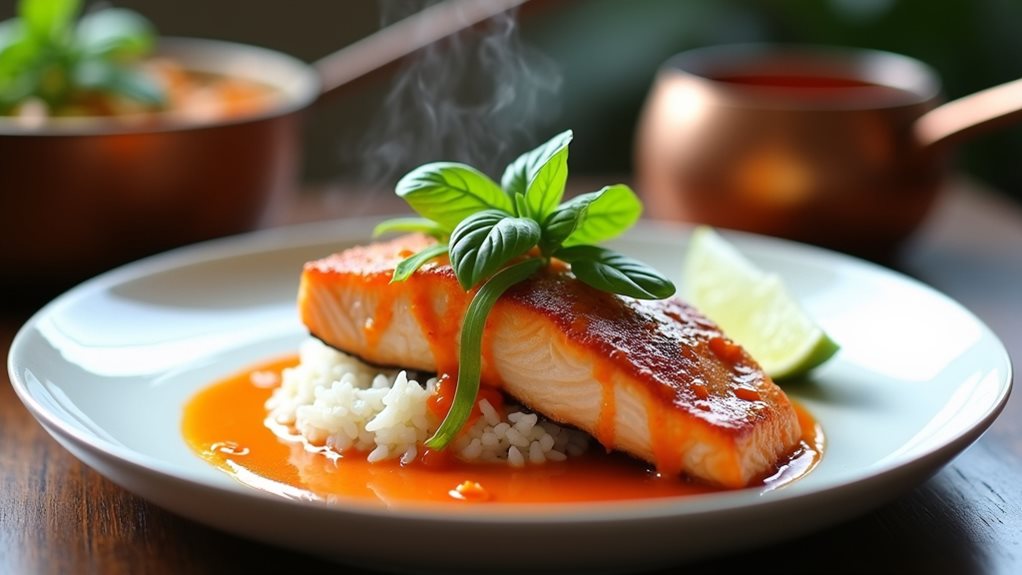
I’ve discovered that the perfect Thai red curry coconut sauce can transform ordinary salmon into an extraordinary meal. The silky blend of coconut milk and red curry paste creates a balance of creamy, spicy flavors that cling beautifully to the fish. It’s become my go-to sauce when I want to impress without spending hours in the kitchen. The secret lies in a few simple ingredients and techniques that I’m about to share with you.
Key Takeaways
- Combine 1 cup unsweetened coconut milk with 1 teaspoon Thai red curry paste and 1 tablespoon brown sugar for a balanced sauce.
- Thicken the sauce with 2 teaspoons cornstarch mixed with water for a glossy coating that adheres to salmon.
- Add 1½ teaspoons fresh lime juice to brighten flavors and cut through the richness of coconut milk.
- Stir fresh basil ribbons into the finished sauce for aromatic depth and authentic Thai flavor.
- Serve the velvety sauce over salmon with jasmine rice to absorb the delicious curry coconut mixture.
Why You’ll Love this Silky Thai Coconut Curry Salmon
Whether you’re craving something exotic or simply want to boost your weeknight dinner, this Thai coconut curry salmon will become your new favorite dish.
The velvety coconut milk creates a luxurious base that perfectly balances the bold heat from the red curry paste. I’ve found that the touch of brown sugar mellows the spice while improving the natural sweetness of the salmon.
What makes this sauce truly special is its versatility. It comes together in minutes while your salmon cooks, and the final addition of fresh basil ribbons brings a bright, aromatic finish that enhances the entire dish.
The cornstarch slurry transforms the sauce into a glossy coating that clings beautifully to the fish and drizzles perfectly over your jasmine rice.
What Ingredients are in Silky Thai Coconut Curry Salmon?
Creating this silky Thai coconut curry sauce for salmon is surprisingly easy, and it brings together some of my favorite Thai-inspired flavors. The combination of creamy coconut milk with the spicy kick from red curry paste creates a perfect balance that complements the richness of salmon. You probably have many of these ingredients in your pantry already.
- 1 cup unsweetened coconut milk
- 1 teaspoon Thai red curry paste
- 1 tablespoon light brown sugar
- 1½ teaspoons fresh lime juice
- 1 pinch salt
- 2 teaspoons cornstarch
- 8 fresh basil leaves
- Water (small amount for cornstarch slurry)
When shopping for these ingredients, quality really matters. Try to find a good Thai red curry paste—brands like Mae Ploy or Thai Kitchen work well. For coconut milk, full-fat varieties provide the best silky texture, though you could substitute light coconut milk if you prefer. Fresh lime juice makes a notable difference compared to bottled, and Thai basil would be ideal if you can find it, but regular basil works beautifully too. The cornstarch is crucial for that perfect glossy finish that clings to the salmon, so I wouldn’t skip it.
How to Make this Silky Thai Coconut Curry Salmon
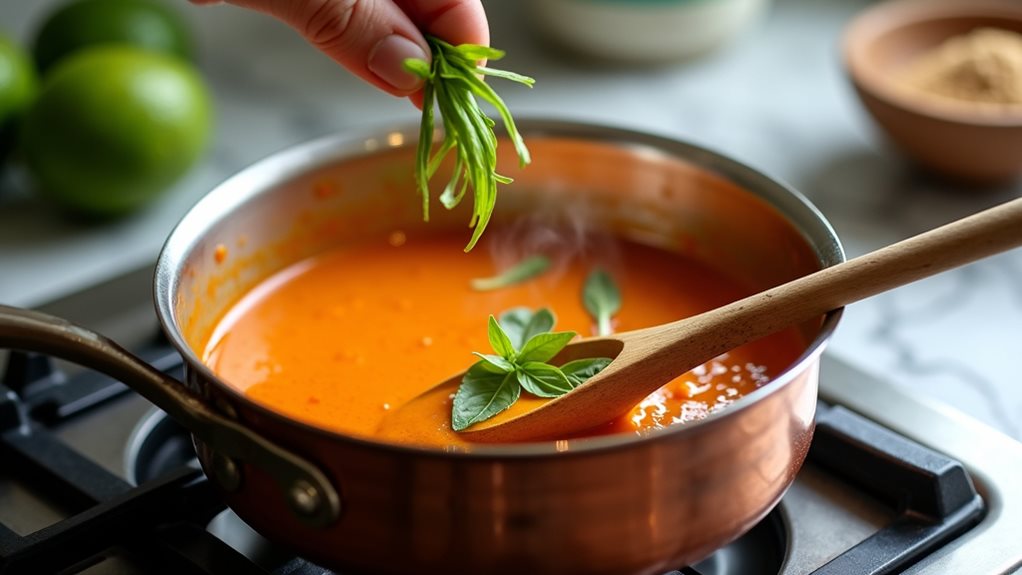
To create this heavenly Thai red curry sauce, start by gathering your ingredients: 1 cup unsweetened coconut milk, 1 teaspoon Thai red curry paste, 1 tablespoon light brown sugar, 1½ teaspoons fresh lime juice, a pinch of salt, 2 teaspoons cornstarch, and 8 fresh basil leaves.
The magic begins when you combine the coconut milk, curry paste, brown sugar, lime juice, and salt in a small saucepan over medium heat. Let these flavors mingle and dance together, creating that signature Thai aroma that fills your kitchen.
Give it a taste—this is your chance to adjust the flavors to your liking. Need more sweetness? Add a touch more brown sugar. Craving more zing? A splash of extra lime juice does wonders.
When your salmon is nearly done cooking, it’s time to thicken that gorgeous sauce. Mix your 2 teaspoons of cornstarch with a small amount of water to create a slurry, then stir it into the warm sauce.
Watch as the transformation happens—the sauce will become glossy and velvety, perfectly coating the back of a spoon. Now for the finishing touch: those 8 fresh basil leaves. Stack them up, roll them like a tiny cigar, and slice them crosswise to create delicate ribbons.
These aromatic green slivers get dropped into the sauce just before serving, adding fresh flavor and visual appeal. Keep your sauce warm but avoid prolonged simmering, which might dull those vibrant flavors you’ve worked so hard to develop.
Serve this luscious Thai red curry sauce generously ladled over your perfectly cooked salmon. The creamy, spicy sauce complements the rich fish beautifully, creating a restaurant-worthy dish right in your own kitchen.
For an authentic Thai-inspired meal, pair it with fragrant Jasmine or Basmati rice to soak up every drop of that magnificent sauce. For consistently perfect rice every time, consider using a professional rice cooker to elevate your entire culinary experience. The contrast between the fluffy white rice, the tender salmon, and the vivid orange-red sauce? Pure culinary poetry on a plate.
Silky Thai Coconut Curry Salmon Substitutions and Variations
This beautiful Thai curry sauce doesn’t have to be limited to one specific recipe—you can personalize it with many delicious substitutions and variations.
If you don’t have red curry paste, green or yellow curry paste works wonderfully, each offering a distinct flavor profile. For a dairy-free option that’s not coconut milk, try cashew cream for richness without the tropical notes.
Don’t limit this sauce to just salmon! It pairs beautifully with chicken, shrimp, or tofu for vegetarian options.
For additional texture and flavor, consider adding vegetables like bell peppers, snow peas, or spinach. I sometimes incorporate lemongrass or kaffir lime leaves for more authentic Thai aromatics.
If you prefer a spicier version, add a sliced Thai chili or a dash of sriracha to enhance the heat level.
What to Serve with Silky Thai Coconut Curry Salmon
When serving silky Thai coconut curry salmon, I always prioritize complementary sides that balance the rich, spicy flavors of the curry sauce. Jasmine or basmati rice is vital—their fragrant qualities and light texture perfectly absorb the sauce while providing a neutral base.
I also recommend steamed vegetables like baby bok choy, snow peas, or broccoli, which offer an invigorating crunch against the creamy curry.
For a complete meal, consider adding a simple cucumber salad with rice vinegar and a touch of sugar to cleanse the palate between bites.
If you’re entertaining guests, start with a light appetizer like fresh spring rolls with peanut dipping sauce. The meal feels cohesive when you maintain those Thai-inspired flavors throughout each course.
Final Thoughts
Although mastering Thai red curry salmon might seem challenging at first, I’ve found that this dish offers one of the best returns on culinary effort you can achieve in home cooking.
The combination of silky coconut milk, aromatic curry paste, and fresh herbs creates a restaurant-quality meal with minimal ingredients and preparation time.
I encourage you to experiment with the sauce proportions to match your spice tolerance and flavor preferences.
Don’t hesitate to adjust the curry paste, sugar, or lime juice until you’ve found your perfect balance.
Remember that quality ingredients make a notable difference here—fresh lime juice, authentic curry paste, and good coconut milk will enhance your results dramatically.
For an exciting flavor enhancement, try incorporating a drizzle of spicy-infused honey that will create a pleasant tension between heat and sweetness while complementing the coconut base.
This elegant yet simple preparation will become a reliable favorite in your cooking repertoire, impressing dinner guests while requiring surprisingly little kitchen expertise.