I’ve always believed the most satisfying recipes combine simplicity with exceptional results, and Irish soda bread perfectly embodies this principle. With just a handful of pantry staples and no yeast required, I can create a warm, rustic loaf featuring a golden crust and tender interior in under an hour. The versatility of this quick bread continues to surprise me—whether serving it alongside hearty stews or transforming it with sweet additions. What makes this traditional bread truly special, however, extends far beyond its ingredients.
Key Takeaways
- Soda bread is a quick bread leavened with baking soda instead of yeast, requiring no rising time.
- Traditional Irish soda bread uses simple ingredients: flour, buttermilk, baking soda, and salt.
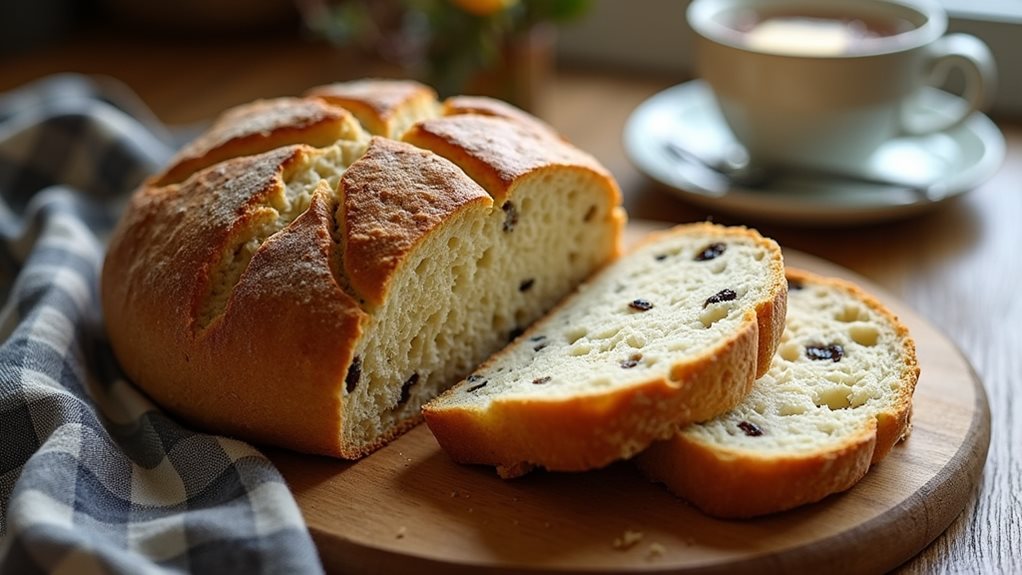
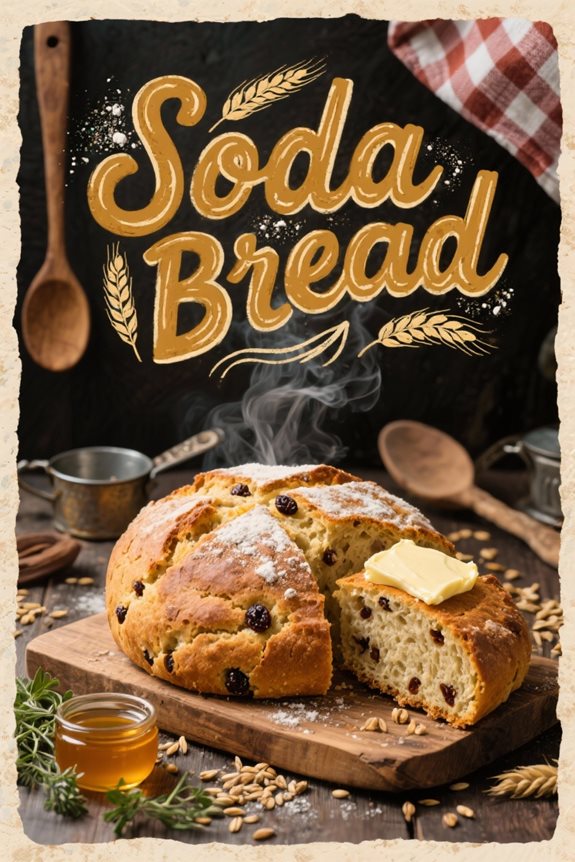
- The bread develops a distinctive golden, crackly crust with a moist, tender interior when baked properly.
- Common variations include adding raisins, currants, or nuts, with some recipes incorporating eggs for richness.
- Soda bread pairs excellently with stews, soups, or breakfast spreads, and can be made with whole wheat flour alternatives.
Why You’ll Love this Golden Irish Soda Bread
Simplicity is the hallmark of this traditional Golden Irish Soda Bread, making it one of my favorite recipes to share with both novice and experienced bakers.
You’ll appreciate how quickly this bread comes together—no yeast means no waiting for dough to rise. With just a few pantry staples like flour, buttermilk, and baking soda, you’ll create a rustic loaf with a tender crumb and slightly sweet flavor, improved by plump raisins throughout.
I love the versatility of this bread; it’s perfect alongside hearty stews or simply slathered with butter and jam for breakfast.
The golden, crackly crust develops beautifully during baking, while the interior stays moist. Best of all, you’ll enjoy fresh, homemade bread in under an hour with minimal effort.
What Ingredients are in Golden Irish Soda Bread?
Traditional soda bread is one of those simple, comforting recipes that doesn’t require fancy equipment or hard-to-find ingredients. What makes it so wonderful is how basic pantry staples come together to create something rustic and delicious. This particular recipe combines the tangy flavor of buttermilk with a touch of sweetness from both sugar and raisins, creating a bread that’s perfect alongside a hot cup of tea or with a slather of butter for breakfast.
Ingredients:
- 3 cups unsifted all-purpose flour
- 3 tablespoons sugar
- 2 teaspoons baking powder
- 1 teaspoon baking soda
- 1 teaspoon salt
- 1½ cups buttermilk
- 1 egg, slightly beaten
- 3 tablespoons Crisco oil
- ½ cup raisins
When gathering your ingredients, the buttermilk is truly non-negotiable here—it’s what gives soda bread its distinctive tang and helps activate the baking soda for proper rising. Can’t find buttermilk? You could make your own in a pinch by adding a tablespoon of lemon juice or vinegar to regular milk and letting it sit for about 10 minutes. The raisins add a lovely sweetness, but they could be swapped for currants or even dried cranberries if you’re feeling adventurous. And while traditional Irish soda bread often doesn’t contain oil, this version with Crisco creates a slightly more tender crumb.
How to Make this Golden Irish Soda Bread
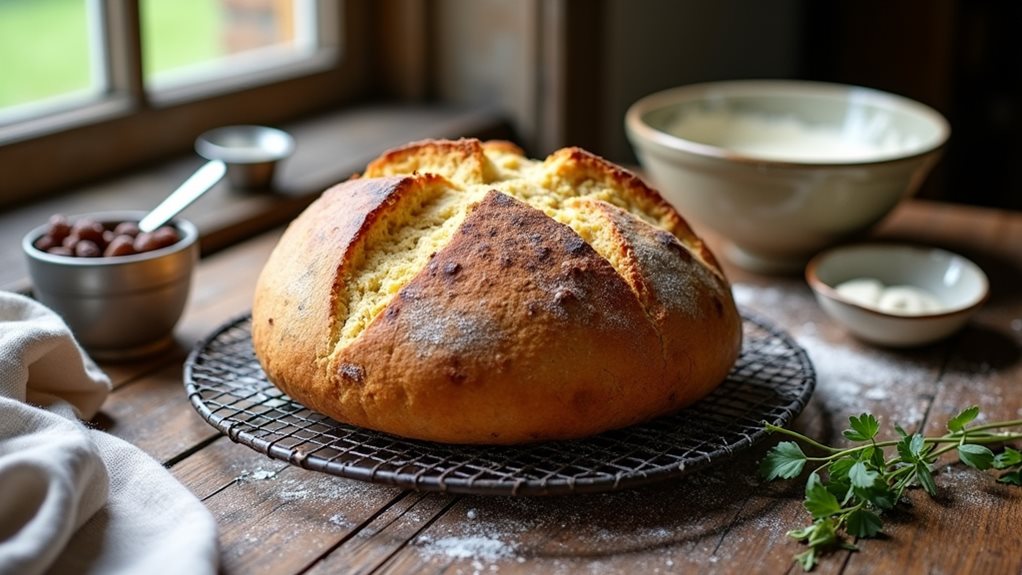
Making soda bread couldn’t be simpler, and the results are absolutely divine. Start by preheating your oven to 350° and oiling an 8-inch round baking dish—this gives your bread that classic rounded shape with a perfectly crisp exterior.
In a medium bowl, whisk together 3 cups of unsifted all-purpose flour, 3 tablespoons of sugar, 2 teaspoons of baking powder, 1 teaspoon of baking soda, and 1 teaspoon of salt until well combined. This dry mixture is the foundation of your bread’s texture.
Next, pour in 1½ cups of buttermilk, 1 slightly beaten egg, and 3 tablespoons of Crisco oil. The buttermilk is what gives soda bread its distinctive tangy flavor—it’s non-negotiable, trust me. Gently stir everything with a fork until just moistened; overmixing is the enemy of tender soda bread.
Fold in ½ cup of plump raisins for little bursts of sweetness throughout the loaf.
Pour the batter into your prepared baking dish—it’ll be somewhat sticky and rough-looking, but that’s exactly what we want. Pop it into the oven for 35 to 40 minutes, until a wooden pick inserted in the center comes out clean. The aroma of baking soda bread will fill your kitchen, making the wait almost unbearable.
Once baked, patience is key: let it cool in the dish for 10 minutes before transferring to a wire rack to cool completely. The waiting is the hardest part, but cutting into warm soda bread can make it gummy. Who knew something with so few ingredients could create such a hearty, golden treasure? While your soda bread is cooling, you might want to explore outdoor grill smoker combo options for your next culinary adventure.
Golden Irish Soda Bread Substitutions and Variations
While the classic Irish soda bread recipe remains a beloved staple, there’s plenty of room for creativity when it comes to substitutions and variations.
I often swap out the raisins for dried cranberries, cherries, or currants depending on what’s in my pantry. For a nuttier flavor, try adding 1/2 cup of chopped walnuts or pecans to the batter.
Don’t have buttermilk? No problem. Mix 1 1/2 tablespoons of lemon juice or white vinegar with regular milk and let it sit for 5 minutes.
You can also substitute whole wheat flour for up to half of the all-purpose flour for a heartier texture. For a sweeter version, increase the sugar to 1/4 cup and add 1 teaspoon of cinnamon.
These simple changes create delightful variations while maintaining the bread’s characteristic density and flavor.
What to Serve with Golden Irish Soda Bread
Now that you’ve explored various ways to adapt your soda bread recipe, let’s consider what foods pair perfectly with this rustic Irish classic.
I find that soda bread’s slightly sweet, dense texture complements hearty soups like beef stew or potato leek soup beautifully. The bread’s ability to soak up rich broths makes it an ideal companion.
For breakfast or tea time, I recommend serving slices with salted Irish butter and honey or jam. The contrast between the bread’s subtle tanginess and sweet spreads creates a delightful balance.
If you’re hosting a traditional Irish dinner, pair your soda bread with corned beef and cabbage or shepherd’s pie. The bread provides a wonderful textural counterpoint to these savory dishes, allowing you to savor every last bit of gravy or sauce.
Final Thoughts
As we’ve traveled through the wonderful world of soda bread, I’ve come to appreciate how this humble loaf represents more than just a quick bread option. It connects us to culinary traditions that span generations, offering both nourishment and nostalgia in each dense, flavorful slice.
What makes soda bread special is its accessibility—anyone can create this satisfying staple with basic ingredients and minimal effort. The recipe I’ve shared yields a slightly sweet version with raisins, but don’t hesitate to experiment with your own additions or keep it traditionally plain.
Remember that the beauty of soda bread lies in its imperfection. Those rustic cracks, the golden crust, and the tender interior all tell the story of a bread that’s meant to be shared around the table. Much like how arborio rice provides essential creaminess and texture to mushroom risotto, the simple ingredients in soda bread work together to create something truly special.