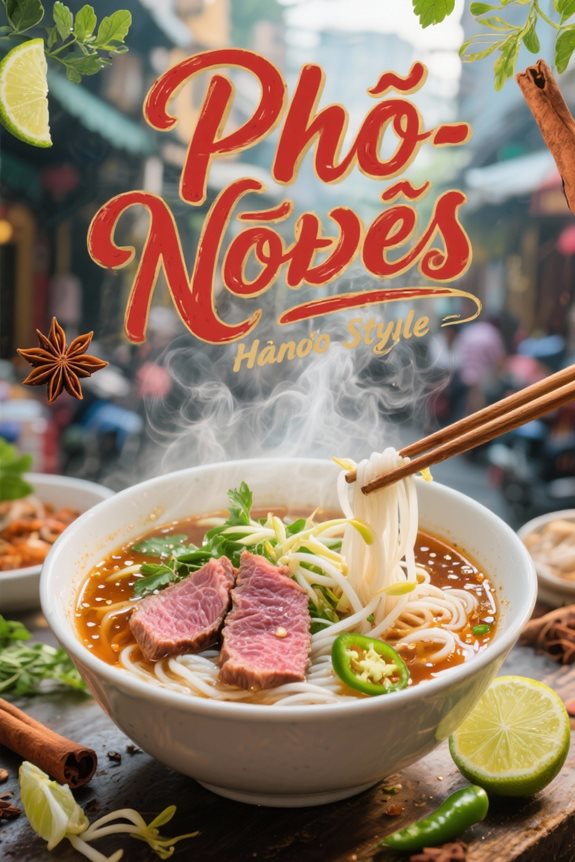
I’ve spent years perfecting my Hanoi-style beef pho recipe, and I’m excited to share these authentic techniques with you. This isn’t just soup—it’s a fragrant expedition combining tender beef, silky rice noodles, and a complex broth infused with cinnamon, star anise, and charred ginger. What distinguishes this northern Vietnamese version from others is its clarity of flavor and simplicity of garnishes. Follow along to discover how the smallest details transform this humble bowl into something truly extraordinary.
Key Takeaways
- Hanoi-style beef pho features a clearer broth with fewer garnishes than southern Vietnamese versions.
- The broth is infused with cinnamon, star anise, and charred ginger for authentic flavor.
- Traditional preparation includes dual-cooking methods for beef to enhance both broth and serving texture.
- Rice noodles are soaked until flexible, then assembled with thinly sliced beef and hot broth.
- Customizable toppings include bean sprouts, lime wedges, and fresh herbs for personal preference.
Why You’ll Love this Soulful Hanoi Beef Pho
Comfort in a bowl, this authentic Hanoi-style beef pho delivers a symphony of aromatic flavors that will transport you straight to the bustling streets of Vietnam’s capital.
I’ve crafted this recipe to capture the essence of traditional pho—a fragrant broth infused with cinnamon, star anise, and charred ginger that simmers to perfection over an hour.
What makes this version special is the dual cooking method for the beef: first using round steak to flavor the broth, then adding tender rib-eye slices just before serving.
The result is a deeply satisfying meal with layers of texture—silky rice noodles, crisp bean sprouts, and melt-in-your-mouth beef.
You’ll appreciate how each customizable bowl allows everyone to adjust herbs, lime, and heat to their preference.
What Ingredients are in Soulful Hanoi Beef Pho?
Making authentic Hanoi-style beef pho at home requires quite a few ingredients, but don’t let that intimidate you. The rich, aromatic broth and tender beef create a bowl of comfort that’s worth every bit of effort. This Vietnamese classic combines fragrant spices, fresh herbs, and thinly sliced beef for a deeply satisfying meal that warms you from the inside out.
- 8 cups chicken broth
- 1 pound round steak (for cooking in the broth)
- 1¼ pounds boneless rib-eye, strip, or flank steak (for serving)
- 3 cinnamon sticks
- 3 whole cloves
- 3 star anise
- 1 unpeeled medium onion, quartered lengthwise
- ½ cup peeled and coarsely chopped fresh ginger
- ½ pound dried rice noodles (banh pho)
- 2 tablespoons fish sauce
- 1 teaspoon sugar
- ½ teaspoon salt
- 3 cups bean sprouts
- 1 cup very thinly sliced onion or shallots
- 1 cup chopped fresh Asian basil, cilantro, or mint (or a combination)
- ½ cup thinly sliced green onion
- ¼ cup freshly squeezed lime juice
- 2 fresh jalapeño chilies, cut diagonally into thin ovals
When shopping for these ingredients, quality matters. The broth forms the foundation of your pho, so use the best chicken broth you can find (or make your own if you’re feeling ambitious). For the beef, freshness is key—the rib-eye or flank steak should be as fresh as possible since it’ll be sliced paper-thin. The aromatics—cinnamon, cloves, star anise, onion, and ginger—are non-negotiable for achieving that distinctive pho flavor. And don’t skip the fresh herbs and accompaniments, which add brightness and texture to this beloved Vietnamese soup.
How to Make this Soulful Hanoi Beef Pho
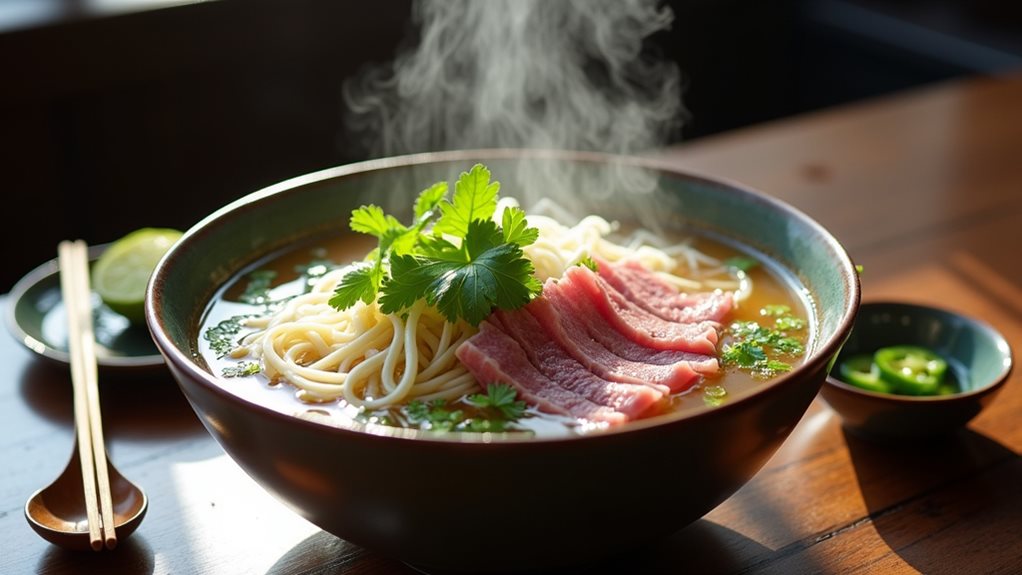
Creating authentic pho starts with a rich, aromatic broth that serves as the soul of this Vietnamese classic. Begin by combining 8 cups of chicken broth with 1 pound of round steak (sliced into 1-inch strips), 3 cinnamon sticks, 3 whole cloves, and 3 star anise in a large stockpot. While that comes to a gentle boil, char 1 quartered onion and 1/2 cup coarsely chopped ginger in a hot skillet until they’re beautifully browned and fragrant—this step adds incredible depth to your broth.
Add these charred aromatics to your simmering pot and let everything mingle for about an hour. During this time, soak 1/2 pound of dried rice noodles in warm water for 15-20 minutes until they become flexible and bright white. The final touch for your broth? Stir in 2 tablespoons of fish sauce, 1 teaspoon of sugar, and 1/2 teaspoon of salt before straining out all the solids.
About 30 minutes before serving, prepare your accompaniments: 3 cups bean sprouts, 1 cup thinly sliced onion, 1 cup of fresh herbs (basil, cilantro, or mint), 1/2 cup sliced green onions, and 1/4 cup lime juice.
For the star of the show—the beef—place your 1 1/4 pounds of boneless rib-eye, strip, or flank steak in the simmering broth for about 10 minutes until medium-rare, then transfer to a cutting board and slice into thin, bite-sized strips.
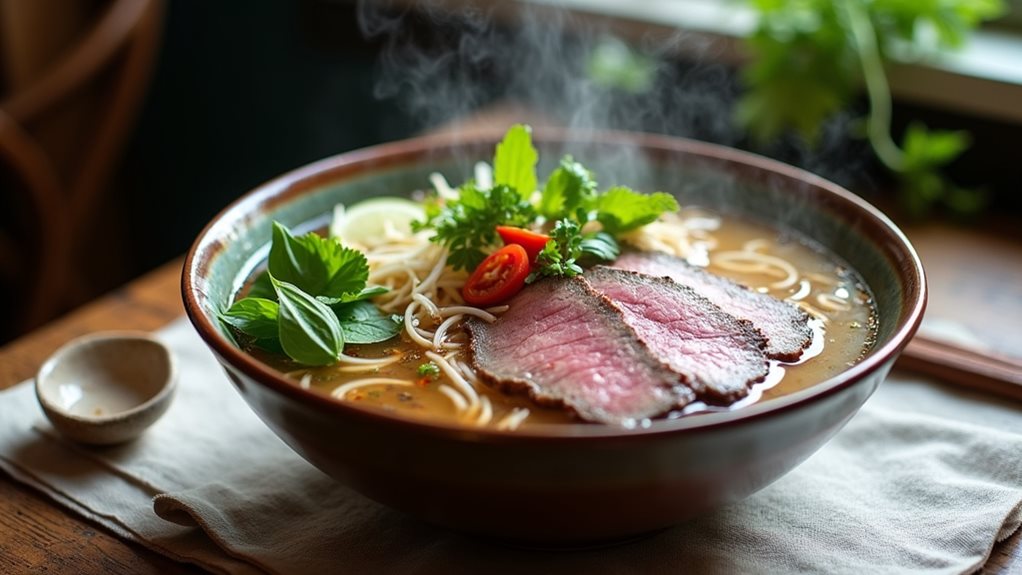
Meanwhile, cook your softened rice noodles in boiling water for 10 minutes, drain well, and divide among four bowls. Now comes the fun part: building your pho bowls. Top the noodles with sliced beef, a generous handful of bean sprouts, sliced onions, fresh herbs, green onions, a squeeze of lime juice, and thinly sliced jalapeños for heat.
Finally, ladle about 1 1/2 cups of piping hot broth over each bowl, and voilà—a steaming bowl of comfort that warms you from the inside out. For an even more efficient cooking process, consider using an Indian pressure cooker to reduce the broth simmering time while preserving all the rich flavors. Don’t forget to provide chopsticks and soup spoons so everyone can properly enjoy this Vietnamese treasure.
Soulful Hanoi Beef Pho Substitutions and Variations
While traditional Hanoi-style pho offers a specific flavor profile, you can adapt this soulful dish to suit your tastes or accommodate what’s available in your pantry.
I often substitute chicken or vegetable broth when I can’t find good beef bones, though it will alter the depth of flavor slightly. For protein alternatives, try thinly sliced chicken breast, shrimp, or even firm tofu for a vegetarian version.
If star anise or cinnamon sticks aren’t on hand, use a pinch of five-spice powder instead. Rice noodles are traditional, but in a pinch, I’ve used thin wheat noodles.
Can’t find Asian basil? Regular basil or mint makes a suitable substitute.
What to Serve with Soulful Hanoi Beef Pho
Now that you’ve mastered the art of adapting your pho, let’s explore what accompaniments improve this iconic Vietnamese dish.
I recommend serving fresh spring rolls as a light appetizer, providing a perfect textural contrast to the steaming soup. For beverages, Vietnamese iced coffee (cà phê đá) or jasmine tea complements the rich broth beautifully.
On the side, offer a plate of additional garnishes like lime wedges, extra Thai basil, cilantro, and thinly sliced chilies, allowing guests to customize their bowls.
A small dish of hoisin and sriracha sauce is traditional for dipping meat or adjusting flavors. For a complete meal, finish with a simple dessert like fresh mango or sweet sticky rice with coconut – light options that won’t overwhelm after such a satisfying bowl of pho.
Final Thoughts
As I’ve traveled through the elements of authentic Hanoi-style pho with you, I’m reminded that this dish represents far more than just a meal—it’s a cultural experience that connects us to Vietnam’s rich culinary heritage.
The careful balance of fragrant broth, tender beef, and fresh herbs creates a symphony of flavors that has captivated food lovers worldwide.
Don’t be intimidated by the multiple steps—each one contributes to the soulful depth that makes pho so remarkable.
Remember that patience is key; the slow-simmered broth and thoughtful preparation are what transform simple ingredients into something extraordinary.
Whether you’re serving this for a special occasion or a comforting weeknight dinner, authentic pho brings the heart of Hanoi straight to your table.
Consider using a pressure cooker for your broth to preserve up to 90% of nutrients while dramatically reducing the traditional hours-long simmering time.