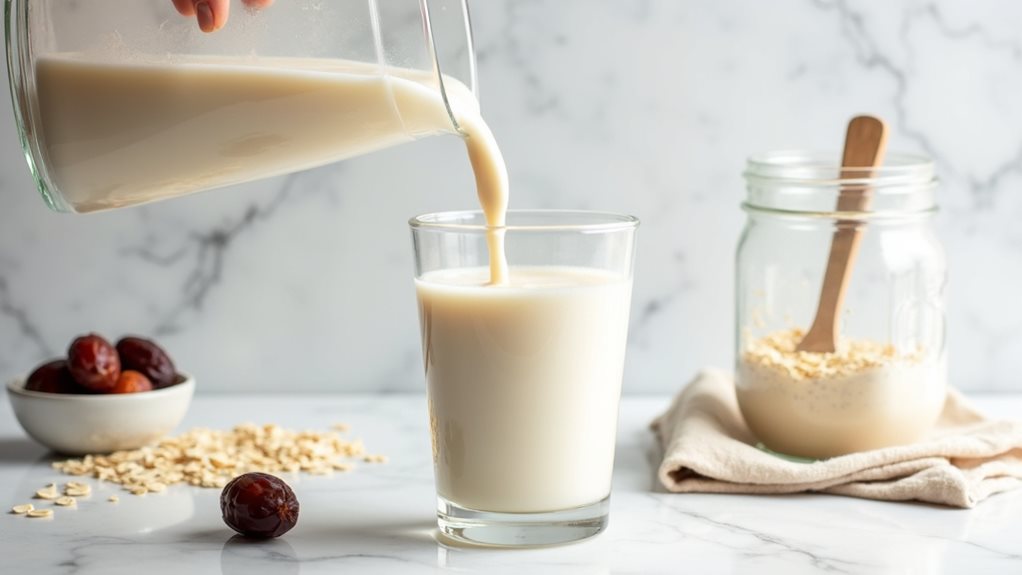
I’ve discovered that making oat milk at home transforms my daily routine. The smooth texture and customizable flavor profile simply can’t be matched by store-bought versions. When I blend fresh oats with water, I’m creating not merely a dairy alternative, but a versatile ingredient that enhances my coffee, baking, and smoothies. If you’re curious about why this simple combination inspires such devotion among home cooks and what makes it nutritionally appealing, there’s much more to explore.
Key Takeaways
- Oat milk is a dairy-free alternative made from blended oats and water, requiring simple straining for a silky texture.
- Homemade versions offer control over ingredients without preservatives, gums, or additives found in commercial products.
- Quick-cooking oats soaked for 30 minutes produce optimal results when blended with fresh water.
- Customize sweetness with dates, maple syrup, or honey, and add vanilla or spices for flavor variations.
- Use oat milk in coffee, cereal, smoothies, baking recipes, or creamy savory dishes as a versatile dairy substitute.
Why You’ll Love this Silky Homemade Oat Milk
While store-bought options can be convenient, making your own oat milk at home offers unparalleled freshness and customization that you simply can’t find in commercial versions.
I’ve discovered that homemade oat milk has a silky-smooth texture that rivals premium brands at a fraction of the cost. You’ll appreciate controlling exactly what goes into your milk—no preservatives, gums, or unnecessary additives.
What I love most is how easily you can adjust the sweetness with those two small dates in the recipe, or omit them entirely for an unsweetened version.
The quick 30-minute soak time means you’re never more than an hour away from fresh oat milk. Plus, it’s incredibly sustainable, making it an environmentally-friendly choice that’s also gentle on your budget.
What Ingredients are in Silky Homemade Oat Milk?
Making your own oat milk at home is surprisingly simple and requires just a handful of ingredients.
The beauty of homemade oat milk lies in its simplicity—you’ll avoid all those additives and preservatives found in store-bought versions. Plus, you can adjust the sweetness and thickness to your personal preference, which is something we all appreciate in our morning coffee or favorite recipes.
- 1 cup quick-cooking oats
- Water for soaking
- 3 cups water for blending
- 2 small dates, pitted (for sweetness)
The quality of your oats matters quite a bit in this recipe. While quick-cooking oats work perfectly, you could experiment with rolled oats for a slightly different texture.
The dates add just the right amount of natural sweetness without overwhelming the mild, cereal-like flavor of the oats. Some people might prefer to substitute maple syrup or honey instead of dates, or leave the sweetener out entirely for a more neutral milk alternative.
And remember, you’ll need some kind of straining equipment—either a nut milk bag or cheesecloth—to achieve that silky flat texture we’re looking for.
How to Make this Silky Homemade Oat Milk
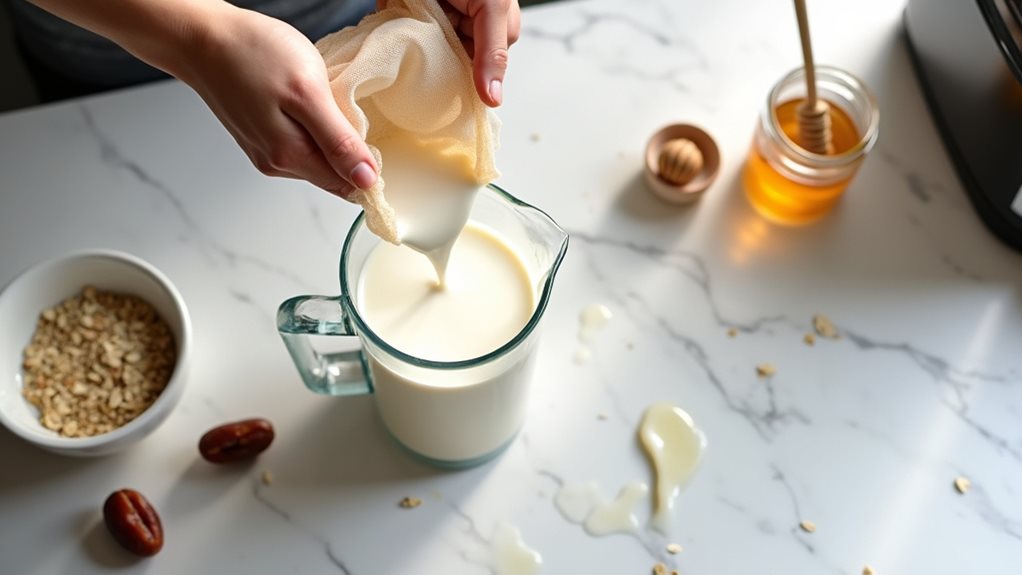
Making your own oat milk at home is surprisingly simple and requires just a handful of ingredients. Start by soaking 1 cup of quick-cooking oats in enough cool water to cover them completely. This soaking step is essential, as it softens the oats and helps create that creamy texture we’re after. Cover the bowl and let those oats relax for about 30 minutes, giving them time to absorb some of the water.
Once the soaking time is up, drain the oats using a mesh colander – this removes any excess water that might make your milk too watery. Now, combine your drained oats with 3 cups of fresh water and 2 small, pitted dates in a large bowl. The dates add just a touch of natural sweetness without overwhelming the subtle oat flavor. Let this mixture sit undisturbed for 10 to 15 minutes, giving the dates time to soften.
While waiting, you might want to gather your straining materials – a nut milk bag or cheesecloth works perfectly for this.
The final steps transform your soaked ingredients into silky milk. Transfer the oat mixture to a blender and pulse a few times to break everything up. Then blend on medium-high speed for about a minute until completely velvety. Don’t overblend, though, or you might end up with slimy oat milk (nobody wants that).
The most important part comes next – straining the mixture through your nut milk bag or cheesecloth to remove all the solids. This step guarantees your oat milk has that velvety, silky texture that makes it so delightful in coffee, cereal, or just for sipping. For larger batches or commercial quantities, a commercial oat milk maker can significantly streamline this process. Serve your freshly made oat milk either cold from the fridge or gently warmed on the stove.
Silky Homemade Oat Milk Substitutions and Variations
Your homemade oat milk recipe can be wonderfully customized to suit your personal preferences and dietary needs.
I recommend experimenting with sweeteners beyond dates—try maple syrup, honey, or agave nectar for different flavor profiles. You can also add a pinch of salt to improve the overall taste, or incorporate vanilla extract for a more aromatic milk.
For nutritional boosts, consider adding a tablespoon of chia seeds or flaxseeds before blending.
If you’re looking for creamier texture, substitute some water with coconut milk or add a tablespoon of coconut oil during blending.
Cinnamon, nutmeg, or cardamom create warming seasonal variations, while cocoa powder transforms your oat milk into a chocolate treat.
Don’t hesitate to adjust the water-to-oat ratio—less water yields a thicker, creamier milk ideal for coffee drinks.
What to Serve with Silky Homemade Oat Milk
Once you’ve prepared your silky homemade oat milk, numerous delicious pairings await that will showcase its velvety texture and subtle sweetness.
I love adding it to my morning coffee or tea, where it creates a perfectly balanced, dairy-free alternative that doesn’t overpower the beverage’s natural flavors.
For breakfast, try pouring oat milk over granola, muesli, or your favorite cereal—it’s particularly wonderful with cinnamon-spiced options.
You can also use it as a base for smoothies, adding fruits like bananas or berries for a nutritious start to your day.
When baking, I’ve found it works beautifully in pancakes, waffles, and muffins, contributing moisture without heaviness.
Don’t forget to try it in savory applications too, like creamy soups or mashed potatoes.
Final Thoughts
After diving into the world of homemade oat milk, I’ve come to appreciate its remarkable versatility and simplicity more than ever.
This plant-based alternative doesn’t just provide a creamy texture for your morning coffee or breakfast cereal; it represents a sustainable choice that’s kind to both your wallet and the environment.
Making your own oat milk allows you to control exactly what goes into your beverage—no preservatives, stabilizers, or unnecessary additives.
The basic recipe I’ve shared can be easily customized with vanilla, cinnamon, or a touch of maple syrup to suit your taste preferences.
Remember that homemade oat milk typically lasts 3-5 days when refrigerated in an airtight container, so consider making smaller batches more frequently for the freshest experience.
Like the herbed quinoa salad that pairs wonderfully with plant-based milks, oat milk supports healthy dietary habits while maintaining a balanced flavor profile that appeals to diverse palates.