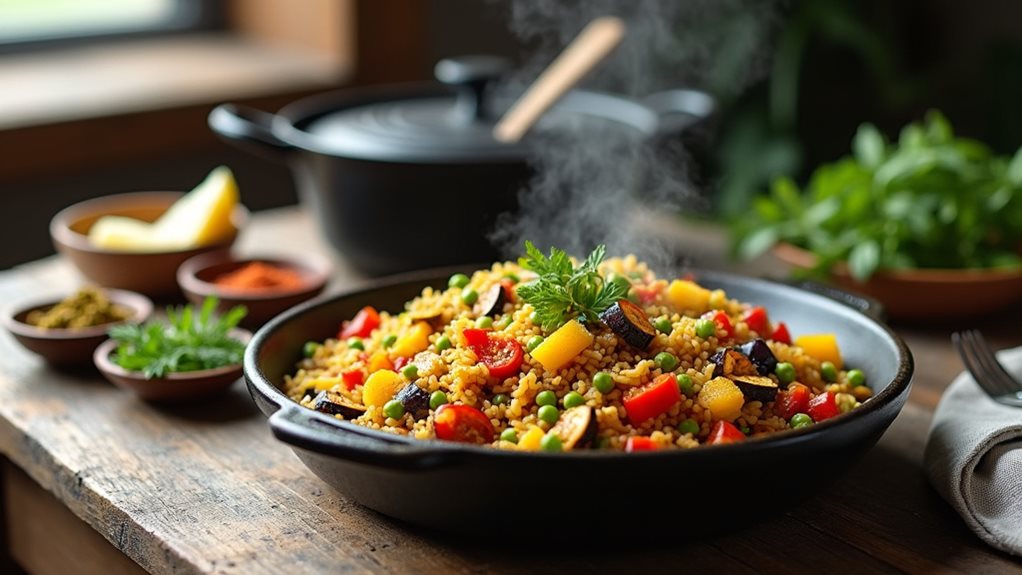
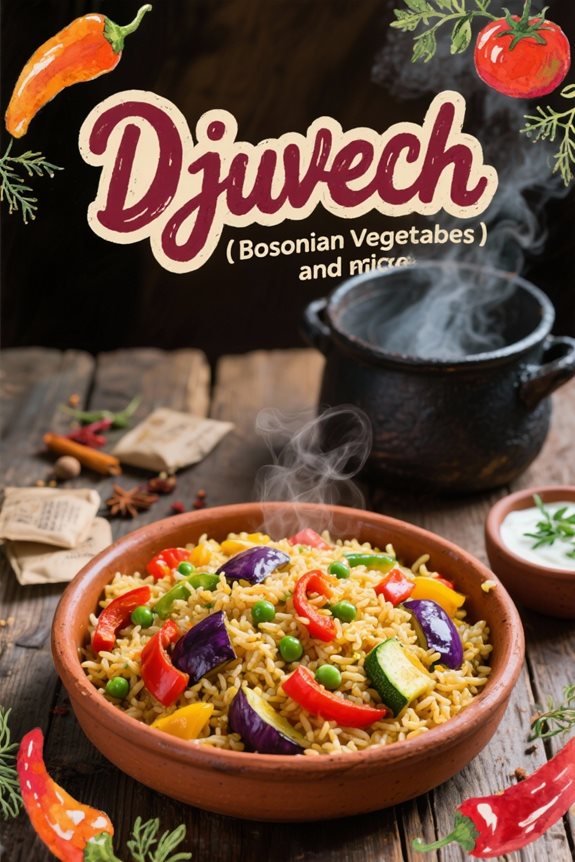
I’m excited to share one of my favorite Bosnian dishes with you today. Djuvech combines layers of fresh vegetables with perfectly cooked rice in a one-pot wonder that’s both comforting and nutritious. The beauty of this dish lies in its simplicity and depth of flavor – each vegetable contributes its unique character while merging into a harmonious whole. Let’s explore how this traditional meal comes together and why it deserves a place in your cooking repertoire.
Key Takeaways
- Djuvech is a traditional Balkan one-pot dish combining multiple vegetables with rice in sequential layers.
- The recipe typically includes onions, tomatoes, bell peppers, eggplant, and medium-grain rice.
- Vegetables are layered and cooked down first, then rice is added to absorb the flavorful juices.
- The dish is seasoned with salt, paprika, pepper, oregano, and sometimes cumin for depth.
- When properly cooked, djuvech has a sticky, relatively dry texture with complex, savory flavors.
Why You’ll Love this Bosnian Djuvech
Versatility makes Bosnian Djuvech a standout dish in Balkan cuisine. This colorful vegetable and rice medley adapts to whatever produce you have on hand, making it perfect for using up garden harvests or clearing out your refrigerator.
I’m particularly fond of how this one-pot meal combines multiple vegetables—eggplant, zucchini, peppers, and tomatoes—creating layers of flavor that deepen as they cook together.
The sequential cooking method, where each vegetable is added in a specific order, guarantees every ingredient maintains its distinct texture while contributing to the overall harmony of the dish.
You’ll appreciate how the rice absorbs all those vegetable juices, resulting in a satisfying meal that’s nutritionally complete. Plus, the aromatic blend of paprika, oregano, and optional cumin delivers a subtle warmth without overwhelming spice.
What Ingredients are in Bosnian Djuvech?
Djuvech is a hearty Bosnian dish that combines vegetables with rice to create a flavorful, complete meal. This traditional recipe showcases the rich agricultural bounty of the Balkans, with a colorful array of vegetables that cook down to create a symphony of flavors.
The beauty of djuvech is how simple ingredients transform into something truly special when cooked together in layers.
- 100g onions (sliced into half-rounds)
- 300g tomatoes (sliced)
- 100g bell peppers, red or green (sliced)
- 100g eggplants (cut into strips)
- 100g zucchini (sliced)
- 50g French beans (cut into 3-4cm pieces)
- 50g green peas (shelled)
- 1 garlic clove (finely minced)
- 200g rice
- 3 tablespoons olive oil
- 15g salt (plus extra for salting eggplant)
- 1/2 teaspoon hot paprika
- 10g pepper
- 1/2 teaspoon dried oregano
- 1/4 teaspoon cumin (optional)
When shopping for ingredients for djuvech, try to find the freshest vegetables possible, as they form the foundation of this dish’s flavor.
The eggplant requires special attention—don’t skip the salting step, as it removes bitterness and improves the texture. For the rice, a medium-grain variety works wonderfully, absorbing the vegetable flavors while maintaining some texture.
And while cumin is listed as optional, it adds a warm, earthy note that complements the vegetables beautifully, so I’d recommend giving it a try if you have it on hand.
How to Make this Bosnian Djuvech
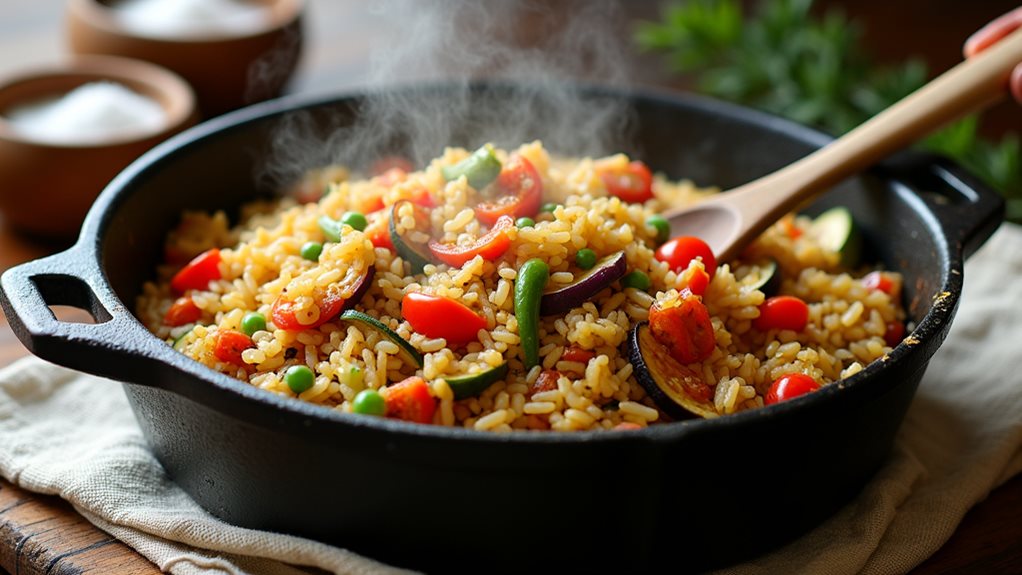
To prepare this fragrant Bosnian dish, you’ll start by prepping all your vegetables. Slice 100g of onions into half-rounds along with 100g of bell peppers. The 100g of eggplant needs special attention—slice it into strips, season with some salt, and let it sit for about 15 minutes. This step is essential, as you’ll need to squeeze the eggplant with your hands afterward to remove that bitter liquid that nobody wants in their final dish.
Meanwhile, slice 300g of tomatoes, cut 50g of French beans into 3-4 cm pieces (blanching them briefly in hot water), slice 100g of zucchini, shell 50g of green peas, and finely mince 1 garlic clove.
Now comes the layering magic that makes djuvech so flavorful. In a pot with 3 tablespoons of olive oil, you’ll create a vegetable symphony by adding ingredients one after another. Start with onions, sautéing for a couple minutes before adding peppers, then eggplant, garlic, tomatoes, beans, peas, and finally zucchini. For authentic results, consider using a cast iron pot which distributes heat evenly and adds a subtle depth of flavor to the dish.
Don’t remove any vegetables as you go—they’re building flavors together. Season the mixture with 15g of salt, 1/2 teaspoon of hot paprika, 10g of pepper, and herbs like dried oregano (1/2 teaspoon) and cumin (1/4 teaspoon, if you’re feeling adventurous). Let this wonderful medley cook down for about 15 minutes until the vegetables soften and excess liquid evaporates.
The final step transforms this from a vegetable stew to a complete meal. Add 200g of rice to the pot and stir to coat each grain with the vegetable goodness. Then add water according to your rice package instructions (might want to add a touch more salt here too).
The secret to authentic djuvech? The final texture should be sticky and relatively dry—not soupy at all. In fact, the rice should almost be frying by the end of cooking. This creates that distinctive texture that makes Bosnian djuvech so satisfying and hearty. The finished dish offers a beautiful marriage of vegetables and rice where every bite delivers complex, savory flavors.
Bosnian Djuvech Substitutions and Variations
While the traditional Bosnian djuvech recipe calls for specific vegetables and proportions, you’ll find that this dish welcomes substitutions based on seasonal availability and personal preference.
I often swap bell peppers for colorful alternatives like yellow or orange varieties, which add visual appeal without changing the flavor profile considerably.
If eggplant isn’t your favorite, substitute with more zucchini or add carrots for sweetness and texture. When fresh peas aren’t available, frozen work perfectly fine. You can even introduce cauliflower or broccoli florets for added nutrition.
For a heartier version, I sometimes add diced chicken or beef, browning it before the vegetables.
Vegetarians might enjoy chickpeas as a protein-rich addition. The rice component can be brown rice, bulgur, or even barley for a nuttier texture.
What to Serve with Bosnian Djuvech
Bosnian djuvech stands beautifully on its own as a complete meal, but I’ve found that thoughtful accompaniments can transform this hearty rice and vegetable dish into a memorable feast.
I typically serve it with a side of tangy yogurt or sour cream, which cuts through the richness and adds a revitalizing contrast to the spiced vegetables.
For protein, grilled lamb or beef kebabs make excellent partners, while a simple green salad dressed with lemon and olive oil provides a crisp counterpoint.
When entertaining, I’ll often include some crusty bread for sopping up any remaining sauce and pickled vegetables for a touch of acidity.
If you’re looking for a traditional pairing, try serving djuvech with ajvar, a roasted red pepper and eggplant spread that’s beloved throughout the Balkans.
Final Thoughts
As I’ve traveled through the layers of flavor in this traditional Balkan favorite, I’ve come to appreciate djuvech not merely as a recipe, but as a tribute to resourceful cooking.
The beauty of this dish lies in its flexibility—you can adjust the vegetables based on seasonal availability without compromising its essence.
What makes djuvech special is how the individual flavors of each vegetable meld together while still maintaining their distinct character.
The method of adding ingredients sequentially guarantees that every component cooks properly while contributing to the overall profile.
Don’t rush the process of reducing the liquid before adding rice; this concentration of flavors is what enhances the dish from ordinary to extraordinary.
Similar to how arborio rice provides essential creaminess in traditional Italian risotto, the rice in djuvech absorbs the concentrated vegetable flavors while creating a satisfying texture.