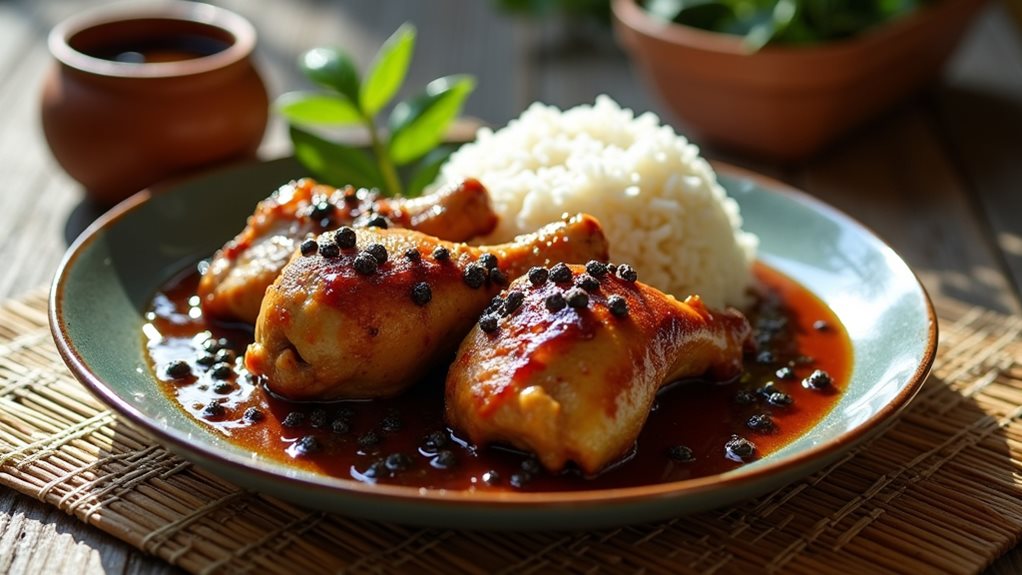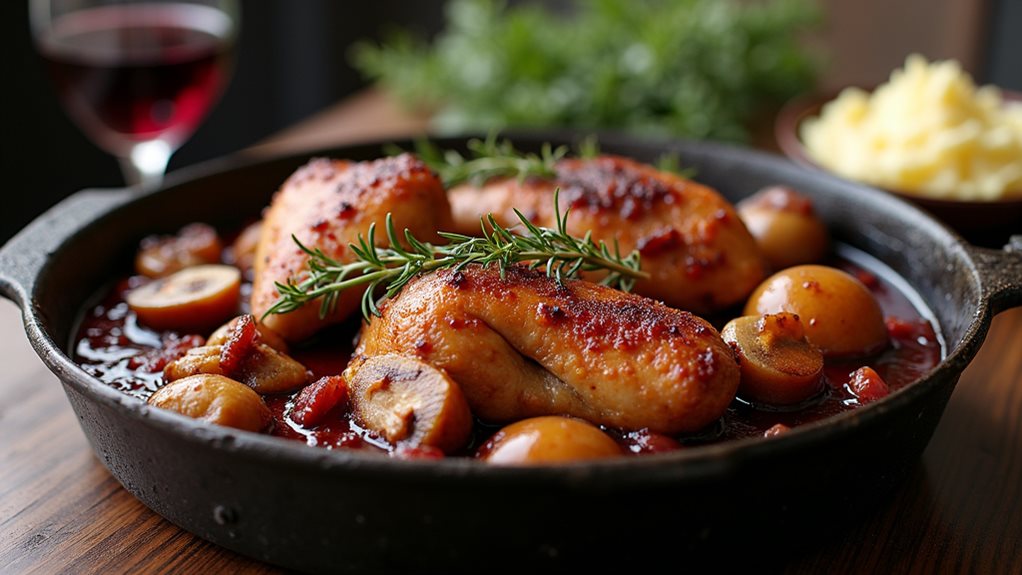
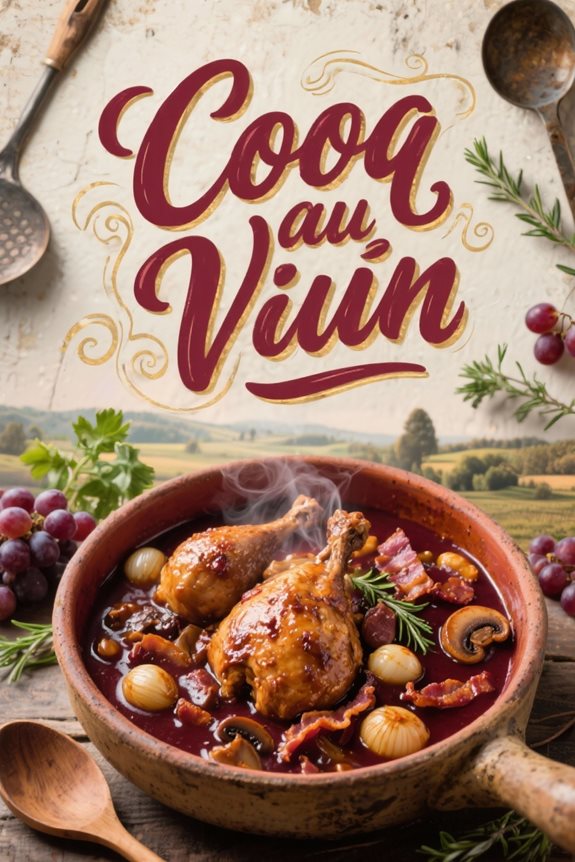
I’ve always considered Coq Au Vin to be the perfect introduction to French cooking—approachable yet impressive. This classic dish transforms humble chicken into something extraordinary through the magic of wine, aromatics, and patience. It’s comfort food with a sophisticated edge, where each bite tells the story of centuries of culinary tradition. The rich burgundy sauce alone will transport you straight to a countryside bistro in France. Want to know how to master this timeless recipe in your own kitchen?
Key Takeaways
- Coq Au Vin is a classic French dish featuring chicken cooked in Burgundy wine with bacon, mushrooms, and pearl onions.
- The dish requires browning seasoned chicken pieces before simmering them in wine and chicken broth.
- Pinot Noir can substitute for Burgundy wine, while Coq au Vin Blanc uses white wine for a lighter variation.
- Preparation involves dredging chicken in flour, sautéing until browned, then combining with cooked vegetables in a savory sauce.
- Serve with crusty French bread, buttered egg noodles, or mashed potatoes to complement the rich, velvety sauce.
Why You’ll Love this Soul-Warming Coq Au Vin
When the temperature drops and comfort food beckons, nothing satisfies quite like a classic Coq au Vin simmering on your stovetop. This iconic French dish transforms humble chicken into a masterpiece of flavor, with tender meat that falls off the bone after bathing in rich Burgundy wine.
I’ve found that Coq au Vin offers the perfect balance of rustic simplicity and elegant flavor. The marriage of bacon, mushrooms, and pearl onions creates a depth that simply can’t be matched by other chicken dishes.
What’s more, it’s surprisingly adaptable—make it ahead for even better flavor the next day, or impress dinner guests who’ll never guess how straightforward the preparation actually is. The velvety sauce alone, with its complex notes from herbs and wine, makes this dish worth every minute of cooking time.
What Ingredients are in Soul-Warming Coq Au Vin?
Coq Au Vin, the classic French dish that translates to “rooster in wine,” is comfort food at its finest. This rustic, soul-warming stew transforms humble ingredients into something magnificent through the magic of slow cooking. The rich, deep flavors develop as chicken simmers in wine with aromatics and vegetables, creating a dish that feels like a warm hug on a cold evening.
- 2½ pounds chicken (broiler-fryer, quartered, or 3 whole chicken breasts, boned, halved and skinned)
- 8 small white onions, peeled
- 1 clove garlic, crushed
- 6 slices bacon, diced
- 8 whole mushrooms
- 2/3 cup sliced green onion
- 1 tablespoon chopped shallots (or onions)
- 2-2½ tablespoons flour
- 1 cup chicken broth (condensed, undiluted)
- 2 cups Burgundy (or ½ cup dry white Bordeaux wine)
- 8 small new potatoes, scrubbed
- 2-4 tablespoons butter
- ¼ teaspoon dried thyme leaves
- ½ teaspoon dried tarragon
- 1 teaspoon salt
- ⅛ teaspoon pepper
- ¼ cup heavy cream (optional)
- Chopped parsley for garnish
While traditional Coq Au Vin was made with rooster (which needed long, slow cooking to tenderize), modern versions typically use chicken pieces. Don’t skimp on the wine quality—it doesn’t need to be expensive, but it should be something you’d enjoy drinking. The recipe is quite flexible; you can adjust the herbs to your preference or what you have on hand. The heavy cream is optional but adds a lovely richness to the finished dish. For the best flavor development, consider marinating the chicken in the wine overnight, though this isn’t strictly necessary if you’re short on time.
How to Make this Soul-Warming Coq Au Vin
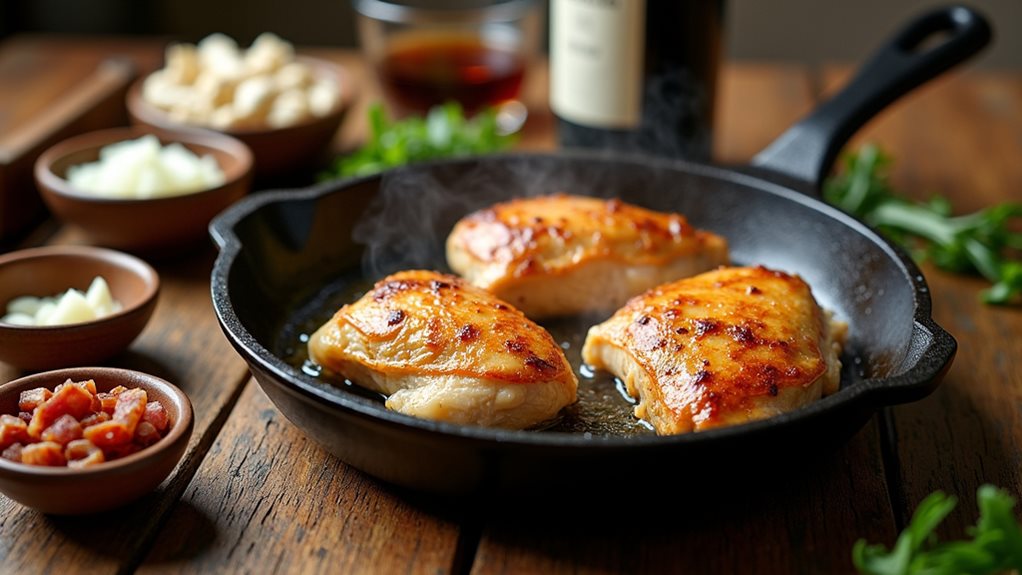
Preparing this classic French dish starts with seasoning your chicken pieces (2½ pounds of broiler-fryer, quartered, or 3 whole chicken breasts, boned, halved and skinned) generously with salt, pepper, and crushed garlic.
Once seasoned, dredge the chicken in about ¼ cup of flour, making sure to reserve any remaining flour for later—trust me, we’ll need it for that silky sauce. In a large skillet, melt 3 tablespoons of butter until it’s sizzling, then add your chicken pieces and sauté until they’re beautifully browned on all sides. The goal here isn’t to cook them through, just to develop that gorgeous golden crust that locks in all the flavor.
When browned, transfer the chicken to a 13 x 9-inch baking dish.
Now for the magic that transforms this from ordinary chicken to coq au vin. In the same pan with all those lovely browned bits, cook 6 slices of diced bacon until crisp, then add 8 peeled small white onions, 8 whole mushrooms, and about ⅔ cup of sliced green onions.
Cook until they’re just softened, then stir in 2½ tablespoons of flour and ¼ teaspoon of dried thyme leaves. Slowly pour in 2 cups of Burgundy wine (this is what puts the “vin” in coq au vin) and 1 cup of undiluted chicken broth, stirring constantly until the sauce thickens slightly. Who doesn’t love the rich aroma of wine reducing in a pan? It’s practically a form of aromatherapy.
Pour this luxurious sauce over the chicken in your baking dish, adding 8 small new scrubbed potatoes nestled around the chicken pieces. Cover and bake until the chicken is tender and the potatoes are cooked through, usually about an hour at 350°F.
For perfect, evenly cooked rice to accompany your coq au vin, consider using a professional rice cooker to free up your attention for the main dish. For an extra touch of richness, some variations call for adding ¼ cup of heavy cream to the sauce before serving, and a sprinkle of chopped parsley adds the perfect fresh finish.
What you’ll end up with is the ultimate comfort food—tender chicken bathed in a deeply flavored wine sauce with bacon, mushrooms, and onions that have soaked up all that goodness. Isn’t that worth the effort?
Soul-Warming Coq Au Vin Substitutions and Variations
While this classic French dish follows a traditional recipe, you can easily adapt coq au vin to suit your pantry and preferences.
I often substitute chicken thighs for the whole chicken when I’m short on time, as they cook more quickly and remain tender throughout the process.
Don’t have Burgundy wine? Any dry red wine works beautifully—Pinot Noir offers similar flavor profiles.
For a lighter version, I’ll occasionally use white wine instead, creating a “Coq au Vin Blanc” that’s equally delicious.
Mushroom varieties can be mixed; cremini or shiitake add earthier notes than button mushrooms.
If bacon isn’t available, pancetta makes an excellent alternative.
For a healthier twist, I reduce the butter and use olive oil, which maintains the richness while lightening the calorie count.
What to Serve with Soul-Warming Coq Au Vin
A perfect accompaniment can elevate your coq au vin from merely delicious to truly memorable. I recommend serving this rich, wine-braised chicken with crusty French bread to soak up the flavorful sauce.
Buttered egg noodles or fluffy mashed potatoes also make excellent starchy foundations that complement the dish beautifully.
For vegetables, consider simple steamed green beans with a touch of butter and lemon, or a crisp salad with a light vinaigrette to cut through the richness.
Roasted carrots or Brussels sprouts provide a wonderful contrast of textures and flavors as well.
Don’t forget about wine pairing—the same Burgundy (Pinot Noir) you used in cooking makes an ideal accompaniment, creating a harmonious dining experience that honors this classic French dish’s rustic elegance.
Final Thoughts
Mastering coq au vin represents one of the true joys of French country cooking, as this dish beautifully transforms humble ingredients into something extraordinary. I’ve found that patience truly rewards you here—allowing those layers of flavor to develop as chicken slowly simmers in wine creates magic in your kitchen.
Don’t be intimidated by its reputation. The techniques you’ll learn making coq au vin transfer to countless other dishes, from braising to sauce-making. I encourage you to make this recipe your own over time, perhaps adjusting the wine variety or playing with different mushroom types. Remember that traditional French cooking evolved from practical home kitchens, not merely professional ones. Every time you prepare this classic, you’re connecting with generations of home cooks who found beauty in transforming simple ingredients into memorable meals. For optimal flavor distribution, allow your coq au vin to rest after cooking as this crucial step gives the juices time to redistribute throughout the meat.