I’ve fallen in love with Chicken Katsu‘s irresistible crunch and juicy interior, a combination that keeps me coming back for more. This Japanese classic transforms simple chicken thighs into something extraordinary through a careful breading technique that creates the perfect texture. I’ll show you how to achieve that restaurant-quality katsu at home, with tips I’ve perfected over years of cooking. The secret lies not only in the ingredients, but in the method that guarantees crispy perfection every time.
Key Takeaways
- Chicken Katsu is a Japanese dish featuring fried chicken coated with panko breadcrumbs for maximum crunchiness.
- The traditional preparation uses boneless chicken thighs marinated in sake before a three-step breading process.
- Frying at 350°F creates the signature golden-brown exterior while maintaining juicy meat inside.
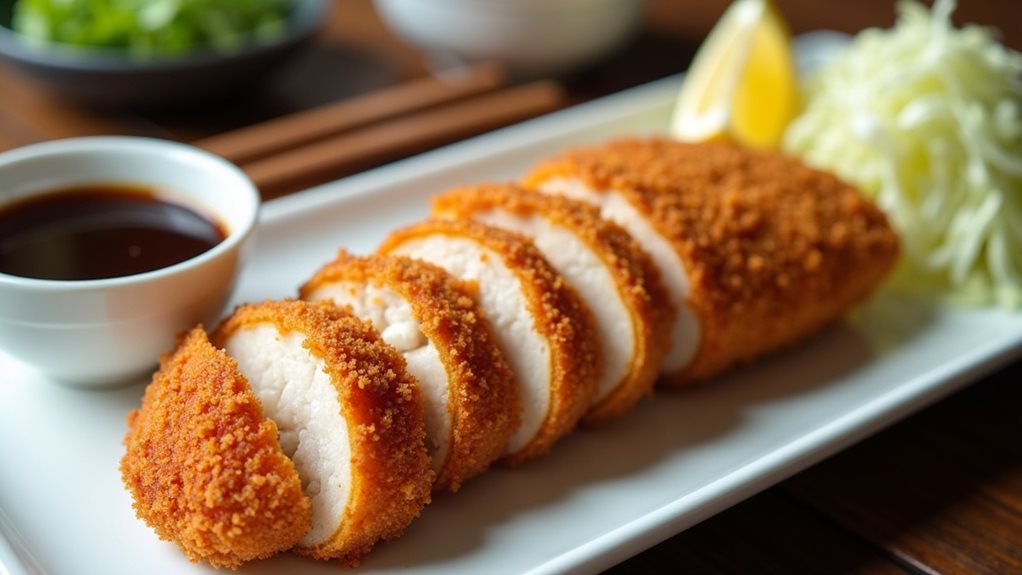
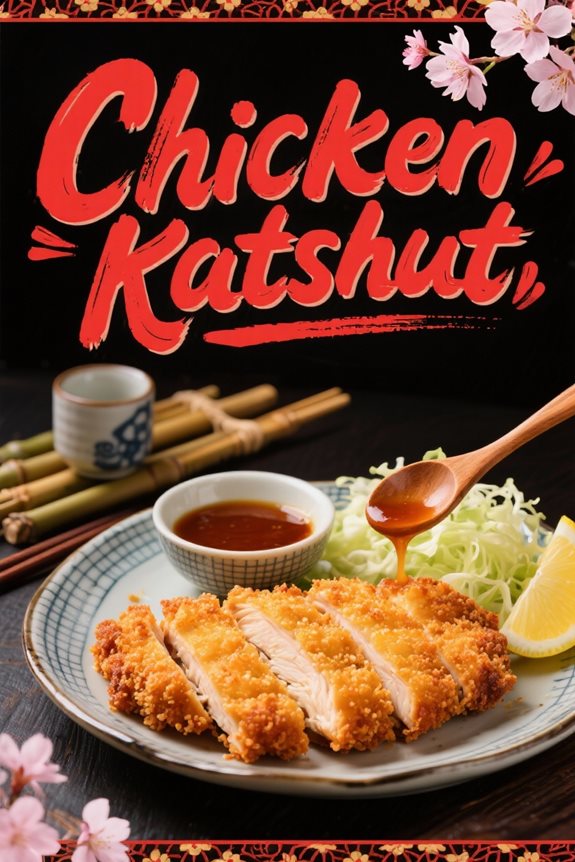
- Typically served with steamed rice, shredded cabbage, and tonkatsu sauce for an authentic presentation.
- Variations include using chicken breast, serving with Japanese curry, or incorporating into sandwiches and rice bowls.
Why You’ll Love this Crispy Chicken Katsu
If you’ve never experienced the satisfying crunch of perfectly prepared chicken katsu, you’re in for a treat with this Japanese-inspired dish. I’m particularly fond of this recipe because it transforms simple chicken thighs into something extraordinary through a foolproof three-step breading process.
The magic happens when the sake-marinated thighs meet the golden panko coating, creating an irresistible textural contrast—juicy, tender meat inside with a shatteringly crisp exterior. Unlike other fried chicken recipes, katsu maintains its crunchiness even as it cools, making it perfect for meal prep or picnics. The versatility is another selling point; serve it with traditional tonkatsu sauce for authenticity, or pair it with curry, rice bowls, or even slice it for sandwiches. It’s straightforward enough for weeknights but impressive enough for guests.
What Ingredients are in Crispy Chicken Katsu?
Chicken katsu is one of those delightful Japanese dishes that proves simplicity can be absolutely magnificent. The perfect chicken katsu relies on quality ingredients that work together to create that signature crispy exterior while keeping the meat tender and juicy inside.
You really don’t need a pantry full of exotic ingredients to make this happen—just a handful of staples that transform ordinary chicken into something special.
- 2 1/2 pounds chicken thighs
- 1/4 cup sake
- Salt, to taste
- Black pepper, to taste
- 1 to 2 eggs
- Panko bread crumbs (enough for coating)
- Cooking oil (for deep frying)
- Tonkatsu sauce (optional, for serving)
When shopping for these ingredients, try to find the freshest chicken thighs possible, as they’re the star of the show.
The sake might seem like an unusual addition if you’re not familiar with Japanese cooking, but it helps tenderize the meat and adds subtle depth of flavor.
As for the panko—don’t substitute regular breadcrumbs if you can help it. Panko’s larger, airier texture is what gives chicken katsu that distinctively light, crispy crunch that makes this dish so craveable.
And while the recipe lists tonkatsu sauce as optional, I’d consider it practically crucial for the authentic experience.
How to Make this Crispy Chicken Katsu
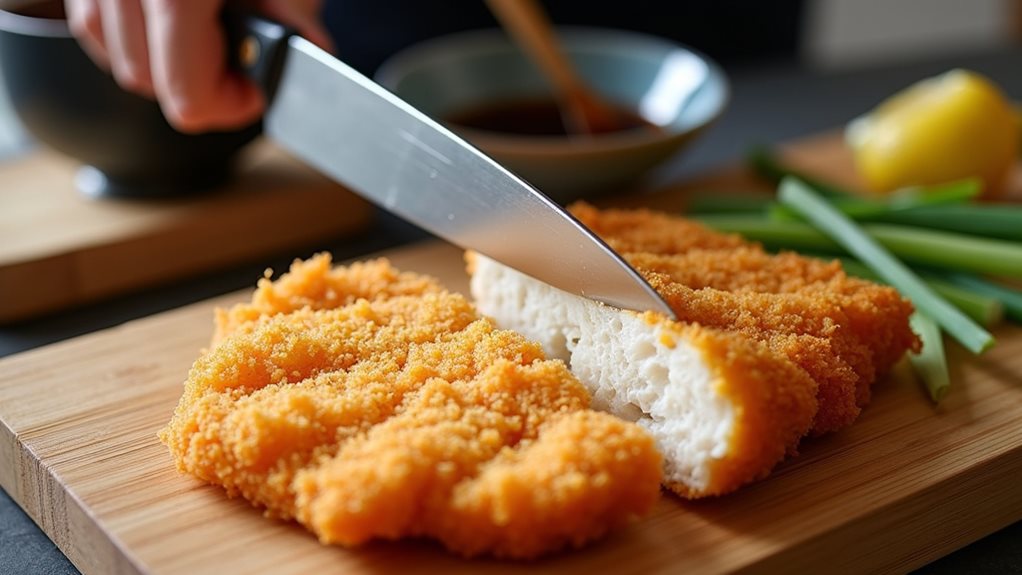
Making crispy chicken katsu at home is surprisingly straightforward. Start by deboning 2 1/2 pounds of chicken thighs if they aren’t already boneless. Place them in a bowl, pour in 1/4 cup of sake, and sprinkle generously with salt. Let the chicken marinate for about 10 to 15 minutes—this brief soak helps tenderize the meat and infuse it with subtle flavor.
The sake might seem like an unusual addition if you’ve never used it before, but trust me, it adds a wonderful depth that water or other liquids just can’t match.
While the chicken is marinating, prepare your breading station. In a separate bowl, beat 1 to 2 eggs (depending on how many pieces of chicken you’re making) and season with salt and pepper to taste.
Now comes the fun part—the breading process. Take each marinated chicken thigh and dip it thoroughly in the egg mixture, making certain it’s completely coated. Then roll it in panko flakes, pressing gently to guarantee the breadcrumbs adhere well to the surface.
The panko is what gives katsu its signature ultra-crispy texture, so don’t skimp on this step. Heat oil in a deep pan for frying—you’ll want enough oil to submerge the chicken pieces halfway. When the oil is hot (around 350°F if you’re using a thermometer), carefully place the breaded chicken thighs in and fry until they’re golden brown and crispy, about 3-4 minutes per side.
For a healthier alternative with the same delicious crunch, consider using a large premium air fryer instead of traditional deep frying.
After frying, let them rest on paper towels to drain excess oil, then slice into bite-sized strips for serving. A drizzle of tonkatsu sauce takes this dish to the next level, creating a perfect balance of crispy, savory chicken and tangy sauce.
Crispy Chicken Katsu Substitutions and Variations
While the traditional recipe creates a delicious dish, you’ll find that chicken katsu offers plenty of room for customization based on your dietary needs or what’s available in your pantry.
For protein alternatives, I often substitute chicken breast when I want a leaner option, though it tends to be slightly drier than thighs. Turkey cutlets work wonderfully too, providing a similar texture when pounded thin.
If you’re avoiding alcohol, replace the sake with apple juice or chicken broth to maintain moisture and flavor.
Can’t find panko? Regular breadcrumbs will work, though they won’t deliver quite the same crispiness.
For a gluten-free version, I recommend crushed rice cereal or gluten-free breadcrumbs. You can also add sesame seeds to your coating for extra crunch and nutty flavor.
What to Serve with Crispy Chicken Katsu
A perfectly executed chicken katsu deserves equally thoughtful accompaniments to create a balanced and satisfying meal.
I recommend serving it with steamed short-grain rice, which provides the perfect canvas for the crispy texture of the chicken. For a traditional presentation, include shredded cabbage dressed with a light vinaigrette—this adds freshness and helps cut through the richness of the fried meat.
Don’t forget the sauce element! While tonkatsu sauce is mentioned in the recipe as optional, I find it crucial for authentic flavor.
You might also consider adding Japanese curry for a heartier meal option, or miso soup as a complementary side. For a complete dinner experience, include quick-pickled vegetables or tsukemono, which provide acidity that balances the meal’s fried components beautifully.
Final Thoughts
Once you’ve mastered this chicken katsu recipe, you’ll discover it’s an incredibly versatile dish that deserves a permanent spot in your cooking repertoire. I’ve found that the key to exceptional katsu lies in the quality of your ingredients—fresh chicken thighs, quality panko, and proper frying technique make all the difference. For the juiciest results, always let your chicken rest for 5-10 minutes after cooking to allow for proper juice redistribution throughout the meat. Don’t be afraid to experiment with this foundation. Try different dipping sauces beyond tonkatsu, adjust the seasonings to your preference, or even substitute chicken breast if you prefer leaner meat. The crispy exterior and juicy interior create a textural contrast that’s universally appealing. I encourage you to make this recipe your own. With practice, you’ll develop the confidence to prepare this Japanese classic whenever the craving strikes, impressing family and friends with your culinary skills.