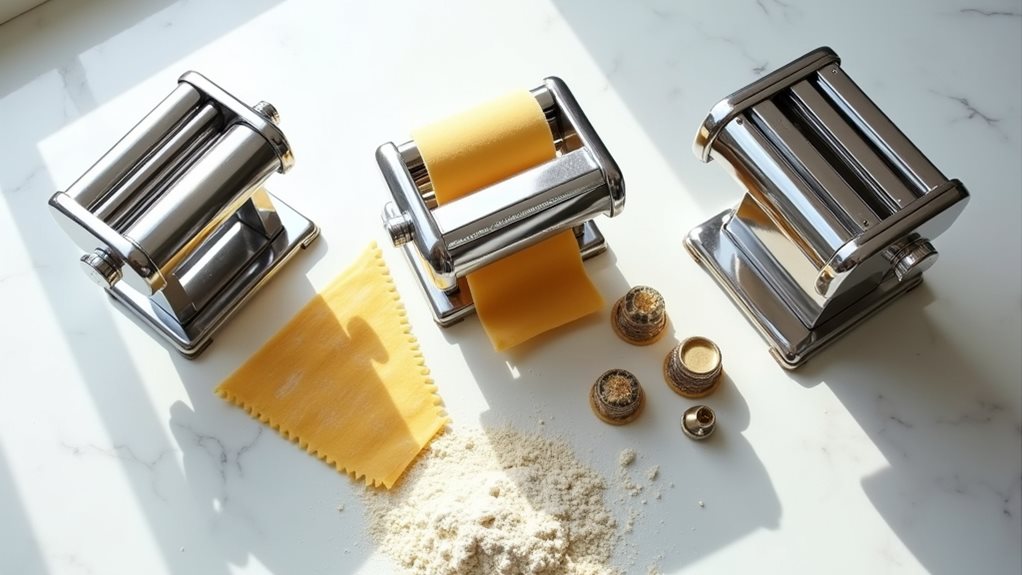
Making fresh pasta at home can transform your cooking experience, but you’ll need the right equipment for success. Whether you’re craving traditional Italian fettuccine or looking to experiment with unique shapes, today’s pasta makers offer options for every skill level and kitchen setup. You’ll find manual machines that give you complete control over thickness and texture, alongside automatic models that do the hard work for you. Ready to discover which pasta maker might become your new favorite kitchen companion?
Sur La Table Manual Pasta Maker Machine
For home chefs who crave authentic, restaurant-quality pasta without industrial machinery, the Sur La Table Kitchen Fundamental Va Bene Manual Pasta Maker transforms your kitchen into an Italian trattoria. Crafted from stainless steel and finished in elegant Juniper Green, this versatile machine creates everything from spaghetti to lasagna sheets.
You’ll appreciate the nine thickness settings (0-9) that let you customize your pasta for different sauces. The detachable pasta shaper cuts perfect ribbons of fettuccine and spaghetti, while the included clamp keeps everything stable during use. Remember, it’s hand-wash only to preserve its quality and performance.
Best For: Home cooks and pasta enthusiasts looking to create authentic, restaurant-quality pasta dishes with precise thickness control without investing in expensive electric machines.
Pros:
- Features nine adjustable thickness settings (0-9) allowing customization for various pasta types and sauce pairings
- Comes complete with all essential components including a detachable pasta shaper for fettuccine and spaghetti, handle, and stabilizing clamp
- Attractive Juniper Green stainless steel construction adds both durability and aesthetic appeal to your kitchen tools
Cons:
- Requires manual operation which may be time-consuming and labor-intensive compared to electric alternatives
- Hand-wash only care instructions demand extra maintenance effort after each use
- Limited to producing only certain pasta types (spaghetti, fettuccine, lasagna, dumpling skin) without additional attachments
Philips Compact Pasta and Noodle Maker (HR2370/05)
Busy home cooks who’ve dreamed of serving fresh pasta without the traditional time investment will find the Philips Compact Pasta Maker a revolutionary addition to their kitchen arsenal. This automatic machine transforms your ingredients into 2-3 servings of fresh pasta in just 18 minutes, handling both mixing and extruding with its uniquely designed stirring bar.
The space-saving design (15.5″ x 13″ x 11.9″) won’t overwhelm your countertop, while smart built-in storage keeps the three stainless steel shaping discs organized. You’ll appreciate the versatility to create spaghetti, penne, or fettuccini using different flours and mix-ins like spinach or carrot juice for healthier, customized pasta options.
Best For: Home cooks who value freshly-made pasta but have limited time and countertop space, yet still want to experiment with healthy, customized pasta varieties.
Pros:
- Creates fresh pasta from mixing to extrusion in just 18 minutes, saving significant time compared to traditional pasta-making methods
- Compact design with built-in storage for the three shaping discs (spaghetti, penne, fettuccini) makes it practical for everyday kitchen use
- Allows for creative customization using different flours and ingredients like spinach or carrot juice for healthier, personalized pasta options
Cons:
- At 10.36 pounds, it’s relatively heavy for a compact appliance, which might make storing it away between uses cumbersome
- Limited to producing only 2-3 servings (7-14 ounces) per batch, making it less ideal for larger families or entertaining
- Only comes with three pasta shape options, which may feel restrictive for pasta enthusiasts wanting more variety
Pasta Maker Deluxe Holiday Set with 3 Attachments (Makes 5 Different Pastas)
The CucinaPro Pasta Maker Deluxe Holiday Set stands out as a versatile choice for home cooks who crave authentic Italian cuisine without restaurant prices. With this stainless steel machine, you’ll create five different pasta types: spaghetti, fettuccini, angel hair, ravioli, and lasagnette.
The set includes everything you need to get started—a hand crank, countertop clamp for stability, and a cleaning brush. You’ll appreciate the adjustable thickness settings that allow you to customize your pasta exactly how you like it. If you encounter any issues, customer service is ready to assist. It’s an ideal gift for anyone who values the incomparable taste and satisfaction of homemade pasta.
Best For: Home cooks looking to create restaurant-quality pasta dishes with the ability to customize thickness and pasta types while enjoying the authentic Italian cooking experience.
Pros:
- Creates 5 different pasta varieties (spaghetti, fettuccini, angel hair, ravioli, and lasagnette) with 3 interchangeable attachments
- Durable chrome-coated steel construction ensures longevity while the included countertop clamp provides stability during use
- Adjustable thickness settings allow for complete customization of pasta according to personal preference
Cons:
- Requires manual operation with hand crank, which may be labor-intensive compared to electric pasta makers
- Cleaning between the small parts might be time-consuming despite the included cleaning brush
- Limited to the 5 pasta types without purchasing additional attachments for other varieties
Factors to Consider When Choosing Pasta Makers
When choosing the perfect pasta maker for your kitchen, you’ll want to weigh several key factors that will impact your homemade pasta experience. You’ll need to decide between manual and electric options, consider your budget, and think about what types of pasta you want to create. Additionally, you should examine the material and construction quality of each machine, while also taking into account how much storage space you have available for your new culinary tool.
Manual vs. Electric Options
Choosing between manual and electric pasta makers ultimately depends on your personal preferences and cooking style. If you value tradition and enjoy the hands-on experience, manual pasta makers offer superior control over dough thickness and texture through their adjustable settings and hand-cranking mechanisms. They typically feature sturdy clamps for countertop stability while you work.
Electric models, however, prioritize convenience and efficiency, with some producing fresh pasta in as little as 18 minutes. These machines handle the mixing, kneading, and extruding automatically, making them ideal if you’re short on time but still want homemade pasta. They often include preset options that simplify the process and space-saving designs for easier storage. You’ll also find electric models particularly useful if you like experimenting with different ingredients for healthier pasta varieties.
Budget and Price Range
As you explore pasta maker options, your budget will greatly influence your final selection, with prices spanning from approximately $30 for basic manual models to upwards of $200 for feature-rich electric machines. Manual pasta makers typically fall within the $50-$100 range, making them ideal if you’re an occasional pasta enthusiast working with limited funds.
If you’re planning to create pasta regularly, electric models, while pricier at $100-$250, offer convenience that might justify the investment. When evaluating options, don’t simply look at the price tag; consider what features you’re getting—additional cutting attachments, durability, and ease of cleaning all contribute to value.
Remember that a quality pasta maker can offset grocery expenses over time, especially if you frequently purchase fresh pasta from specialty stores.
Pasta Variety Capabilities
The heart of your pasta-making experience lies in the machine’s ability to produce different pasta shapes and styles, which will greatly impact your culinary creativity at home. Look for models that offer multiple cutting attachments or extrusion discs that can create everything from spaghetti and fettuccine to ravioli and lasagna sheets.
Consider whether you’ll need adjustable thickness settings, which allow you to customize the pasta’s texture and cooking time according to your preferences. Manual pasta makers require physical effort but often excel at traditional shapes, while automatic machines do the kneading and extruding for you with minimal intervention. Don’t overlook the machine’s ability to handle alternative ingredients like spinach, beetroot, or whole wheat flour if you’re interested in creating colorful, nutritious pasta variations that accommodate dietary restrictions.
Material and Durability
Three critical aspects of any pasta maker’s construction will determine how long it serves your culinary needs: the primary material, build quality, and maintenance requirements. When evaluating options, you’ll find stainless steel machines offer superior durability and resist rust and corrosion—ideal for frequent pasta-making sessions. Chrome-coated steel provides an excellent alternative, balancing strength with aesthetic appeal while maintaining longevity.
While plastic components may reduce cost and weight, they typically won’t withstand the same level of use as their metal counterparts. Pay attention to the overall construction; a solid, stable machine prevents wobbling during operation and reduces potential damage over time. Regardless of which material you choose, you’ll extend your pasta maker’s lifespan through proper care—hand washing after use and avoiding harsh cleaning chemicals are crucial maintenance practices.
Storage Space Requirements
Finding adequate storage space for your pasta maker ranks among the most practical yet overlooked considerations when selecting the right model for your kitchen. Compact electric models like the Philips Compact Pasta and Noodle Maker (15.5L x 13W x 11.9H inches) can fit conveniently on countertops, while manual pasta makers typically demand more surface area during operation for clamping and hand-cranking.
Weight is another significant factor—heavier machines offer stability but present challenges when moving or storing, with some models exceeding 10 pounds. Look for pasta makers with built-in storage compartments for accessories like shaping discs to improve organization. Remember that models with multiple attachments require additional space, so assess your kitchen’s storage capacity realistically before purchasing. Your pasta maker shouldn’t create organizational headaches when not in use.
Cleaning and Maintenance
When selecting a pasta maker, proper cleaning and maintenance requirements deserve careful consideration, as they directly impact both the machine’s longevity and the quality of your homemade pasta.
You’ll need to prioritize models that allow easy disassembly, particularly those with removable shapers and cutting discs that can be thoroughly cleaned after each use. Most manufacturers recommend hand washing components, as dishwashers may damage internal mechanisms or cause rusting. Always use a soft brush or cloth to reach crevices and remove dough residue without scratching surfaces. After cleaning, it’s essential that you dry all parts completely before reassembly to prevent moisture-related damage, especially to metal components. Develop a habit of regularly inspecting moving parts for signs of wear and tear, which will help you catch potential issues early and maintain your pasta maker’s best performance.
Additional Accessories Included
Beyond the regular maintenance of your pasta maker, the accessories that come with your purchase will ultimately determine the range of pasta varieties you can create in your kitchen. Manual models typically include detachable pasta shapers that transform your dough into spaghetti or fettuccini, while electric versions often feature interchangeable discs for creating diverse shapes like penne and angel hair pasta.
Look for complementary tools such as hand cranks, countertop clamps, and cleaning brushes that improve both the user experience and maintenance routine. These extras greatly expand your pasta maker’s functionality, allowing you to customize thickness and shape according to your preferences. When evaluating different models, carefully consider the included accessories, as they’ll directly impact the versatility of your homemade pasta adventures and potentially save you from purchasing additional components separately.
Frequently Asked Questions
How Do I Clean Pasta Makers With Non-Removable Parts?
Wipe your pasta maker with a dry brush to remove flour, then use a damp cloth for sticky residue. Don’t submerge it in water. Run dough scraps through to collect remaining particles.
Can I Use Gluten-Free Flour in These Pasta Makers?
Yes, you can use gluten-free flour in these pasta makers. You’ll need to adjust your recipe slightly as gluten-free dough tends to be stickier. Try adding xanthan gum for better elasticity and texture.
How Long Does Homemade Pasta Stay Fresh?
Fresh homemade pasta lasts 1-2 days in the refrigerator. You’ll want to store it in an airtight container with a light dusting of flour to prevent sticking. For longer storage, try freezing it.
Are Pasta Makers Dishwasher Safe?
Most pasta makers aren’t dishwasher safe. You’ll need to hand wash them to prevent damage to moving parts and potential rust. Always check your specific model’s manual for cleaning instructions before attempting to clean it.
What’s the Difference Between Bronze and Plastic Dies?
Bronze dies create pasta with a rougher texture that holds sauce better, while plastic dies produce silkier pasta. You’ll notice bronze-extruded pasta has a more artisanal appearance, though they’re typically more expensive and slower to clean.
Final Thoughts
When selecting your pasta maker, you’ll need to balance tradition, convenience, and versatility based on your cooking style. The Sur La Table manual option delivers authentic results for purists, while Philips’ automated machine saves precious time for busy households. For those wanting variety, the Deluxe Holiday Set offers multiple pasta possibilities. Consider your kitchen space, budget, and how frequently you’ll prepare fresh pasta before making your final decision.