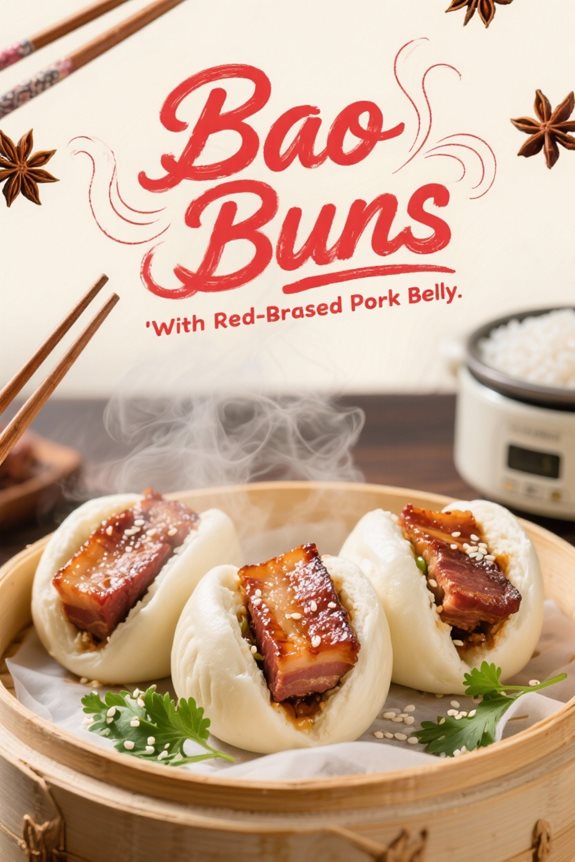
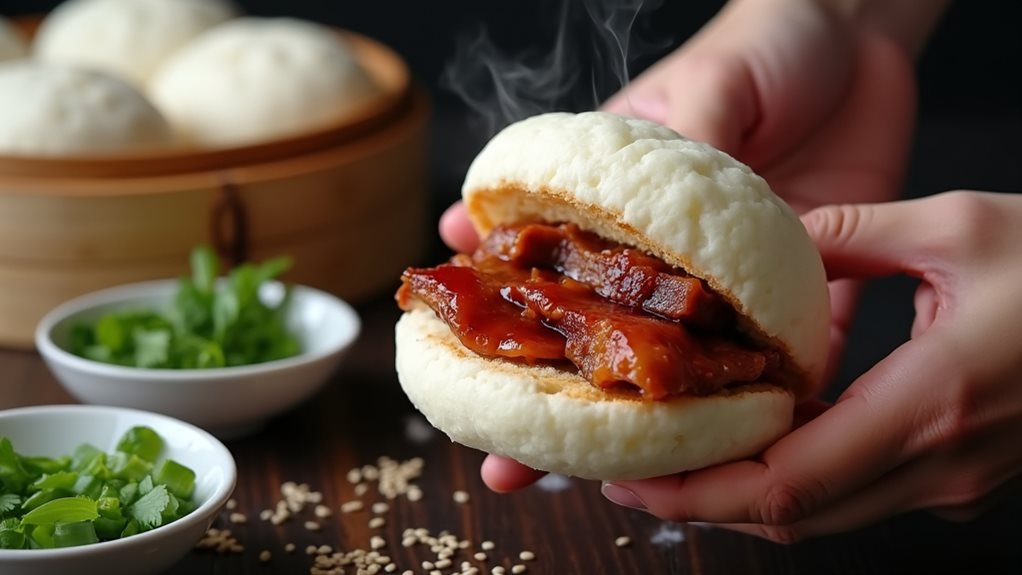
I’m excited to share my recipe for these irresistible bao buns with red-braised pork belly. There’s something magical about biting through the pillowy softness of a steamed bao to discover the rich, melt-in-your-mouth pork belly inside, glistening with its savory-sweet sauce. This classic Chinese dish combines contrasting textures with deeply layered flavors that have been perfected over centuries. If you’ve never tried making these at home, you’re in for a delicious revelation that will transform your home cooking repertoire.
Key Takeaways
- Cloud-soft bao buns combine pillowy steamed dough with melt-in-your-mouth red-braised pork belly for authentic Chinese flavor.
- Quality pork belly with balanced fat and meat is crucial for achieving the perfect texture in this dish.
- The red-braising technique uses Shaoxing wine, soy sauces, and spices to create a rich, savory-sweet sauce.
- Traditional preparation involves proofing and steaming the bao dough while separately parboiling, searing, and braising the pork.
- Serve with cucumber salad, pickled vegetables, or chili oil for a complete meal experience.
Why You’ll Love these Cloud-Soft Red-Braised Pork Belly Bao
If you’ve been searching for the perfect combination of pillowy soft buns and succulent, flavorful pork, these Red-Braised Pork Belly Bao are about to become your new obsession.
I’ve crafted this recipe to deliver that authentic balance of textures you’ll find in the best Chinese kitchens—cloud-like steamed buns that tear apart with gentle resistance, cradling melt-in-your-mouth pork belly glazed in a rich, savory-sweet sauce.
What makes these bao special is the contrast between the neutral, slightly sweet dough and the intensely flavored meat.
The pork belly, braised for over an hour with star anise, ginger, and both light and dark soy sauces, develops a complex depth that perfectly complements the freshness of the cilantro and scallion garnishes.
What Ingredients are in Cloud-Soft Red-Braised Pork Belly Bao?
These cloud-soft bao buns filled with succulent red-braised pork belly make for an irresistible meal that’s worth every minute of preparation.
The combination of pillowy steamed buns and melt-in-your-mouth pork creates a perfect harmony of textures and flavors that will transport you straight to the streets of Taiwan or China.
Ready to recreate this classic at home? Let’s gather our ingredients.
For the Bao Buns:
- 2 cups (250g) all-purpose flour, plus extra for rolling
- 1/2 teaspoon baking powder
- 1/2 cup (120g) warm water
- 1/3 cup (70g) plus 1 teaspoon sugar (preferably caster sugar), divided
- 1 packet (4g) active dry yeast
- 1 teaspoon shortening or neutral cooking oil
For the Red-Braised Pork Belly:
- 1 pound pork belly, sliced 3/4-inch thick and 3-inches long
- 2 tablespoons vegetable oil
- 3 tablespoons brown sugar
- 2 tablespoons Shaoxing wine or Chinese rice wine
- 2 tablespoons light soy sauce
- 2 tablespoons dark soy sauce
- 1 thumb-sized piece of ginger, sliced
- 2 cloves of garlic
- 2 scallions, cut into 2-inch pieces
- 2 star anise pods
For Garnish:
- Fresh cilantro sprigs
- Toasted sesame seeds
- Chopped scallions
When shopping for these ingredients, the quality of your pork belly matters tremendously—look for a piece with a good balance of meat and fat layers.
Some ingredients like Shaoxing wine and dark soy sauce might require a trip to an Asian grocery store, but they’re worth seeking out for authentic flavor.
If you can’t find them, dry sherry can substitute for the wine in a pinch, though the flavor profile will be slightly different.
And remember, while the ingredient list might seem long, many items are pantry staples that will serve you well for future Asian cooking adventures.
How to Make these Cloud-Soft Red-Braised Pork Belly Bao
To create these fluffy bao buns, you’ll start by activating 4g of active dry yeast in 120g of warm water with a teaspoon of sugar. While that’s getting foamy, sift together 250g of all-purpose flour, 1/2 teaspoon of baking powder, and the remaining sugar.
Combine the wet and dry ingredients in a stand mixer with a dough hook (or use your hands if you’re feeling particularly energetic), adding a teaspoon of shortening or neutral oil after the dough comes together. Knead until even and elastic—about 5-7 minutes—then let it rise until doubled in size. Who knew such pillowy perfection required such patience?
After your dough has proofed, punch it down and divide into 10 equal portions. Roll each piece into a rectangular shape about 6 inches long and 3 inches wide, then fold in half lengthwise and place on small squares of parchment paper.
These need another 30-45 minutes to proof before steaming for 12 minutes until they’re soft and cloud-like. A professional rice cooker with a steamer attachment would make this process effortless and consistent. Meanwhile, prepare the star of the show: the red-braised pork belly. Parboil 1 pound of pork belly slices for 5 minutes, then sear them in a mixture of 2 tablespoons vegetable oil and 3 tablespoons brown sugar until beautifully caramelized.
The magic happens when you braise the pork belly with 2 tablespoons each of shaoxing wine, light soy sauce, dark soy sauce, plus aromatic ginger, garlic, scallions, and star anise. This slow simmer for 60-90 minutes transforms the pork into melt-in-your-mouth tenderness with a rich, glossy sauce.
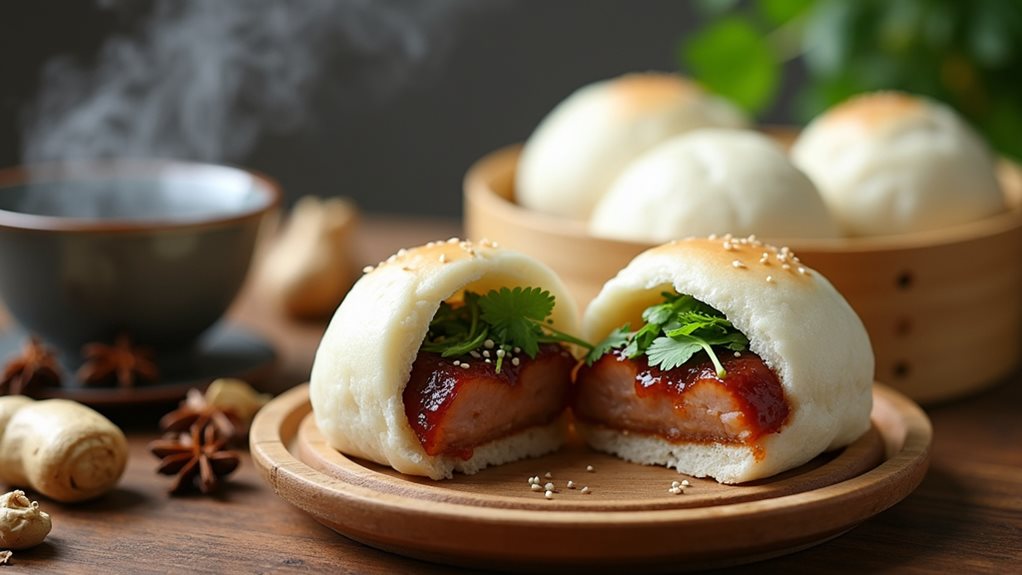
To assemble, simply open a steamed bao, brush the interior with that heavenly sauce, add a slice or two of pork belly, and garnish with cilantro, toasted sesame seeds, and chopped scallions. The contrast between the soft, slightly sweet bun and the savory, succulent pork creates a perfect bite that’s worth every minute of preparation.
Cloud-Soft Red-Braised Pork Belly Bao Substitutions and Variations
While the classic red-braised pork belly bao remains unmatched in flavor, you’ll be glad to know several adaptations can accommodate dietary restrictions or ingredient availability without sacrificing taste.
For a vegetarian option, substitute the pork with braised tofu or mushrooms using the same sauce profile—the key is maintaining that rich umami character.
Don’t have Shaoxing wine? Dry sherry works beautifully, or even a splash of sake in a pinch.
For those avoiding gluten, rice flour can replace all-purpose flour in the bao dough, though you’ll need to adjust the liquid ratio slightly.
The dark soy sauce, which provides that signature mahogany color, can be substituted with regular soy sauce plus a touch of molasses if needed.
I’ve even made a leaner version using pork shoulder instead of belly that still delivers wonderful results.
What to Serve with Cloud-Soft Red-Braised Pork Belly Bao
Now that you’ve mastered making the perfect bao buns, let’s explore what to serve alongside these cloud-soft pockets of flavor.
I like to balance the rich, savory notes of the pork belly with invigorating sides like a simple cucumber salad dressed with rice vinegar and sesame oil.
Pickled vegetables—particularly daikon radish and carrots—offer a tangy contrast that cuts through the fatty pork.
For a more substantial meal, consider serving steamed edamame sprinkled with flaky salt, or a light miso soup.
If you’re entertaining, arrange a family-style spread with small bowls of chili oil, extra braising sauce, and sliced scallions so guests can customize their bao experience.
Don’t forget a cold Tsingtao beer or jasmine tea to complete your feast!
Final Thoughts
After mastering these delectable bao buns with red-braised pork belly, you’ll find yourself returning to this recipe time and again. The combination of pillowy soft buns with tender, flavorful pork creates a perfect harmony that’s simply irresistible.
I’ve found that patience is key throughout this process—from proofing the dough properly to allowing the pork belly to braise until it reaches that melt-in-your-mouth consistency.
Don’t rush the reduction of the sauce, as achieving that honey-like glaze makes all the difference in the final dish. Remember that these components can be prepared ahead of time, making them perfect for entertaining or weekend meal prep.
With practice, you’ll develop an instinct for the dough’s elasticity and the pork’s ideal tenderness, elevating your homemade bao to restaurant quality.
For even more succulent results, consider using your pressure cooker to reduce the braising time of pork belly from 2 hours to just 30 minutes while still achieving that tender, juicy texture you crave.