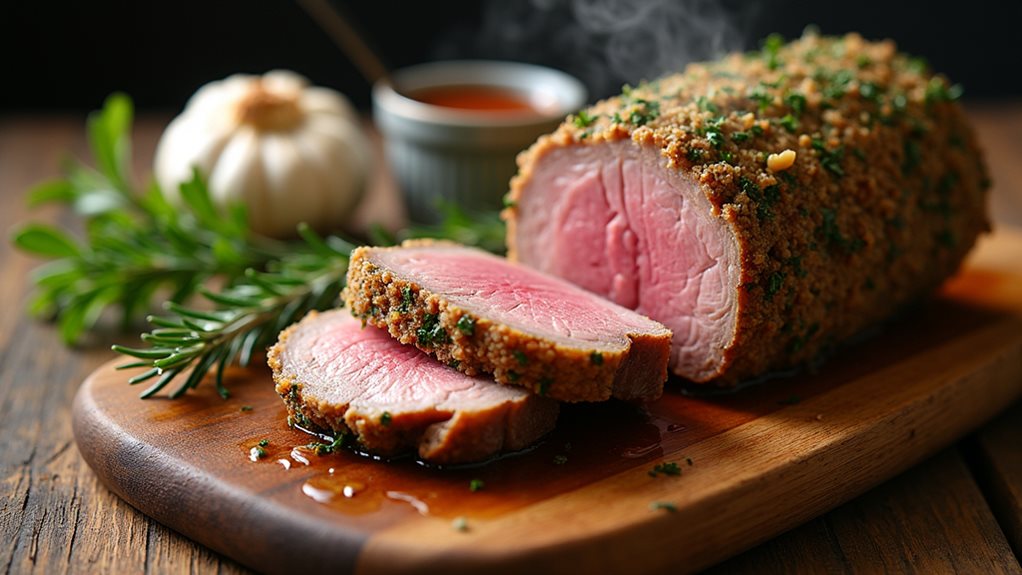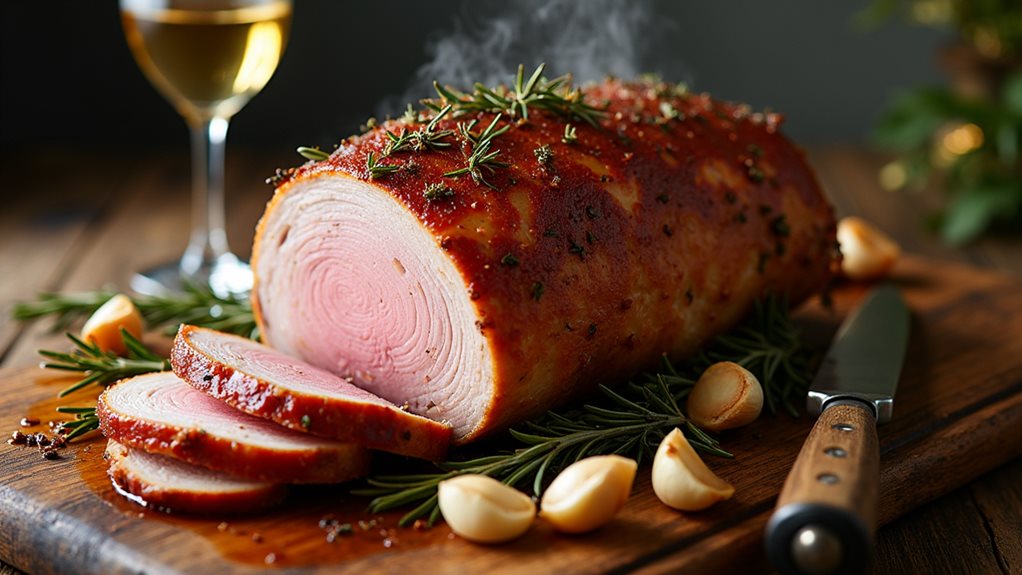
I’ve perfected my “Drunk Pig” pork roast after years of Sunday dinner experiments. This isn’t your average roast—it’s a wine-infused masterpiece where sweet Sauterne transforms ordinary pork into something extraordinary. The magic happens as the meat slowly cooks, creating its own savory bath of juices that keep every bite moist and tender. Want to know my secret for those pockets of melted garlic that guests always rave about? There’s a technique to it.
Key Takeaways
- “Drunk Pig” features pork roast infused with Sauterne wine for tenderness and sweet flavor notes.
- Garlic cloves are inserted into wells in the meat, creating pockets of rich flavor as they melt.
- The roasting process includes browning at 450° then slow-cooking at 350° with frequent basting.
- Wine creates a self-basting sauce that keeps the meat moist throughout the cooking process.
- Substitutions like Riesling, Chardonnay, or Pinot Noir can replace Sauterne in this rustic yet sophisticated dish.
Why You’ll Love this Wine-Infused Drunk Pig’s Feast
When you’re looking for a showstopping centerpiece that combines rustic tradition with sophisticated flavor, this wine-bathed pork roast delivers on every level.
I’ve found that the Sauterne wine doesn’t just tenderize the meat—it infuses every fiber with a complex sweetness that balances perfectly against the sharp garlic and salt.
What makes this recipe truly special is the transformation that happens during those hours of slow roasting.
The wine reduces to create a self-basting sauce that keeps the pork incredibly moist while developing a caramelized exterior.
The garlic cloves tucked inside the meat melt into aromatic pockets of flavor that surprise and delight with each bite.
It’s rustic cooking at its finest, impressive enough for holidays yet simple enough for Sunday dinner.
What Ingredients are in Wine-Infused Drunk Pig’s Feast?
This Pork Roast “Drunk Pig” recipe combines the rich flavors of wine-soaked pork with aromatic garlic for a truly special meal. The wine infusion creates a tender, juicy roast with complex flavors that will impress your dinner guests.
Whether you’re planning a holiday feast or just a special Sunday dinner, this recipe delivers restaurant-quality results with surprisingly simple ingredients.
- 1 fresh ham or pork roast
- 1/5 Sauterne wine
- Garlic cloves
- Salt
- Pepper
- Garlic salt
When shopping for this recipe, quality matters. Look for a well-marbled fresh ham or pork roast—the fat adds flavor and helps keep the meat moist during the long cooking process.
For the Sauterne wine, you don’t need to splurge on something expensive since it’s being used for cooking, but avoid anything labeled “cooking wine” as it contains added salt.
The garlic should be fresh and firm, not sprouted or soft. And while the recipe calls for basic seasonings, freshly ground black pepper will give you more flavor than the pre-ground variety.
Sometimes the simplest ingredient lists yield the most memorable meals, don’t you think?
How to Make this Wine-Infused Drunk Pig’s Feast
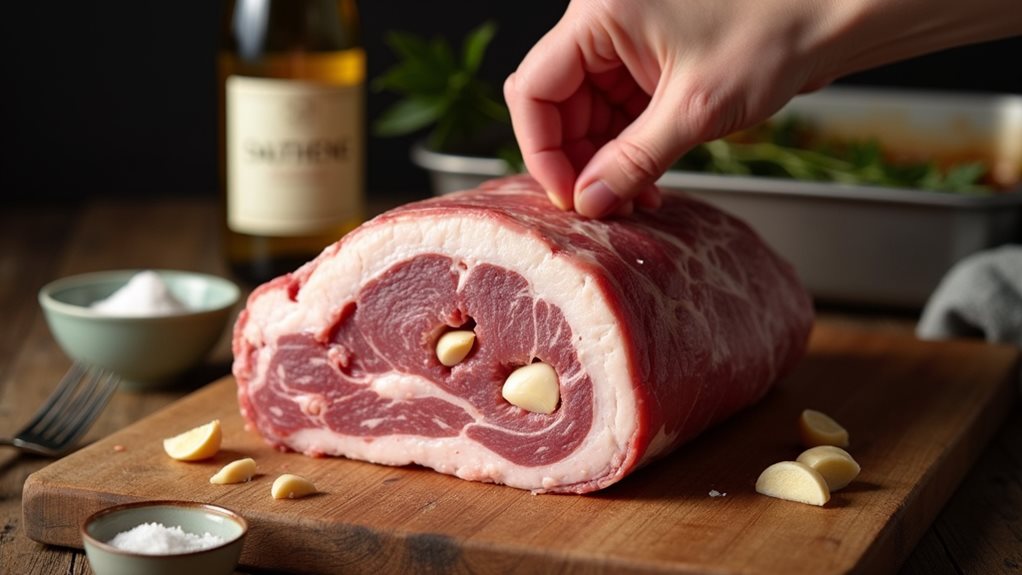
This showstopper pork roast begins with preparation that’s simple but effective. Start with a fresh ham or pork roast and create several wells throughout the meat—just stab a knife into the roast, then wiggle your finger in the hole to create a little pocket. Into each pocket, place a piece of garlic (not the whole clove, maybe just half or a third of larger ones), then fill the remainder of the pocket with salt. This flavor-infusion technique guarantees the garlic and salt permeate the meat from within, rather than just seasoning the outside.
Once your pockets are filled, place the roast in a roasting pan and rub salt all over the exterior, followed by a generous sprinkling of pepper and garlic salt.
Now for the magic—preheat your oven to 450° and brown the roast for about 30 minutes until it develops a gorgeous crust. Then comes the “drunk” part of our Drunk Pig: pour 1/5 Sauterne wine over the roast, leaving about 1/4-inch of wine in the bottom of the pan.
Reduce the temperature to 350° after 45 minutes total cooking time, and cover the roast. Remember to baste every 15 minutes with that delicious wine, adding more if the bottom of the pan starts to dry out.
The roast will need 2 to 3 1/2 hours more cooking time, depending on its size—creating a tender, wine-infused masterpiece that’s certain to impress even the pickiest dinner guests. For even more consistent results and temperature control, consider using a large electric roaster which offers spacious cooking capacity perfect for family-sized pork roasts.
Wine-Infused Drunk Pig’s Feast Substitutions and Variations
While the classic Drunk Pig recipe creates a memorable main course, several substitutions and variations can adapt this dish to your preferences or pantry limitations.
I’ve found that replacing Sauterne with a dry Riesling or Chardonnay works beautifully, though you’ll notice subtle flavor differences. For a deeper, earthier profile, consider using red wine like Pinot Noir.
Don’t have fresh garlic? Garlic powder works in a pinch—about 1/4 teaspoon per clove.
I sometimes add rosemary sprigs, thyme, or sage leaves around the roast for aromatic complexity. For heat lovers, crushed red pepper flakes mixed with your salt creates a gentle warmth throughout the meat.
You can also experiment with adding sliced onions, carrots, and potatoes to the roasting pan, allowing them to cook in the wine-infused juices.
What to Serve with Wine-Infused Drunk Pig’s Feast
When selecting accompaniments for your succulent Drunk Pig roast, I’ve found that balancing the rich, wine-infused flavors requires thoughtful side dish pairings.
Starchy sides like garlic mashed potatoes or wild rice pilaf absorb the delicious wine sauce, while roasted root vegetables—carrots, parsnips, and turnips—complement the savory pork beautifully.
I recommend adding something acidic to cut through the richness; a simple arugula salad with lemon vinaigrette or braised red cabbage with apples works wonderfully.
For a complete meal, consider serving crusty bread to soak up every drop of that incredible sauce.
If you’re entertaining guests, start with a light appetizer like stuffed mushrooms to avoid overwhelming palates before the main attraction arrives at your table.
Final Thoughts
After preparing this wine-infused pork roast, I’ve come to appreciate how the Drunk Pig recipe exemplifies rustic cooking at its finest. The combination of garlic, salt, and Sauterne wine creates a depth of flavor that transforms an ordinary pork roast into something truly memorable.
What makes this recipe special is its simplicity—just a handful of ingredients working in harmony.
Don’t rush the process; the magic happens during those hours of slow roasting when the wine gradually infuses the meat. The technique of creating wells for the garlic guarantees flavor penetrates throughout, not merely on the surface.
I encourage you to make this recipe your own. Perhaps add herbs like rosemary or thyme, or experiment with different wines to discover your perfect variation. For maximum flavor retention, allow your roast to rest for 5-10 minutes after cooking, loosely covered with foil to redistribute the juices throughout the meat.