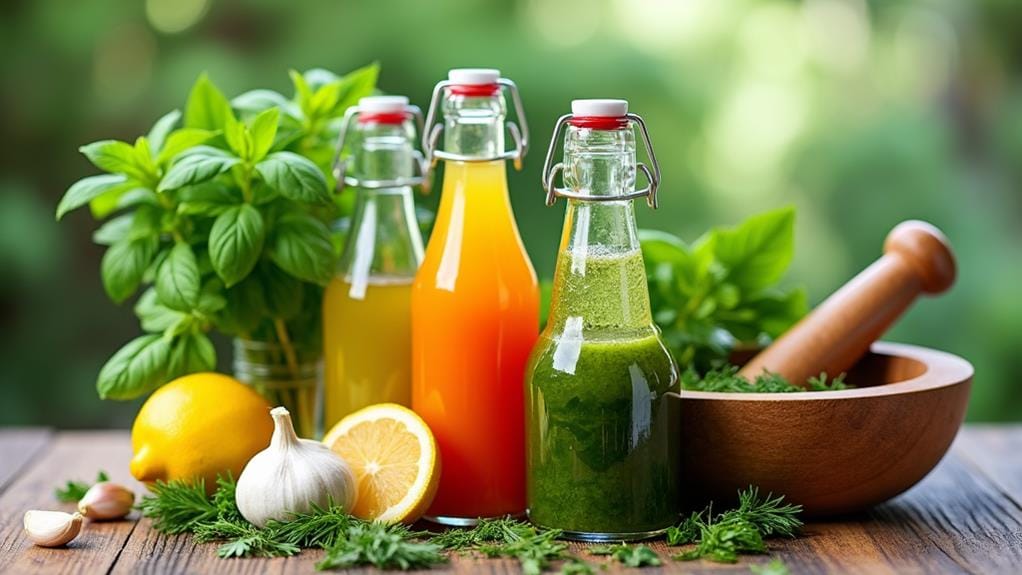
To craft zesty, herb-infused salad dressings, start by selecting fresh herbs with vibrant colors and strong aromas. Prepare them by washing thoroughly and finely chopping to maximize flavor release. Experiment with both cold and hot infusion techniques, adjusting steeping time based on herb type and desired intensity. Balance flavors by mastering herb-to-oil ratios, typically starting with a 1:4 proportion. Enhance your dressings with complementary ingredients like toasted nuts or aged cheeses for depth and texture. Store your creations in airtight glass containers and refrigerate for 5-7 days. Pair your dressings thoughtfully, matching intensity with salad ingredients. By exploring these techniques, you'll unlock a world of culinary possibilities.
The Art of Herb Selection
Mastery of herb selection is the foundation of creating exceptional herb-infused salad dressings. To elevate your culinary creations, you'll need to familiarize yourself with a wide array of herb varieties and their unique flavor profiles. Start by exploring classic herbs like basil, thyme, and rosemary, then branch out to more exotic options such as lemon verbena or Thai basil. Adding fresh herbs not only enhances flavors but also complements nutritious components like those found in dishes such as herbed quinoa salad.
Consider the seasonality of herbs when crafting your dressings. Seasonal herbs not only offer peak freshness but also align with the flavors of other ingredients available during that time. In spring, experiment with tender herbs like chives and dill, while summer calls for robust basil and oregano. As autumn approaches, sage and thyme take center stage, followed by heartier winter herbs like rosemary.
When selecting herbs, look for vibrant colors and strong aromas, indicators of freshness and flavor potency. Don't be afraid to mix different herb varieties to create complex flavor profiles.
Preparing Herbs for Maximum Flavor
After selecting the perfect herbs, proper preparation is crucial for extracting maximum flavor. To elevate your herb-infused dressings, you'll need to master essential herb preparation techniques.
Begin by thoroughly washing your herbs under cool running water, then gently pat them dry with a clean kitchen towel. For delicate herbs like basil or cilantro, use your fingers to carefully remove the leaves from the stems. Heartier herbs such as rosemary or thyme can be stripped by running your fingers along the stem in the opposite direction of growth.
To maximize flavor extraction, consider bruising your herbs before incorporating them into your dressing. This technique releases aromatic oils, intensifying the herb's essence. You can accomplish this by gently crushing the leaves with a mortar and pestle or the back of a spoon.
Alternatively, finely chop your herbs using a sharp knife or herb scissors. For an innovative twist, try flash-freezing herbs in olive oil ice cubes, which preserves their freshness and creates a convenient flavor boost for future use.
Infusion Techniques for Salad Dressings
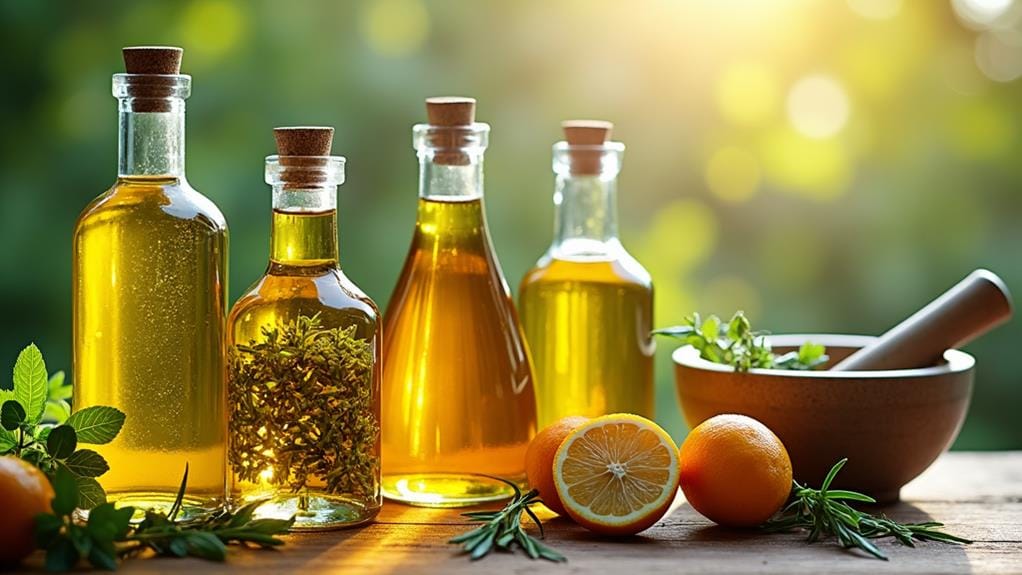
When infusing herbs into salad dressings, you'll need to choose between cold and hot infusion methods, each offering distinct flavor profiles and intensity levels.
For a smooth texture, you'll want to blend your infused mixture thoroughly, ensuring all ingredients are well incorporated and any herb particles are finely dispersed.
Remember that steeping time plays a crucial role in flavor extraction, so you'll need to adjust your infusion duration based on the herbs you're using and the desired strength of your dressing.
Cold vs. Hot Infusion
While both cold and hot infusion techniques can elevate your herb-infused salad dressings, they yield different results and are suited for various ingredients.
Cold infusion benefits include preserving delicate flavors and vibrant colors, making it ideal for tender herbs like basil, mint, and cilantro. To cold-infuse, simply combine your chosen herbs with oil or vinegar in a sealed container and refrigerate for 24 to 48 hours, shaking occasionally. This method produces a lighter, fresher taste that's perfect for summer salads.
Hot infusion techniques, on the other hand, are better suited for hardier herbs and spices like rosemary, thyme, and peppercorns. To hot-infuse, gently heat your oil or vinegar with the herbs over low heat for about 10 minutes, then strain and cool.
This method extracts more intense flavors and aromatics, creating robust dressings that pair well with heartier greens and roasted vegetables. You'll find that hot infusion produces deeper, more complex flavors in a shorter time frame, making it an efficient choice for quick, flavorful dressings.
Experiment with both methods to discover which best suits your palate and culinary creations.
Blending for Smooth Texture
For a silky-smooth texture in your herb-infused salad dressings, blending is key. By incorporating advanced blender techniques, you'll elevate your dressings from ordinary to extraordinary. Start by adding your liquid ingredients to the blender first, followed by softer herbs and seasonings. This order ensures a more efficient blending process and better texture enhancement.
When it comes to blending for smoothness, consider these innovative tips:
- Use a high-speed blender for ultra-smooth results
- Blend in short bursts, increasing speed gradually
- Strain your dressing through a fine-mesh sieve for the ultimate velvety texture
Don't be afraid to experiment with different blending times and speeds to achieve your desired consistency. For thicker dressings, you'll want to blend longer, while lighter vinaigrettes may require less time.
Remember, the goal is to emulsify the ingredients thoroughly, creating a homogeneous mixture that won't separate.
If you're working with tougher herbs like rosemary or thyme, consider pre-chopping them before blending to prevent any unwanted fibrous bits in your final product.
Steeping Time Matters
The art of infusing herbs into salad dressings boils down to mastering steeping times. You'll find that the duration of steeping directly impacts the herb potency in your dressing. For delicate herbs like basil or cilantro, a short steeping time of 15-30 minutes is often sufficient. These tender leaves release their flavors quickly, and oversteeping can lead to bitterness.
On the other hand, hardier herbs such as rosemary or thyme benefit from longer steeping durations. You'll want to let these infuse for at least an hour, sometimes up to overnight, to extract their full aromatic potential.
Remember, the steeping process isn't just about time; temperature plays a crucial role too. Hot oil or vinegar will accelerate infusion, while cold steeping requires more patience but can preserve delicate flavors.
Experiment with different steeping times to find your perfect balance. Start with shorter durations and taste-test regularly. You'll soon develop an intuition for when your infusion has reached its peak.
Mastering Herb-Oil Blending Ratios
To master herb-oil blending ratios for your salad dressings, you'll need to understand optimal herb-to-oil proportions, balance flavors effectively, and follow herb selection guidelines.
You'll find that the right ratio of herbs to oil can make or break your dressing, with too little herb resulting in a bland flavor and too much overpowering the other ingredients.
Optimal Herb-To-Oil Proportions
Mastering the art of herb-infused dressings comes down to striking the perfect balance between herbs and oil. The optimal herb-to-oil proportions can vary depending on the intensity of flavors you're aiming for and the specific herb varieties and oil types you're using. As a general rule, start with a 1:4 ratio of herbs to oil, adjusting as needed to achieve your desired flavor profile. For instance, consider using fresh ingredients like those in a Cucumber Mint Salad to enhance the aromatic qualities of your dressing.
When experimenting with different combinations, consider these key factors:
- Herb potency: Delicate herbs like basil require more volume, while robust herbs like rosemary need less.
- Oil viscosity: Lighter oils absorb flavors quickly, while heavier oils may need more herbs or infusion time.
- Infusion method: Cold infusions typically require more herbs than hot infusions.
To optimize your herb-to-oil proportions, start with small batches and keep detailed notes. You'll find that certain herb varieties pair better with specific oil types, allowing you to create unique flavor combinations.
Don't be afraid to push boundaries and try unconventional pairings – innovation often leads to delicious discoveries. Remember, the goal is to create a harmonious blend where neither the herbs nor the oil overpower each other, resulting in a perfectly balanced, zesty dressing.
Balancing Flavors Effectively
Building on the foundation of optimal herb-to-oil ratios, balancing flavors effectively takes your herb-infused dressings to the next level. To achieve culinary creativity, focus on blending sweet and savory elements while maintaining acidity balance.
Start by layering flavors, incorporating herbs with varying intensities to create depth, much like the blend of sweet watermelon with salty feta in a salad. Consider the herb freshness, as this impacts the overall taste profile of your dressing. You can also explore how contrasting ingredients, such as watermelon and feta, enhance flavor synergy in salads.
Texture contrast plays a crucial role in elevating your creation. Experiment with ingredient harmony by combining smooth oils with finely chopped herbs or adding crushed nuts for a subtle crunch.
As you refine your recipe, make seasoning adjustments to ensure a well-rounded taste. Don't shy away from bold combinations, but remember to maintain balance.
Pay attention to dressing thickness, as it affects how the flavors coat your salad ingredients. A thinner dressing might require more intense herb flavors, while a thicker one allows for subtler notes.
As you master these elements, you'll develop unique taste profiles that set your dressings apart. Remember, the key to innovation lies in understanding these principles and then pushing the boundaries of traditional flavor combinations.
Herb Selection Guidelines
When selecting herbs for your infused dressings, it's crucial to understand the art of blending ratios with oils. Start by considering the intensity of your chosen herbs and how they'll interact with your base oil. For robust herbs like rosemary or thyme, use a 1:4 herb-to-oil ratio. Delicate herbs such as basil or cilantro require a 1:2 ratio for optimal flavor extraction.
Consider these key points when selecting and blending herbs:
- Experiment with herb varieties to create unique flavor profiles
- Use seasonal herbs for freshness and to align with your menu
- Combine complementary herbs for depth and complexity
As you refine your technique, you'll discover that certain herb combinations work exceptionally well together. For example, pair mint with basil for a refreshing summer blend, or combine sage and thyme for a warming winter dressing.
Don't be afraid to push boundaries by incorporating unexpected herbs like lavender or lemon verbena.
Balancing Flavors in Dressings
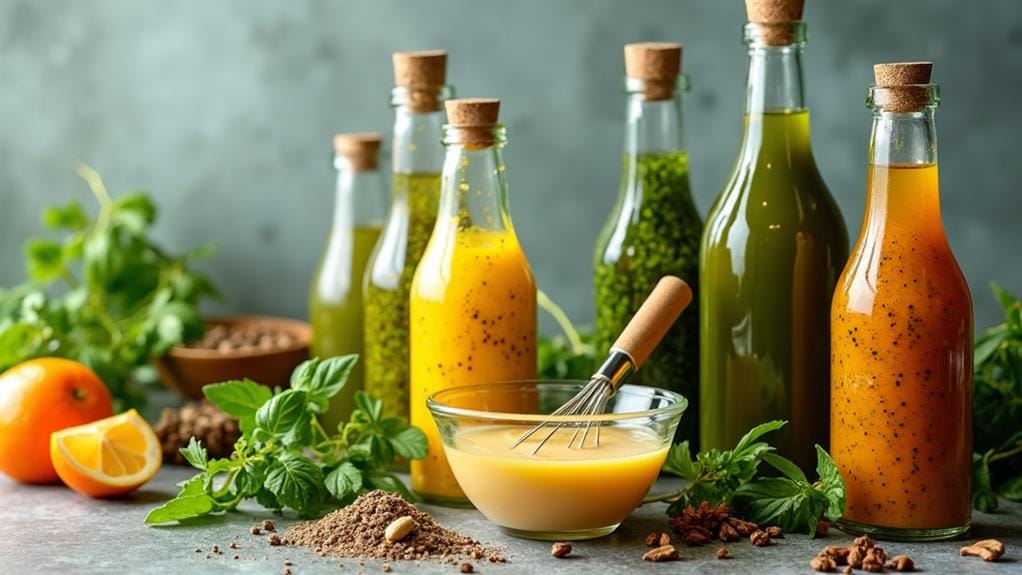
Creating a well-balanced herb-infused dressing is an art that requires careful attention to flavor profiles. You'll need to consider the tasting notes of each ingredient and how they interact to achieve sensory balance.
Start by identifying the dominant flavors in your chosen herbs and base ingredients. Then, experiment with culinary techniques to extract and blend these flavors effectively.
To achieve ingredient harmony, consider the five basic tastes: sweet, sour, salty, bitter, and umami. Your dressing should incorporate a mix of these to create a well-rounded flavor profile.
Don't be afraid to try unconventional dressing variations to suit different palate preferences. As you develop your recipe, make seasoning adjustments gradually, tasting as you go.
Remember that acidity plays a crucial role in balancing flavors. A squeeze of lemon or a splash of vinegar can brighten and unify your dressing.
Similarly, a touch of sweetness can counter bitterness or excessive acidity. By mastering these principles, you'll be able to craft innovative, herb-infused dressings that elevate any salad from ordinary to extraordinary.
Enhancing Dressings With Complementary Ingredients
To take your herb-infused dressings to the next level, you'll want to explore complementary ingredients that enhance and amplify the flavors of your chosen herbs. Understanding flavor profiles and ingredient synergy is key to creating innovative, mouth-watering combinations.
Consider the following elements to elevate your dressings:
- Textural contrast: Add crunch with toasted nuts or seeds
- Sweetness balance: Incorporate honey, maple syrup, or fruit preserves
- Umami depth: Experiment with miso, nutritional yeast, or aged cheeses
When pairing complementary ingredients, think about the characteristics of your base herbs. For example, if you're working with bold, peppery basil, consider adding sweet tomatoes or creamy mozzarella to balance the flavor profile.
For a dressing featuring delicate tarragon, try incorporating tangy citrus or mild shallots to enhance its subtle anise notes. Don't be afraid to push boundaries and test unexpected combinations. A splash of fruit juice or a dollop of yogurt can transform a simple vinaigrette into a complex, multi-dimensional dressing.
Storing and Preserving Herb-Infused Dressings
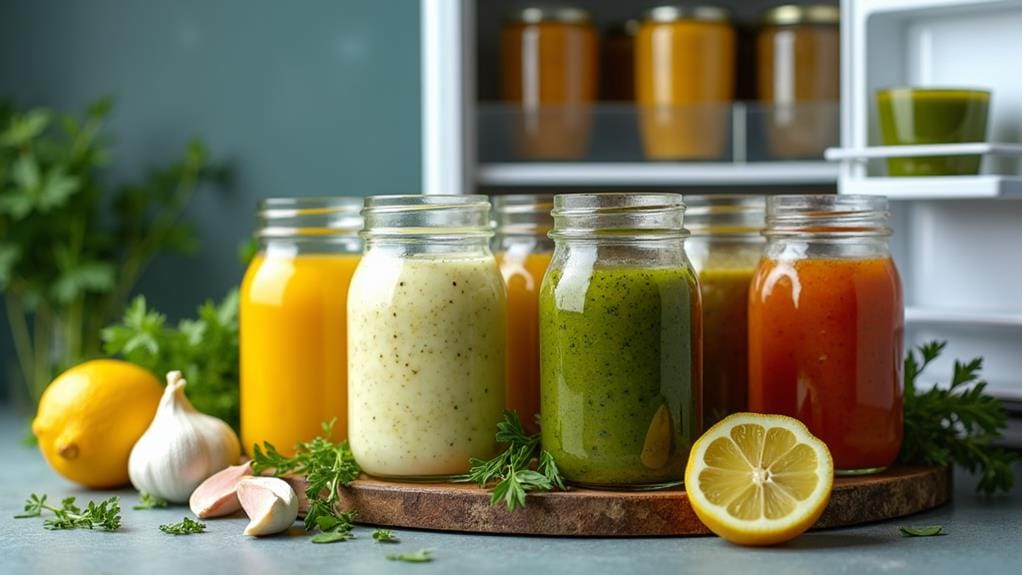
Now that you've crafted your perfect herb-infused dressing, it's time to ensure its longevity. Proper storage is crucial for maintaining flavor and herb potency. Choose airtight storage containers that shield your dressing from light exposure, which can degrade the herbs' quality. Glass containers are ideal, as they don't absorb flavors or odors.
Refrigeration is key to extending your dressing's shelf life. Most herb-infused dressings will last 5-7 days when properly refrigerated. For optimal flavor preservation, store your dressing in the main body of the fridge, not the door where temperature fluctuations occur.
If you've made a large batch, consider freezing methods to prolong its life. Pour the dressing into ice cube trays, freeze, then transfer to freezer bags for easy portioning.
To maintain herb potency, avoid frequent temperature changes. When using your dressing, remove only what you need and return the rest to the fridge immediately.
If you notice any changes in color, smell, or texture, it's best to discard the dressing. By following these storage and preservation tips, you'll ensure your herb-infused creations remain fresh and flavorful for every salad.
Pairing Dressings With Salad Ingredients
The art of pairing herb-infused dressings with salad ingredients is crucial for creating a harmonious and flavorful dish. When selecting your dressing, consider the flavor profiles of both the herbs and the salad components. A robust basil and garlic dressing pairs beautifully with tomatoes and mozzarella, while a delicate lemon and dill vinaigrette complements seafood-based salads.
To achieve optimal salad ingredient synergy, follow these guidelines:
- Match the intensity of your dressing with the strength of your salad ingredients
- Consider the texture of your ingredients and how they'll interact with the dressing
- Balance flavors by pairing contrasting tastes, such as sweet dressings with bitter greens
Don't be afraid to experiment with unexpected combinations. A spicy cilantro-lime dressing can elevate a simple mixed green salad, while a creamy avocado and herb dressing pairs surprisingly well with grilled vegetables.
Elevating Dishes With Herb Dressings
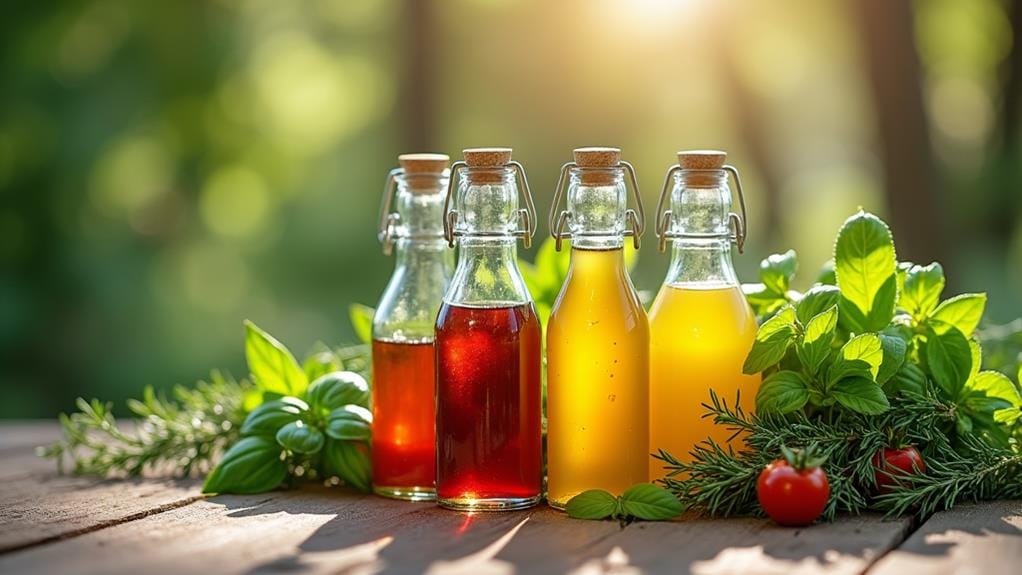
Elevating dishes with herb-infused dressings isn't just about enhancing salads; it's a culinary technique that can transform a wide range of recipes. You'll find that these versatile concoctions can breathe new life into grilled meats, roasted vegetables, and even grain bowls.
By experimenting with herb variety, you'll discover endless possibilities to excite your palate and impress your guests. Consider using a basil-infused vinaigrette to drizzle over caprese skewers or as a marinade for chicken. A dill-lemon dressing can elevate simple steamed fish, while a rosemary-garlic blend works wonders on roasted potatoes.
Don't forget about the dressing acidity; it's crucial for balancing flavors and cutting through rich dishes. A tangy herb dressing can brighten up a hearty stew or liven up a sandwich.
To maximize the impact of your herb dressings, try infusing them into mayonnaise for a zesty spread, or use them as a finishing touch on soups. You can even incorporate them into your baking, adding depth to savory muffins or focaccia.
The key is to think beyond the salad bowl and let your creativity flow.
Frequently Asked Questions
Can Herb-Infused Dressings Be Used as Marinades for Meats and Vegetables?
Absolutely! You'll find herb-infused dressings make excellent marinades. They'll enhance flavors and tenderize proteins, offering marinade benefits beyond salads. Experiment with different herbs to create innovative flavor profiles for your meats and vegetables. It's a game-changer for your cooking!
Are There Any Herbs to Avoid When Making Salad Dressings?
Imagine you're a painter: not all colors blend well. Similarly, avoid overpowering herbs like epazote or rue. They'll disrupt your dressing's flavor profile and consistency. Instead, experiment with innovative combinations that'll elevate your culinary canvas to new heights.
How Can I Make Herb-Infused Dressings Suitable for Vegan or Dairy-Free Diets?
You can create vibrant vegan dressings by using plant-based alternatives like cashew cream, avocado, or coconut milk. Experiment with flavor balancing by combining herbs with citrus, vinegars, and nutritional yeast for a dairy-free umami kick.
What Equipment Is Essential for Creating Herb-Infused Salad Dressings at Home?
You'll need a salad shaker for easy mixing and an immersion blender to emulsify ingredients. Don't forget sharp knives for herb prep, measuring spoons, and airtight containers. Experiment with a mortar and pestle for unique flavor profiles.
Can I Use Dried Herbs Instead of Fresh Ones in Salad Dressings?
Did you know dried herbs are 3-4 times more potent than fresh? You can use them in dressings, but adjust quantities. They'll pack a flavor punch, but you'll miss out on fresh herbs' vibrant intensity. Experiment for innovative blends!
Final Thoughts
As you embark on your herb-infused dressing journey, remember that the key to success lies in experimentation. You'll discover unexpected flavor combinations that'll tantalize your taste buds and elevate your salads to new heights. Don't be afraid to push boundaries and trust your instincts. With practice, you'll develop a keen sense for balancing herbs, oils, and complementary ingredients. The world of zesty, herb-infused dressings awaits – what delicious concoctions will you create next?