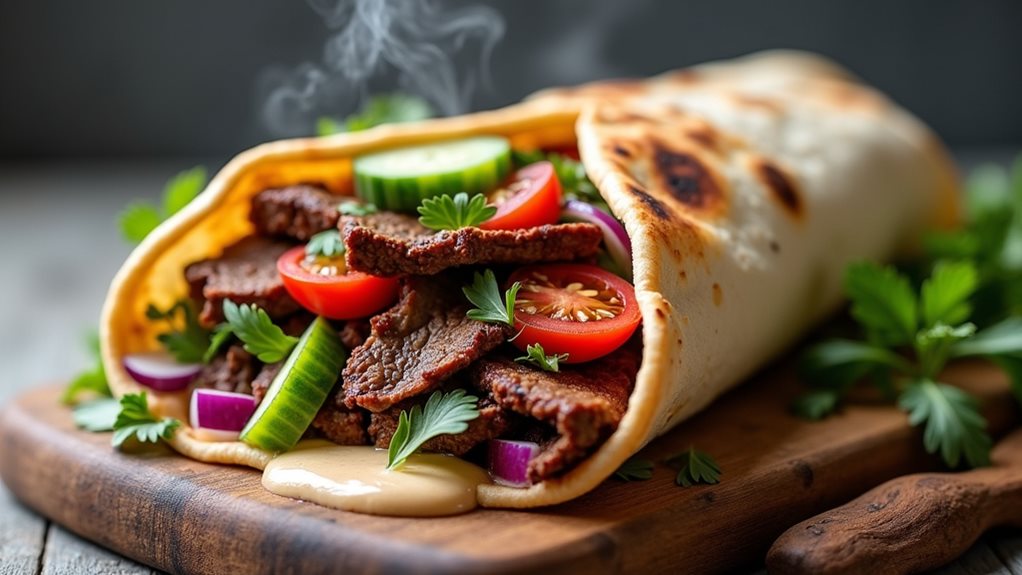
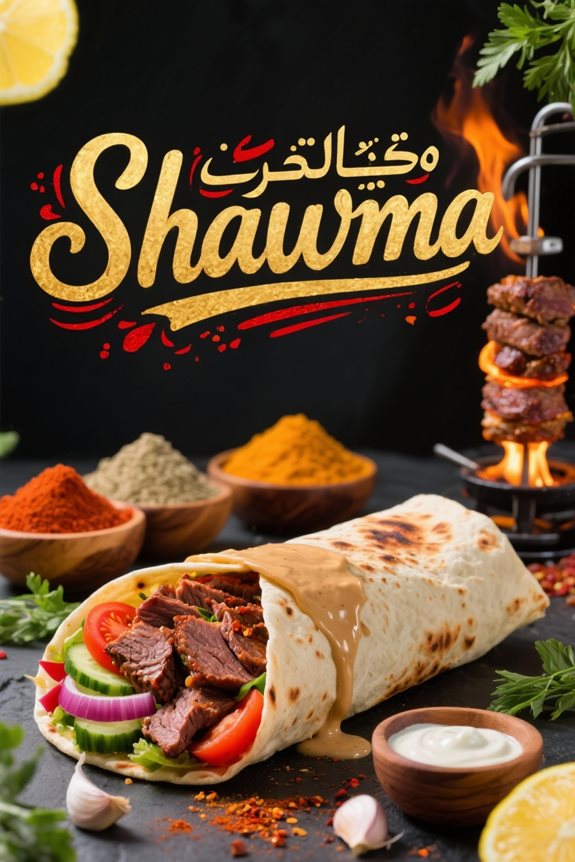
I’ve fallen in love with shawarma, a Middle Eastern dish that transforms ordinary meat into something extraordinary through careful marination and slow cooking. Whether you prefer beef, chicken, or lamb, the secret lies in the aromatic blend of spices that infuse every tender slice. I’ll show you how to recreate this street food favorite at home, from selecting the right cuts to achieving that perfect balance of flavors. The versatility of shawarma might surprise you—there’s much more to discover beyond the basic wrap.
Key Takeaways
- Shawarma is a Middle Eastern dish traditionally made with meat (beef, lamb, or chicken) slow-cooked on a vertical rotisserie.
- The meat is typically marinated in spices like cinnamon, black pepper, and garlic before being thinly sliced and served.
- It’s commonly served wrapped in pita bread or over rice with various toppings like pickled vegetables and yogurt sauce.
- Home cooks can recreate shawarma without special equipment by slow-baking marinated meat until tender with crispy edges.
- Shawarma offers versatile serving options and can be customized with different proteins, including vegetarian alternatives like tofu.
Why You’ll Love this Middle Eastern Beef Shawarma
Every bite of this authentic beef shawarma delivers the rich, aromatic flavors of Middle Eastern cuisine right to your kitchen.
I’ve perfected this recipe to capture the essence of traditional shawarma without requiring a vertical rotisserie. The overnight marinade infuses the sirloin or ribeye with a perfect blend of cinnamon, garlic, and black pepper, creating those distinctive flavor profiles you crave.
What makes this recipe special is its versatility—serve it over fluffy rice for a complete meal or wrapped in warm pita bread for an authentic street food experience.
You’ll appreciate how the slow-baked method creates tender, juicy meat with crispy edges that mimic traditional cooking techniques. The simple ingredients are likely already in your pantry, making this exotic dish surprisingly accessible for weeknight cooking or weekend entertaining.
What Ingredients are in Middle Eastern Beef Shawarma?
Making authentic beef shawarma at home isn’t as complicated as you might think. The magic of this Middle Eastern classic lies in its simple yet flavorful marinade that transforms ordinary beef into something extraordinary. With just a handful of ingredients, you can create a dish that’s aromatic, tender, and absolutely mouthwatering.
- 1 1/2 pounds beef (preferably sirloin or ribeye)
- 1/4 cup vinegar
- 1/4 cup oil
- 1 teaspoon salt
- 1 teaspoon cinnamon
- 1/2 teaspoon black pepper
- 2 cloves garlic
When shopping for ingredients, the quality of your beef matters greatly. Look for well-marbled cuts like sirloin or ribeye, as they’ll stay tender during the cooking process.
The spice profile here is relatively minimal, focusing on cinnamon as the star flavor, but you could certainly add other traditional shawarma spices like cumin, cardamom, or allspice if you want to expand the flavor profile.
And while the recipe doesn’t specify what type of oil or vinegar to use, a neutral cooking oil and white vinegar work perfectly fine, though olive oil and apple cider vinegar would add even more depth to this Middle Eastern favorite.
How to Make this Middle Eastern Beef Shawarma
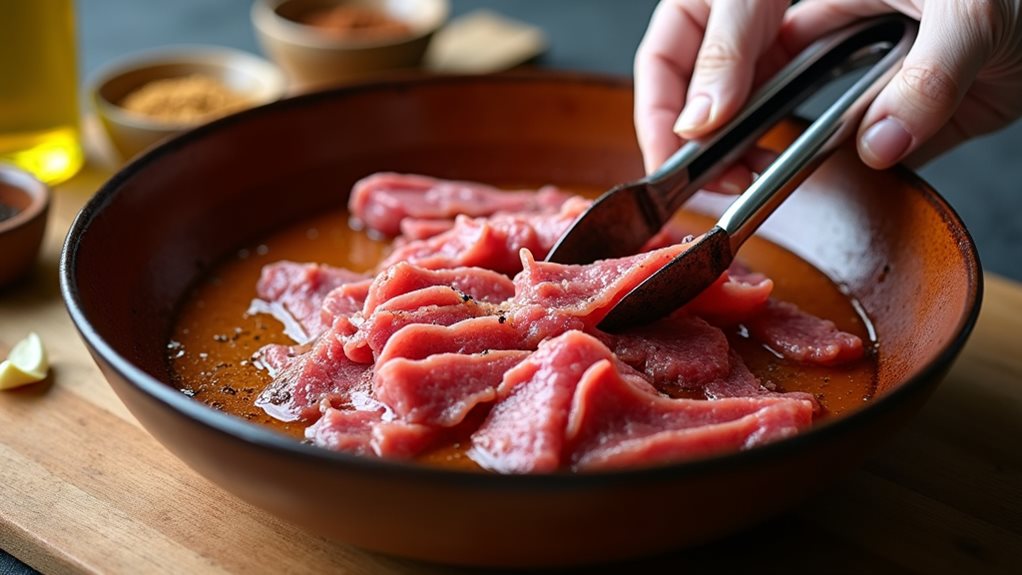
Making authentic beef shawarma at home is surprisingly simple, though it does require a bit of patience. Start by selecting about 1 1/2 pounds of high-quality beef—sirloin or ribeye works beautifully for this recipe. Slice the beef into long, thin strips, going against the grain for maximum tenderness.
Then, prepare your marinade by combining 1/4 cup vinegar, 1/4 cup oil, 1 teaspoon salt, 1 teaspoon cinnamon, 1/2 teaspoon black pepper, and 2 cloves of minced garlic in a bowl. This aromatic mixture is what gives shawarma its distinctive flavor profile, a perfect balance of tangy, savory, and warm spices.
Now comes the waiting game—patience pays off in flavor dividends! Toss your beef strips in the marinade, making certain each piece gets thoroughly coated. Cover the bowl and refrigerate overnight, or at least 8 hours if you’re in a rush.
The next day, preheat your oven to 350°F and transfer the marinated meat to a baking dish. Cover it tightly with foil to keep the moisture in and pop it in the oven for about an hour. Don’t just set it and forget it, though—you’ll want to give everything a good stir every 15 minutes to guarantee even cooking and to let those flavors meld beautifully. The meat should become tender and develop those characteristic caramelized edges we all crave in good shawarma. For a truly authentic experience, consider investing in a vertical rotisserie grill to achieve that traditional stacked meat cooking method used in Middle Eastern restaurants.
Once done, your shawarma is ready to serve! Traditionally, it’s wonderful wrapped in warm pita bread with a drizzle of tahini sauce and some fresh vegetables like tomatoes, cucumbers, and onions.
For a heartier meal, serve it over a bed of fragrant rice. Want to take it up a notch? Add some pickles, a sprinkle of sumac, or a dollop of garlic yogurt sauce. The beauty of homemade shawarma is its versatility—you can customize the garnishes to suit your taste preferences while still enjoying that authentic Middle Eastern flavor profile.
Middle Eastern Beef Shawarma Substitutions and Variations
While mastering the classic beef shawarma recipe is rewarding, the beauty of this Middle Eastern staple lies in its adaptability.
I’ve found that chicken thighs or lamb shoulder make excellent alternatives to beef, each bringing its own distinctive flavor profile. If you’re vegetarian, try firm tofu or seitan marinated in the same spice blend.
Don’t hesitate to adjust the spice mixture to your preference. Add cumin or cardamom for earthier notes, or incorporate paprika for a hint of smokiness.
The marinade can be improved with lemon juice instead of vinegar for a brighter flavor.
For serving variations, I recommend trying shawarma in a wrap with tahini sauce, as a topping for hummus, or even as a pizza topping.
The versatility of shawarma makes it perfect for countless creative interpretations.
What to Serve with Middle Eastern Beef Shawarma
When serving a flavorful beef shawarma as your main dish, the accompanying sides can elevate the entire meal to new heights.
I recommend starting with traditional tabbouleh salad, which offers a invigorating contrast with its bright lemon and parsley flavors. Creamy hummus and baba ganoush provide excellent dipping options for both the meat and warm pita bread.
For a complete experience, I always include pickled vegetables like turnips or cucumbers, which cut through the richness of the beef. A simple yogurt sauce with garlic, cucumber, and mint (tzatziki) adds cooling zest that balances the warm spices.
If you’re looking for something heartier, serve your shawarma with fragrant rice pilaf or crispy seasoned fries, which have become popular accompaniments in many Middle Eastern restaurants.
Final Thoughts
Beef shawarma stands as one of the most rewarding Middle Eastern dishes you can prepare at home. The combination of tender meat, aromatic spices, and that distinctive marinade creates a meal that’s both comforting and exotic.
I’ve found that patience truly pays off with this dish—allowing the meat to marinate overnight makes all the difference in developing those complex flavors.
Don’t be intimidated by the process; even if your first attempt isn’t perfect, the results will still be delicious. Remember to slice your beef thinly and stir regularly during baking to guarantee even cooking.
Whether served with fluffy rice, wrapped in warm pita, or accompanied by fresh vegetables, shawarma brings a taste of Middle Eastern cuisine directly to your table. Just as the gradual broth addition is crucial for creating the perfect texture in risotto, taking time with each step of your shawarma preparation ensures optimal results. It’s a versatile dish that’s sure to become a favorite in your recipe collection.