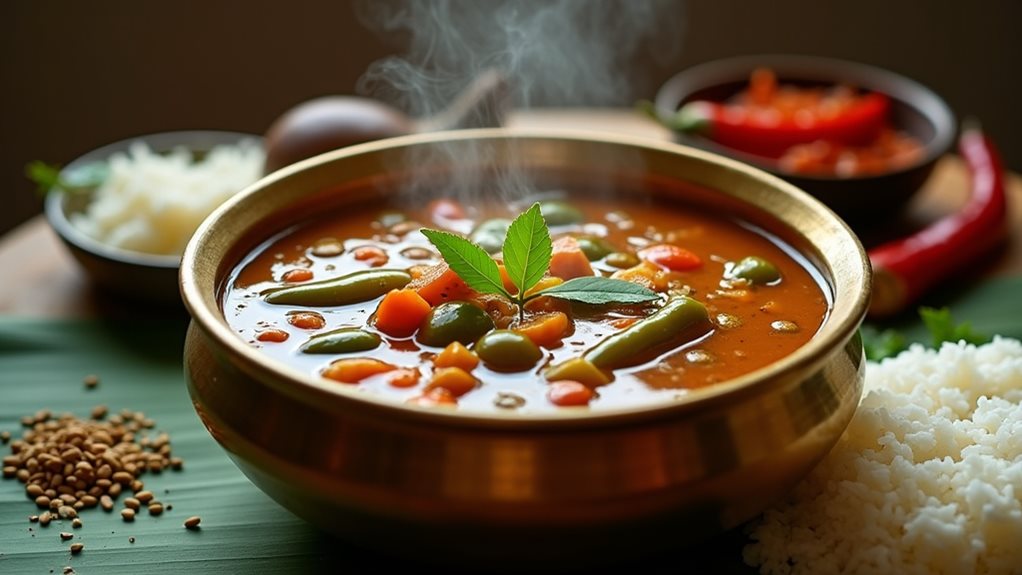
I’ve fallen in love with sambar, a vibrant South Indian stew that balances tangy tamarind with aromatic spices and hearty lentils. When I prepare this dish at home, I’m always amazed by how the complex flavors develop from such simple ingredients. The key lies in the perfect spice blend and tempering technique that transforms ordinary vegetables and dal into something extraordinary. If you’ve never tried making authentic sambar yourself, you’re missing out on one of India’s most beloved culinary treasures.
Key Takeaways
- Sambar is a tangy, spicy South Indian lentil stew made with tamarind, vegetables, and spices.
- The dish balances sourness from tamarind with heat from spices and sweetness from vegetables.
- Traditional sambar uses tuvar dal (yellow split peas), spice paste, and a tempering of mustard seeds.
- Vegetables can vary based on availability, with common options including bell peppers, tomatoes, eggplant, and carrots.
- Sambar is typically served with rice, idli, or dosa, often accompanied by coconut chutney.
Why You’ll Love this Fragrant South Indian Sambar
Why does sambar hold such a special place in South Indian cuisine? This aromatic lentil stew represents the perfect balance of tangy, spicy, and savory flavors that complement rice and dosas beautifully.
I’m particularly drawn to how the tamarind pulp provides that signature sourness while the ground spice paste adds incredible depth.
You’ll appreciate how this recipe transforms humble ingredients—split peas, vegetables, and spices—into something truly extraordinary. The technique of tempering (adding hot spiced oil at the end) enhances the dish, releasing crucial oils from the mustard and cumin seeds.
What makes sambar special is its versatility; you can adjust the vegetables based on what’s in season or your preference. The resulting dish offers complex flavors that will transport you directly to South India.
What Ingredients are in Fragrant South Indian Sambar?
Sambar is a fragrant South Indian staple that combines tangy tamarind, hearty lentils, and aromatic spices into one delicious dish. This comforting stew is perfect alongside dosas, idlis, or simply with rice.
The beauty of sambar lies in its complex flavor profile—simultaneously spicy, tangy, and slightly sweet—achieved through a careful balance of ingredients that might seem intimidating at first glance but come together beautifully.
- 1 cup yellow split peas (tuvar dal)
- 2 cups water (for cooking dal)
- 1/2 cup tamarind pulp
- 1/2 cup water (for tamarind)
- 1 green bell pepper, sliced
- 1 tomato, chopped
- 1 1/2 teaspoons coriander seeds
- 1 teaspoon yellow lentils (chana dal)
- 1 tablespoon unsweetened flaked coconut
- 2 dried red chile peppers
- 2 teaspoons vegetable oil
- 1 teaspoon mustard seed
- 1 teaspoon cumin seed
- 1/4 teaspoon asafoetida powder
When shopping for these ingredients, the quality of your spices makes a huge difference in the final flavor. Fresh spices will give you that authentic aroma that wafts through South Indian kitchens.
If you can’t find asafoetida (also called hing), it’s worth seeking out at an Indian grocery store—its unique flavor is difficult to substitute. The tamarind provides the signature tanginess, but in a pinch, lemon juice can work as an alternative, though the depth of flavor won’t be quite the same.
How to Make this Fragrant South Indian Sambar
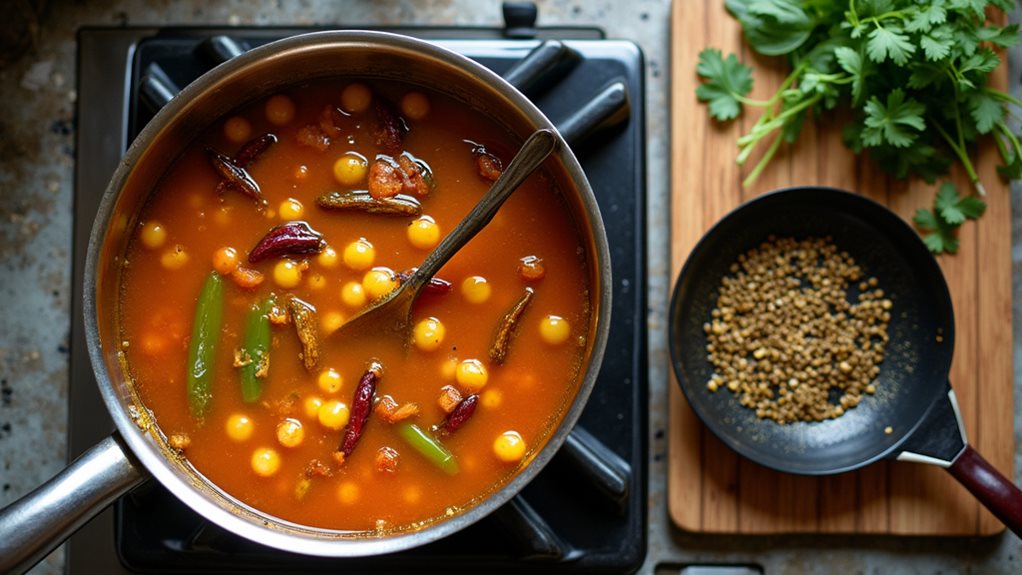
Making authentic sambar at home starts with building layers of flavor. Begin by boiling 1 cup of yellow split peas (tuvar dal) in 2 cups of water until they become soft and tender, about 15 minutes.
While the dal cooks, prepare your tamarind base by mixing 1/2 cup of tamarind pulp with 1/2 cup of water in a separate saucepan, bringing it to a gentle boil. This tangy liquid forms the backbone of good sambar. Add 1 sliced green bell pepper and 1 chopped tomato to the tamarind mixture, allowing them to soften as the liquid reduces by about half.
The aromatic spice paste is where the magic happens. Grind together 1 1/2 teaspoons of coriander seeds, 1 teaspoon of yellow lentils (chana dal), 1 tablespoon of unsweetened flaked coconut, and 2 dried red chile peppers until you have a velvety paste.
This fragrant mixture gets stirred into your tamarind sauce along with the cooked yellow split peas, creating a harmonious blend of spicy, tangy, and savory flavors.
For the final touch that makes sambar truly special, prepare the tempering (or tadka). Heat 2 teaspoons of vegetable oil in a small skillet and add 1 teaspoon of mustard seeds, 1 teaspoon of cumin seeds, and 1/4 teaspoon of asafoetida powder.
When the mustard seeds begin to pop and dance in the pan, quickly pour this aromatic oil mixture into your sambar. The sizzling spices will release their vital oils, infusing the entire dish with their distinctive aroma.
Give everything a good stir before serving your homemade sambar piping hot. For perfectly cooked rice to accompany your sambar, consider using a professional rice cooker that ensures consistent results every time.
Fragrant South Indian Sambar Substitutions and Variations
While traditional South Indian sambar follows time-honored ingredients and methods, you’ll be pleased to discover several adaptable elements that allow for personalization without sacrificing authenticity.
I’ve found that vegetables can be easily substituted based on seasonal availability—try using carrots, eggplant, or drumsticks instead of bell peppers. If tamarind isn’t accessible, a tablespoon of lemon juice provides comparable tanginess.
Don’t have asafoetida? A small amount of minced garlic works wonderfully. For a protein boost, I sometimes add diced tofu or additional lentils.
The spice level is entirely adjustable; reduce or increase dried chilies according to your preference. You can also experiment with different lentil combinations—mixing toor dal with masoor dal creates a unique texture and flavor profile that’s still recognizably sambar.
What to Serve with Fragrant South Indian Sambar
To complete your South Indian dining experience, several traditional accompaniments pair beautifully with a steaming bowl of sambar.
I always serve fluffy steamed rice as the foundation—the neutral canvas absorbs the sambar’s complex flavors perfectly. Idli (steamed rice cakes) and dosa (fermented rice crepes) are equally authentic options, their slight tanginess complementing the spicy-sour profile of the sambar.
Don’t forget to include coconut chutney, which provides cooling relief between bites, and a small portion of pickle for punctuating bursts of intensity.
For a complete meal, I recommend adding a simple vegetable poriyal (dry curry) or crispy papadums on the side. These combinations create a balanced meal showcasing the diverse textures and flavors that make South Indian cuisine so beloved.
Final Thoughts
Sambar stands as one of South India’s greatest culinary treasures, a dish that perfectly balances tangy tamarind, earthy lentils, and aromatic spices in harmonious complexity.
I’ve found that mastering this recipe brings a versatile addition to your culinary repertoire—one that improves with practice and personal adjustments. Don’t be intimidated by the ingredient list; the process breaks down into manageable steps that reward you with authentic flavors.
What I love most about sambar is its adaptability. You can substitute vegetables based on seasonal availability or preference without compromising its core.
Remember that the tempering of spices at the end isn’t just decorative; it’s transformative, releasing crucial oils that define sambar’s character.
Whether served with rice, idli, or dosa, this humble stew continues to nourish generations with its perfect balance of nutrition and flavor. Much like sous vide cooking, sambar retains more nutrients compared to traditional cooking methods, preserving the essential vitamins and minerals in vegetables.