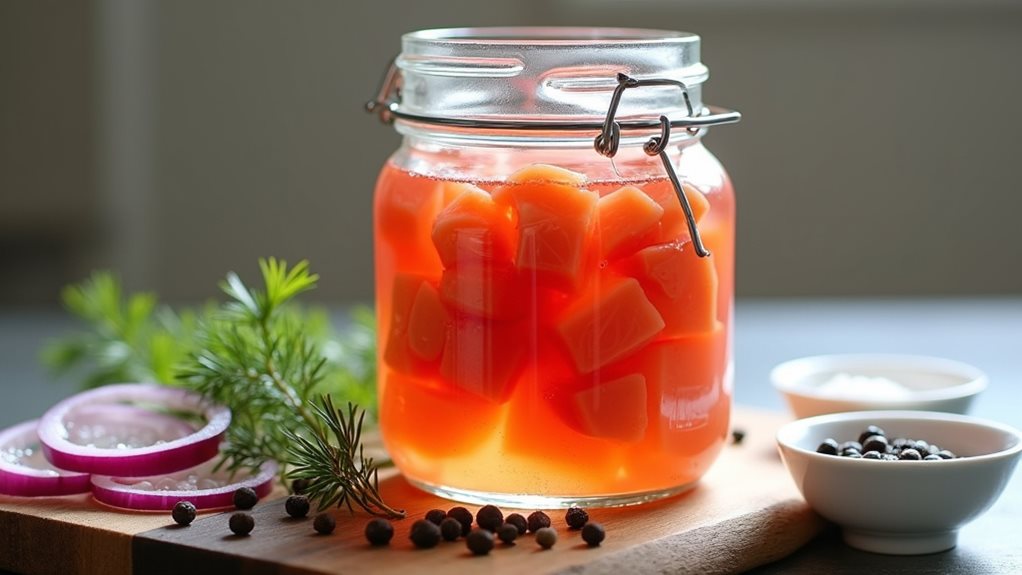

I’ve spent years perfecting my pickled salmon recipe, and I’m thrilled to share it with you today. Salmon’s rich flavor and impressive nutritional profile make it an ideal candidate for pickling—the process improves its natural taste while preserving all those beneficial omega-3 fatty acids. Whether you’re serving guests or preparing a special treat for yourself, this versatile preparation method transforms ordinary salmon into something extraordinary. The tangy, slightly sweet result pairs beautifully with so many accompaniments, and you’ll soon discover why it’s become my signature dish.
Key Takeaways
- Salmon is a versatile fish that can be prepared through various methods including pickling, which requires only four basic ingredients.
- Wild-caught salmon offers optimal texture and flavor, whether used fresh or previously frozen.
- Pickled salmon makes an excellent protein for appetizers, salads, and sandwiches with its enhanced tangy flavor.
- The pickling process involves a simple brine of water, vinegar, and salt, with a minimum 24-hour refrigeration period.
- For serving, pair pickled salmon with complementary items like crusty bread, cream cheese, capers, and fresh herbs.
Why You’ll Love this Homemade Pickled Salmon
While many home cooks shy away from preserving seafood, this homemade pickled salmon recipe will quickly become a staple in your culinary repertoire. I’ve developed this method to be straightforward yet impressive, requiring just four simple ingredients: fresh salmon, kosher salt, water, and vinegar.
What makes this pickled salmon special is its versatility. I use it for elegant appetizers, quick protein additions to salads, and even as a sandwich filling when I’m in a hurry.
The pickling process preserves the salmon’s delicate texture while improving its flavor with a subtle tanginess that can’t be found in store-bought versions.
You’ll appreciate how the preparation requires minimal equipment—just standard pint jars with lids and rings that you likely already have in your kitchen cabinets.
What Ingredients are in Homemade Pickled Salmon?
Making pickled salmon at home is surprisingly simple, requiring just a handful of basic ingredients that work together to create that perfect tangy, preserved fish that’s both delicious and versatile.
The magic happens when the acidic vinegar meets the rich salmon, creating a flavor transformation that’s absolutely worth the minimal prep work. The salt acts as both a preservative and flavor booster, while the water helps create the perfect brine solution.
- Fresh salmon (preferably wild-caught)
- Kosher salt (not table salt, as the larger crystals dissolve better in brining)
- Water (filtered works best)
- Vinegar (white distilled vinegar is standard, but apple cider vinegar works too)
When selecting your ingredients, quality matters tremendously. Opt for the freshest salmon you can find—frozen works in a pinch, but fresh will give you the best texture after pickling.
The type of vinegar can subtly change the flavor profile, so feel free to experiment once you’ve mastered the basic recipe. Some people add additional flavorings like dill, peppercorns, or bay leaves, but the four core ingredients listed above are all you really need for a classic batch of homemade pickled salmon.
Just make sure your pint jars, lids, and rings are properly sterilized before you begin the pickling process.
How to Make this Homemade Pickled Salmon
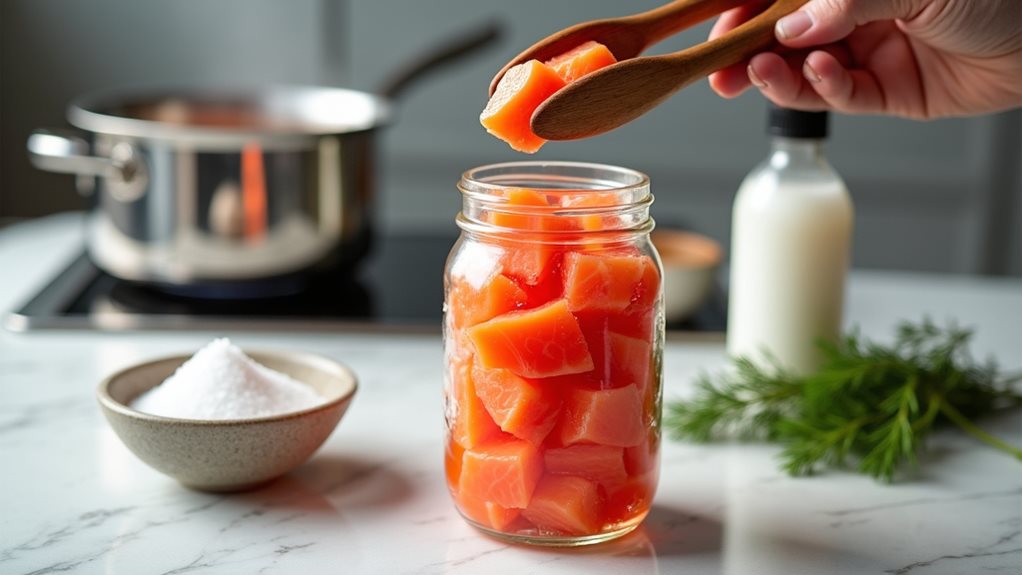
Making your own pickled salmon is surprisingly simple and requires just a handful of ingredients. Start by gathering fresh salmon, kosher salt, water, and vinegar, along with your pint jars, lids, and rings for proper storage.
The process begins with cutting your salmon into bite-sized chunks, perfect for snacking or adding to a charcuterie board later. You know those fancy jars of pickled fish at specialty stores that cost a small fortune? This homemade version delivers the same delicious flavor for a fraction of the price.
Once your salmon is cut, prepare a brine by mixing water, vinegar, and kosher salt in a saucepan and bringing it to a gentle boil. The ratio is typically 2 parts water to 1 part vinegar, with about 2 tablespoons of kosher salt per quart of liquid, but you can adjust to taste.
While that’s heating up, pack your salmon pieces into clean pint jars, leaving about an inch of headspace at the top. When the brine has cooled slightly (still warm but not scalding), pour it over the salmon, making sure all pieces are fully submerged.
Seal the jars with lids and rings, then refrigerate for at least 24 hours before enjoying. The longer it sits, the more flavorful it becomes, with the perfect balance developing after about 3-4 days. For a crispy texture alternative, you could use a professional electric fryer to create delicious fried salmon bites instead of the pickled version.
Homemade Pickled Salmon Substitutions and Variations
Though the basic pickled salmon recipe delivers fantastic results, you can customize it to suit your taste preferences or work with what’s available in your pantry.
I find that adding thinly sliced onions, fresh dill sprigs, or whole peppercorns creates delightful flavor variations. You can substitute white vinegar with apple cider vinegar for a slightly fruity undertone, or try rice vinegar for a milder acidity.
Don’t hesitate to experiment with additional spices like mustard seeds, bay leaves, or coriander. If you can’t source fresh salmon, high-quality canned salmon works in a pinch—just reduce the brining time.
For heat lovers, I recommend adding sliced jalapeños or a pinch of red pepper flakes. Remember to maintain the salt-to-water ratio regardless of your additions to guarantee proper preservation.
What to Serve with Homemade Pickled Salmon
Pickled salmon shines brightest when paired with complementary accompaniments that balance its tangy, savory profile.
I recommend serving it with crusty artisanal bread or crisp crackers, which provide the perfect textural contrast to the tender fish. Cream cheese or crème fraîche dollops alongside create a luxurious mouthfeel that tempers the vinegar’s acidity.
For a complete appetizer spread, I add thinly sliced red onions, capers, and fresh dill to improve the salmon’s briny qualities.
When hosting, I arrange these components on a wooden board with lemon wedges for squeezing. The citrus brightness cuts through the richness wonderfully.
If you’re planning a more substantial meal, consider pairing your pickled salmon with a simple cucumber salad dressed with yogurt and fresh herbs.
Final Thoughts
As I’ve guided you through this pickled salmon adventure, I’ve come to appreciate how this preservation method transforms an everyday fish into something truly remarkable.
The simple combination of salmon, kosher salt, water, and vinegar creates a versatile delicacy that can elevate countless meals.
I encourage you to experiment with your own variations—perhaps adding dill, peppercorns, or even a touch of sugar to develop your signature recipe.
Don’t hesitate to adjust the vinegar ratio if you prefer a milder or stronger flavor profile. Remember to always use proper canning techniques to guarantee food safety.
Using non-iodized salt like sea salt or kosher is essential as iodized varieties can inhibit the fermentation process.
Pickled salmon isn’t just about preservation; it’s about creating something uniquely delicious that connects us to culinary traditions spanning generations.
I hope this guide inspires your own preservation expedition.