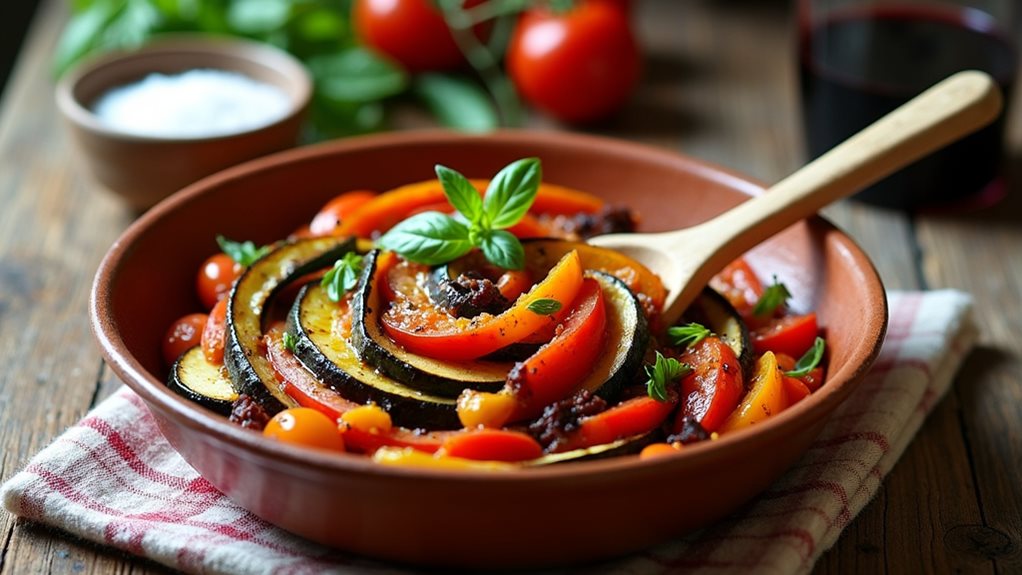
I’ve fallen in love with ratatouille over the years, not only for its vibrant colors but for its incredible versatility in my kitchen. This rustic Mediterranean dish transforms humble vegetables into something truly special, with layers of flavor that develop as eggplant, zucchini, and peppers meld together. I’ll show you how to create this classic vegetable medley that can serve as both an elegant side dish or a satisfying main course. The best part? It’s even better the next day.
Key Takeaways
- Ratatouille is a traditional Mediterranean dish featuring simmered vegetables like eggplant, zucchini, peppers, and tomatoes.
- The dish requires simple cooking techniques, mainly sautéing vegetables before allowing them to simmer together.
- Ratatouille is versatile and can be served as a side, over pasta, with crusty bread, or alongside proteins.
- Fresh herbs and olive oil are essential for developing the authentic Mediterranean flavor profile.
- The dish can be customized with ingredient substitutions like yellow squash, mushrooms, or beans for different variations.
Why You’ll Love this Rustic Mediterranean Ratatouille
Everyone deserves to experience the vibrant flavors of a traditional Mediterranean ratatouille, with its colorful medley of summer vegetables simmered to perfection. I’m excited to share this rustic dish that transforms simple ingredients into something truly extraordinary.
What makes this ratatouille special is how the olive oil gently coaxes flavor from each vegetable—eggplant, zucchini, peppers, and tomatoes—while Italian seasoning ties everything together. You’ll appreciate how the vegetables maintain their individual character while creating a harmonious blend. It’s incredibly versatile too; serve it as a side dish, over pasta, or with crusty bread to soak up the savory juices.
Best of all, this recipe doesn’t demand complicated techniques, just some patience as the vegetables simmer and meld together.
What Ingredients are in Rustic Mediterranean Ratatouille?
Ratatouille, that colorful symphony of Mediterranean vegetables, is one of those dishes that tastes even better the next day. The ingredients are surprisingly simple, but when they come together, they create a rich tapestry of flavors that transport you straight to the sun-drenched countryside of Provence. With just a handful of fresh vegetables and some basic seasonings, you can create this rustic, comforting dish that celebrates summer’s bounty.
- 1½ tablespoons olive oil
- 2 cloves garlic, minced
- 2 medium onions, thinly sliced
- ¾ pound eggplant, peeled and diced
- ½ pound zucchini, unpeeled and sliced
- 1 sweet green pepper, sliced into rings
- 2 teaspoons Italian seasoning
- 1 teaspoon sugar
- Salt (optional)
- Pepper to taste
- 4 medium fresh or canned tomatoes, peeled and sliced
The quality of ingredients really matters in a dish as simple as ratatouille. Whenever possible, try to use fresh, in-season vegetables for the most vibrant flavors. The tomatoes, in particular, can make or break your dish—garden-fresh summer tomatoes will create a sweeter, more complex sauce than their winter counterparts. And while the recipe lists salt as optional, a modest pinch can really help bring out the natural flavors of the vegetables. Just remember, you can always add more seasoning later, but you can’t take it away once it’s in there!
How to Make this Rustic Mediterranean Ratatouille
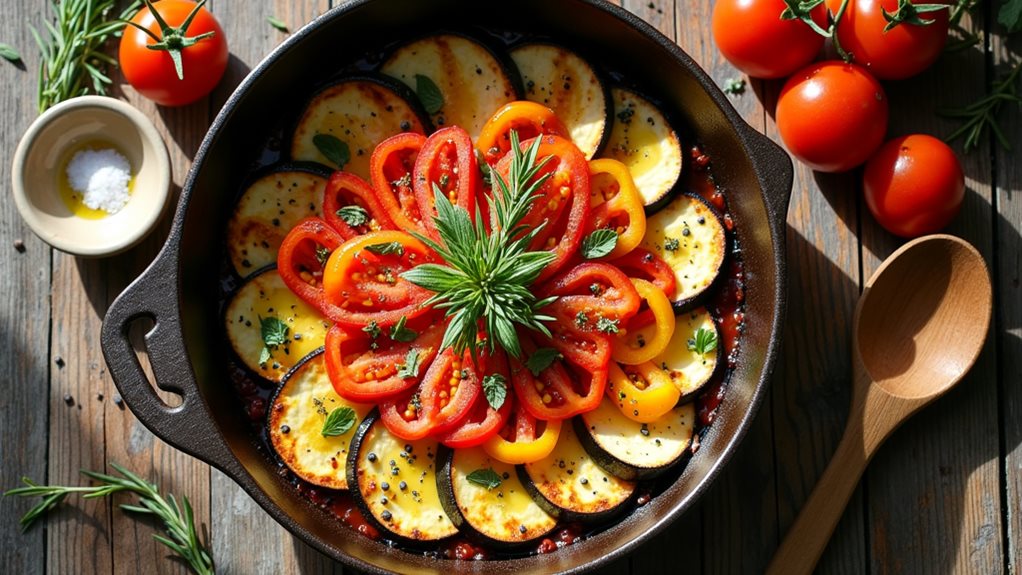
To create this beautiful Mediterranean classic, start by heating 1 1/2 tablespoons of olive oil in a heavy-duty saucepan. Toss in 2 cloves of minced garlic and 2 medium thinly sliced onions, allowing their aromas to begin filling your kitchen.
Next, add your chopped vegetables: 3/4 pound of peeled and diced eggplant, 1/2 pound of unpeeled and sliced zucchini, and 1 sweet green pepper cut into rings. Sauté this colorful medley until the vegetables are just barely tender—you want them to maintain some texture, not turn to mush. The key here is patience and a watchful eye. Those vegetables will tell you when they’re ready if you pay attention.
Once your vegetables have softened slightly, it’s time to add 2 teaspoons of Italian seasoning, 1 teaspoon of sugar, and salt and pepper to taste, mixing everything well to distribute the flavors evenly.
The final touch comes from adding 4 medium fresh or canned tomatoes, peeled and sliced, which will release their juices and create that signature ratatouille sauce. Let everything simmer together for about 20 to 25 minutes, until tender and the flavors have married beautifully. For perfect rice to accompany your ratatouille, consider using a professional rice cooker to achieve consistently fluffy results every time.
The waiting is the hardest part, especially with those incredible aromas wafting through the house. This rustic dish gets even better the next day, when all those Mediterranean flavors have had time to deepen and mingle.
Rustic Mediterranean Ratatouille Substitutions and Variations
While the classic ratatouille recipe calls for specific ingredients, you’ll find this rustic Mediterranean dish incredibly forgiving and adaptable to what you have on hand.
I often substitute yellow squash for zucchini when my garden produces an abundance, and it works beautifully. Don’t have eggplant? Try using more zucchini or even mushrooms for a different earthy flavor.
You can also vary the herbs beyond Italian seasoning—fresh basil, thyme, or herbes de Provence create distinctive regional variations.
I’ve found that adding a splash of balsamic vinegar near the end of cooking introduces a delightful complexity. For a heartier version, I sometimes include chickpeas or white beans.
The key is maintaining the slow-cooked melding of vegetables that defines true ratatouille, regardless of which specific ingredients you choose.
What to Serve with Rustic Mediterranean Ratatouille
When considering what accompaniments best complement the rich, vegetable-laden profile of rustic Mediterranean ratatouille, I’ve found that simple, crusty breads and grains often provide the perfect foundation.
A freshly baked baguette or ciabatta allows you to soak up the flavorful tomato-based juices, while polenta or couscous creates a hearty, satisfying meal.
For protein pairings, I recommend grilled chicken, baked fish, or even a poached egg placed atop a warm serving.
Vegetarians might appreciate chickpeas or white beans stirred in just before serving.
Don’t overlook the classic French approach of enjoying ratatouille at room temperature as a side dish with roasted meats or as part of an antipasto platter with cheese and olives.
The versatility of this dish makes it adaptable to countless meal situations.
Final Thoughts
Ratatouille’s enduring popularity as a Mediterranean staple speaks to its remarkable versatility and wholesome appeal.
I’ve found that mastering this dish opens a world of culinary possibilities, whether you’re serving it as a main course, side dish, or even breakfast option with poached eggs.
What I love most about ratatouille is how it celebrates seasonal vegetables in their prime.
The humble ingredients transform into something truly special when cooked with care.
Don’t be afraid to make this recipe your own—add herbs from your garden or adjust the vegetable ratios to suit your taste.
Much like the comfort food revolution that popularized dishes such as Butternut Squash Mac and Cheese, ratatouille balances nutrition with culinary satisfaction.