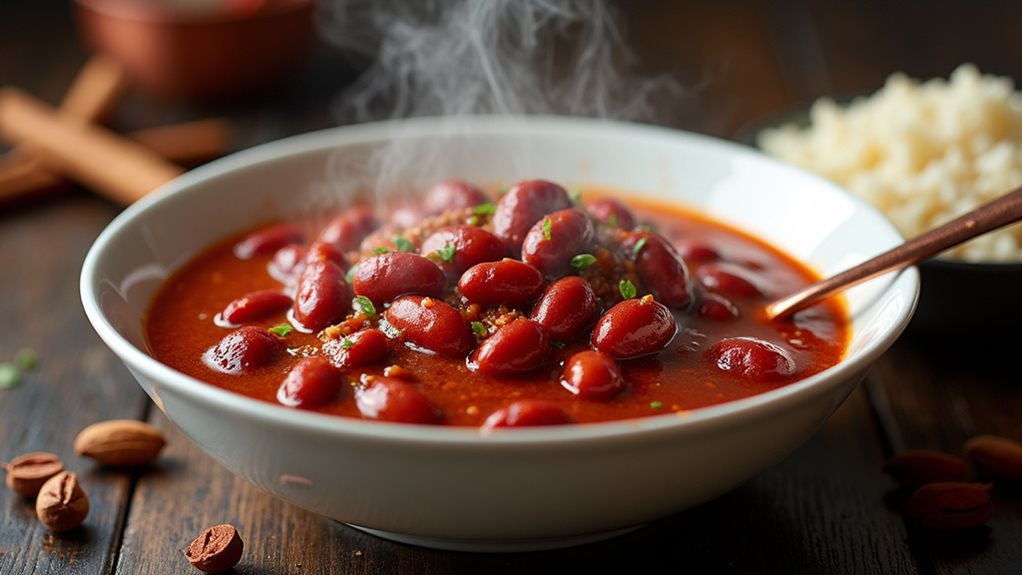
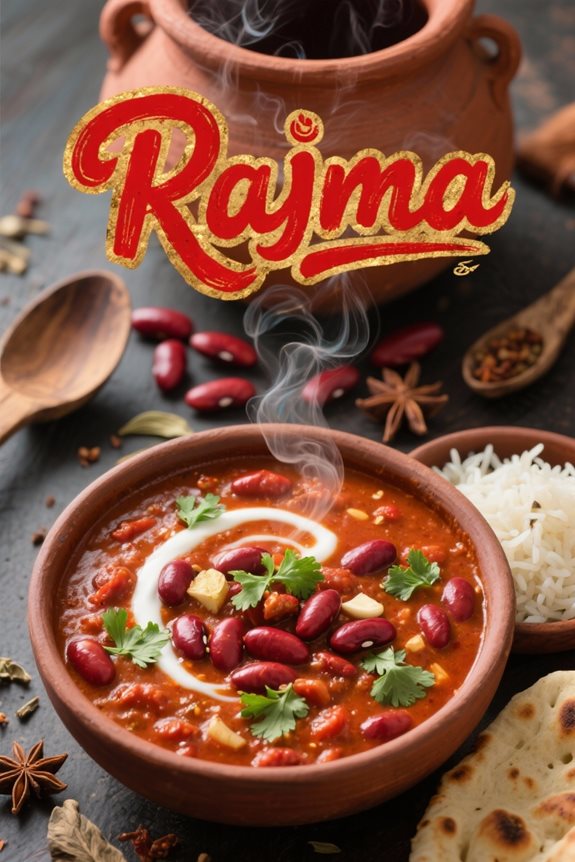
I’ll never forget the first time I tasted rajma, a dish that transformed my understanding of comfort food. This North Indian staple combines tender red kidney beans with a rich, spiced tomato gravy that’s simply irresistible. I’ve perfected my recipe through years of practice, and I’m excited to share these techniques with you. Whether you’re new to Indian cuisine or looking to improve your existing repertoire, this vibrant rajma will become your new go-to meal for both weeknight dinners and special occasions.
Key Takeaways
- Rajma is a popular North Indian dish made with red kidney beans cooked in a spiced tomato-based curry sauce.
- It’s traditionally served with steamed basmati rice as “rajma chawal,” making it a beloved comfort food.
- Key spices include ginger, garlic, cinnamon, cardamom, and garam masala, creating its distinctive aromatic flavor.
- The dish requires soaking dried beans overnight, then simmering with spices until tender.
- Rajma is protein-rich, improves in flavor overnight, and can be adapted with substitutions like different beans or added coconut milk.
Why You’ll Love this Vibrant Rajma
Comfort food at its finest, rajma delivers a perfect balance of hearty texture and aromatic flavors that will transform your weeknight dinner routine. This North Indian classic combines tender red kidney beans with a rich tomato-based sauce, infused with a symphony of spices including ginger, garlic, cinnamon, cardamom, and the warming finish of garam masala.
I’m particularly drawn to rajma’s versatility—it’s substantial enough to serve as a main dish yet complements rice beautifully.
The slow-cooked beans absorb the complex spice profile, creating layers of flavor that deepen with each bite. What’s more, this protein-packed dish improves overnight as the spices meld together, making it perfect for meal prep and busy households looking for nutritious, satisfying options.
What Ingredients are in Vibrant Rajma?
Rajma is a classic North Indian dish featuring tender red kidney beans simmered in a rich, aromatic tomato sauce. The vibrant flavors come from a beautiful blend of warm spices that create depth and complexity. This comfort food is hearty, nutritious, and absolutely packed with flavor.
I love how the beans absorb all those wonderful spices while cooking. Ready to make this delicious dish at home? Here are all the ingredients you’ll need:
- 1 pound dried red beans (any kind), rinsed and picked over
- 2 tablespoons neutral oil (corn, grapeseed, or other)
- 1 tablespoon peeled and minced fresh ginger
- 1 tablespoon minced garlic
- 1 teaspoon fennel seeds
- 1 teaspoon ground cinnamon
- Pinch of ground cloves
- 1 tablespoon ground cardamom
- 1 bay leaf
- 1 teaspoon ground turmeric
- 1/2 teaspoon cayenne (or to taste)
- 2 cups chopped tomatoes (canned are fine)
- Salt to taste
- 1 tablespoon garam masala or curry powder (preferably homemade)
The beauty of rajma lies in its flexibility. If you can’t find traditional kidney beans, other red beans will work just fine. The spice level can be adjusted according to your preference by tweaking the amount of cayenne.
And while homemade garam masala will give you the most authentic flavor, store-bought works in a pinch. For the best texture, soaking the beans overnight is recommended, though not strictly necessary—just be prepared for a longer cooking time if you skip this step.
How to Make this Vibrant Rajma
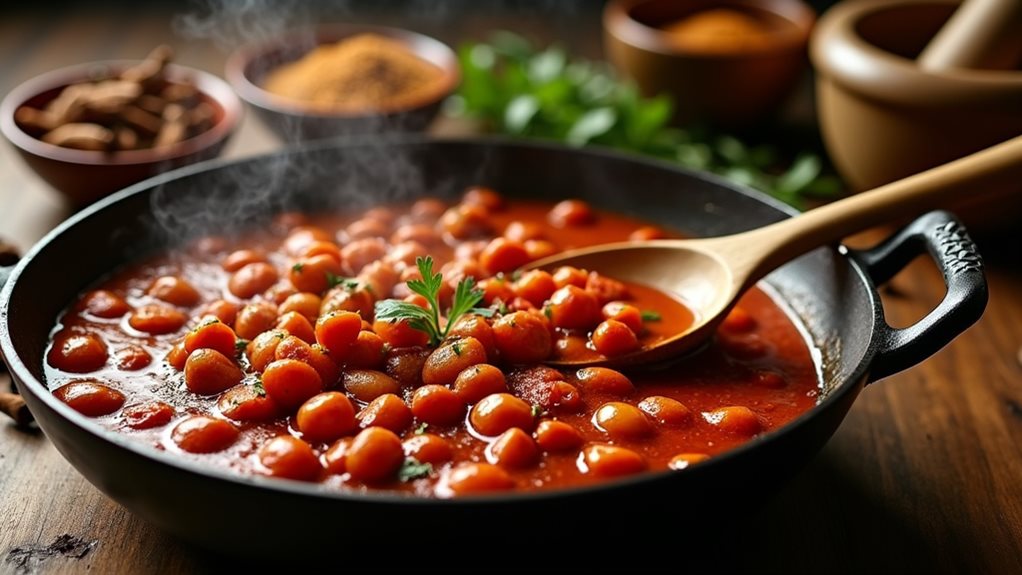
Making rajma starts with preparing the dried red beans, which form the heart of this aromatic Indian dish. Begin by rinsing and picking through 1 pound of dried red beans, then soaking them for several hours or overnight if time permits. This soaking step isn’t absolutely necessary, but it does speed up cooking time later.
Once soaked (or not), place the beans in a large pot with enough water to cover them completely, add 1/2 teaspoon of cayenne (adjust to your heat preference), and simmer until they’re nearly tender—this typically takes 1 to 2 hours depending on whether you soaked them and how fresh they are.
While the beans are simmering, it’s time to create the fragrant tomato sauce that will transform these humble beans into something spectacular. Heat 2 tablespoons of neutral oil in a wide skillet over medium heat, then add 1 tablespoon each of minced ginger and garlic, along with 1 teaspoon fennel seeds, 1 teaspoon ground cinnamon, a pinch of ground cloves, 1 tablespoon ground cardamom, 1 bay leaf, and 1 teaspoon ground turmeric.
This aromatic mixture needs to cook for just about a minute, filling your kitchen with the most intoxicating scent. Next, add 2 cups of chopped tomatoes and cook them for about 5 minutes until they soften and begin to break down.
The final step brings everything together in harmonious flavor. Drain the beans, reserving some cooking liquid just in case, and add them to your tomato sauce along with a generous pinch of salt. Let this mixture simmer for about 15 minutes more until the beans reach perfect tenderness, adding a splash of that reserved bean liquid if things look too dry.
The magic finishing touch comes from adding 1 tablespoon of garam masala at the very end, which blooms in the residual heat without losing its complex aroma. Give everything a final taste, adjust the seasoning if needed, and you’re ready to serve this comforting, protein-rich classic.
For larger gatherings or restaurant-style preparation, a commercial rice cooker designed for Indian cuisine can perfectly prepare the rice that traditionally accompanies this hearty rajma.
The contrast between the creamy beans and the vibrant, spice-infused sauce creates a dish that’s so much more than the sum of its parts.
Vibrant Rajma Substitutions and Variations
While the classic recipe delivers authentic flavor, you’ll find this dish wonderfully adaptable to what you have on hand. Kidney beans are traditional, but black beans or pinto beans make excellent substitutes with slightly different textures. If you’re missing fresh ginger, use 1/2 teaspoon ground ginger instead.
For a richer version, I sometimes add a cup of coconut milk during the final 10 minutes of cooking. You can also increase the heat with additional cayenne or diced jalapeños. When tomatoes aren’t in season, a 14-ounce can of diced tomatoes works perfectly. For a quicker weeknight meal, use canned beans (drained and rinsed), which will reduce cooking time to about 30 minutes total. Just remember to adjust the salt accordingly.
What to Serve with Vibrant Rajma
The perfect companion dishes for this vibrant bean curry will elevate your meal from simple to spectacular.
I always serve rajma with steamed basmati rice, which creates the classic comfort food combination known as “rajma chawal” throughout North India. A side of cooling raita, made with yogurt, cucumber, and a pinch of cumin, helps balance the spice.
For a complete meal, I recommend adding warm roti or naan to scoop up the flavorful sauce.
A simple kachumber salad—diced tomatoes, onions, and cucumbers with lemon juice—provides fresh contrast to the rich curry.
Don’t forget a sprinkle of fresh cilantro and thinly sliced red onions as garnish to brighten both the flavor and appearance of your rajma feast.
Final Thoughts
Rajma represents more than just a hearty bean curry—it embodies the soul of North Indian comfort food.
I’ve found that mastering this dish opens a window into traditional Indian cooking techniques while providing a nourishing, protein-rich meal that satisfies even the most discerning palates.
Don’t be intimidated by the list of spices; each contributes to rajma‘s distinctive depth of flavor that simply can’t be replicated with shortcuts.
Remember that patience is key—allowing the beans to simmer until they’re perfectly tender and absorb the aromatic spices creates that authentic taste.
Whether you’re serving it for a family dinner or preparing meals for the week, this versatile dish delivers both nutrition and comfort.
Like an autumn harvest salad, rajma celebrates seasonal ingredients and can be customized according to personal preference and availability.
Trust me, once you’ve made rajma from scratch, you’ll understand why it holds such a special place in Indian cuisine.