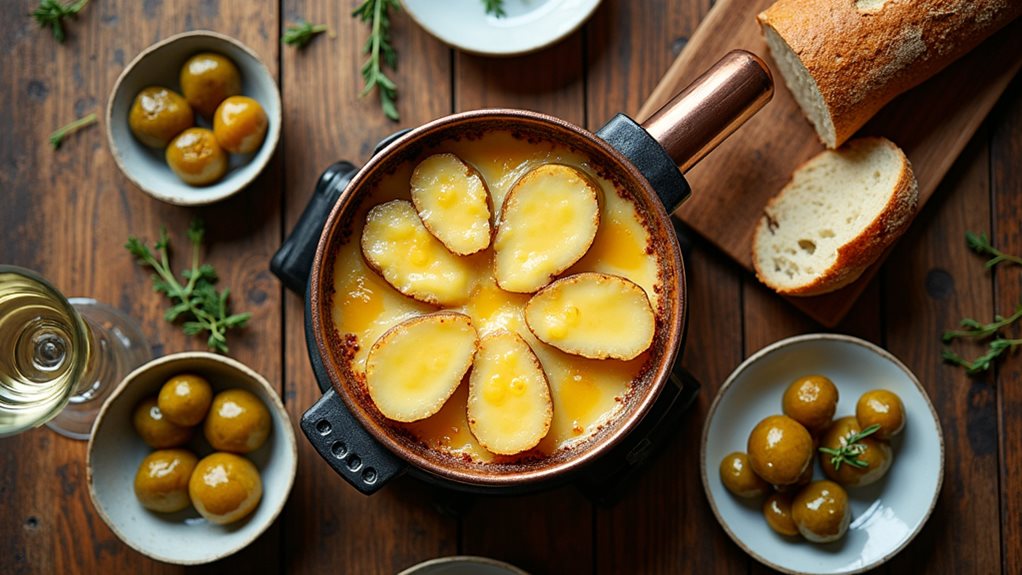
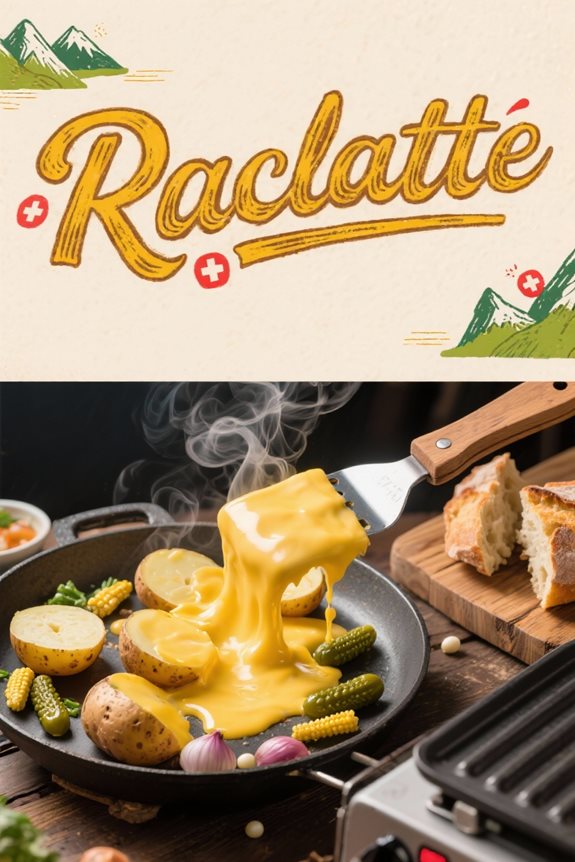
I’ve loved raclette since I first tasted it during a winter trip to Switzerland. This iconic Alpine dish transforms simple cheese and potatoes into something magical through the art of melting. You’ll find it’s more than simply about the food—it’s about creating an experience. Whether you’re using a traditional raclette grill or improvising with your oven, the result is a comfort food that brings people together. Let me show you how to create this warm, gooey delight at home.
Key Takeaways
- Raclette is a melty Swiss cheese traditionally served by heating and scraping over potatoes and accompaniments.
- The dish encourages communal dining as cheese is typically melted at the table using specialized equipment.
- Traditional accompaniments include pickled onions, cornichons, potatoes, and crusty bread.
- Raclette cheese can be substituted with Gruyère, Fontina, or Emmental for similar melting properties.
- The dish balances rich, nutty cheese flavors with tangy pickled vegetables and hearty potatoes.
Why You’ll Love this Melty Alpine Raclette
When you’re craving a comforting dish that combines simplicity with indulgence, this authentic Alpine raclette delivers pure satisfaction.
I’ve found that the magic happens as the cheese melts into a creamy blanket that transforms humble potatoes into something extraordinary. The contrast between the sharp, nutty cheese and the earthy potatoes creates a perfect harmony of flavors.
What makes raclette special is its versatility. You can customize each serving with tangy cornichons and pearl onions that cut through the richness of the cheese.
I particularly love how the crusty French bread serves as the ideal vehicle for scooping up every last bit of melted goodness. This traditional Swiss dish brings people together around the table, encouraging conversation as you share this interactive dining experience.
What Ingredients are in Melty Alpine Raclette?
Raclette is one of those wonderfully simple yet deeply satisfying Alpine dishes that’s all about good cheese melting into creamy goodness. The beauty of raclette lies in its straightforward approach – quality cheese melted and scraped over humble potatoes, with a few tangy accompaniments to cut through the richness.
Anyone can make this Swiss-French classic at home with just a handful of ingredients.
- 1 pound raclette cheese (rind trimmed)
- 24 new potatoes
- Pickled pearl onions
- French cornichons (small pickles)
- Crusty French bread
When shopping for these ingredients, the cheese quality matters most – look for authentic raclette cheese if possible, though other good melting cheeses can work in a pinch.
The potatoes should be small, waxy varieties that hold their shape when boiled. The cornichons and pickled onions provide that perfect acidic contrast to the rich cheese, while good bread is crucial for sopping up any melted cheese that might otherwise be left on the plate.
And really, who could bear to waste even a smidge of that golden, molten goodness?
How to Make this Melty Alpine Raclette

Preparing raclette is surprisingly simple and oh-so-satisfying. Start by boiling 24 new potatoes until they’re fork-tender, then drain them and cut them into halves. Set these aside while you preheat your oven to a toasty 450°F.
Now for the star of the show—take 1 pound of raclette cheese, carefully trim off the rind (we want pure melty goodness here), and divide it into four equal pieces. Place each piece onto an ovenproof plate, then slide these into the hot oven for just a few minutes. You’re looking for that perfect melt, where the cheese becomes irresistibly gooey but hasn’t quite turned into a puddle.
Once your cheese has reached peak meltiness, it’s time for the magic to happen. Gently mix the melted raclette with your halved potatoes, adding pickled pearl onions and French cornichons for that perfect tangy contrast. The heat from the cheese will slightly warm everything else, creating this beautiful harmony of temperatures and textures.
Isn’t there something wonderfully comforting about how the sharp, creamy cheese coats the humble potato? Serve this delightful mixture with chunks of crusty French bread for dipping, scooping, and soaking up every last bit of that precious cheese. The bread, with its crisp exterior and soft interior, provides the perfect vehicle for transporting this Alpine delight from plate to palate.
For an even more authentic experience, consider using an electric raclette grill which allows everyone to melt their own portions at the table while enjoying the communal dining tradition.
Melty Alpine Raclette Substitutions and Variations
Although traditional raclette calls for its namesake cheese, I’ve found several delicious alternatives that can save the day if you can’t locate authentic raclette. Gruyère offers a comparable meltability with a slightly nuttier flavor, while fontina provides a milder but equally gooey consistency. Even a good Emmental can work in a pinch.
Beyond cheese substitutions, I encourage you to experiment with the accompaniments. Try roasted mushrooms, caramelized onions, or thinly sliced prosciutto alongside the traditional potatoes.
For a heartier meal, add sliced sausages or smoked meats to the platter. You can also incorporate seasonal vegetables like asparagus in spring or butternut squash in fall.
The key is maintaining that perfect balance between the rich, melted cheese and simple, flavorful sides.
What to Serve with Melty Alpine Raclette
When creating the perfect raclette experience, I’ve found that the accompaniments are just as important as the cheese itself.
Traditional options include boiled new potatoes, which create a hearty base that absorbs the melted cheese beautifully. I always include tangy pickled pearl onions and cornichons (small French pickles) to cut through the richness.
Crusty French bread is crucial—it’s perfect for scooping up every last bit of cheese. You might also consider adding cured meats like prosciutto or dried beef, mushrooms sautéed with herbs, or roasted bell peppers for color and flavor.
For a revitalizing contrast, serve a crisp green salad dressed with a light vinaigrette. Remember to pair your raclette with a dry white wine, particularly one from the Alpine regions, to complement the cheese’s complex flavors.
Final Thoughts
As I’ve explored the delightful world of raclette, I’m convinced that this Alpine tradition deserves a place in everyone’s culinary repertoire. The simplicity of melted cheese paired with potatoes, pickled onions, and cornichons creates an experience that’s both communal and deeply satisfying.
What makes raclette special isn’t just its flavor but the atmosphere it creates. Gathering friends around the table, watching cheese bubble and transform, then scraping it onto waiting plates—these moments connect us to centuries of Alpine tradition.
Whether you’re using a specialized raclette grill or simply your oven, the result remains the same: pure comfort food at its finest.
Don’t hesitate to experiment with your pairings. While tradition has its merits, your personal touch will make this Swiss classic truly your own.
Consider adding roasted vegetables to your raclette spread, prepared at high temperatures between 400F and 450F for that perfect caramelization that complements the rich, melted cheese.