I’ll never forget the first time I prepared prime rib for my family—the anticipation as that magnificent cut of beef filled my kitchen with its rich aroma. It’s easier than you might think to create this showstopping centerpiece in your own home. While many home cooks shy away from such a premium cut, I’ll guide you through each step to guarantee your prime rib turns out perfectly juicy inside with that coveted savory crust outside. Wait until you see your guests’ faces when you bring it to the table.
Key Takeaways
- Prime rib is a premium beef roast that creates a show-stopping centerpiece with a juicy interior and flavorful crust.
- Cook at 500°F for 15 minutes to form a crust, then reduce to 350°F and bake for 15 minutes per pound.
- Coat generously with rock salt before cooking to create a natural seal that locks in juices.
- Allow meat to rest before slicing, offering varied doneness from more-done end pieces to pink center cuts.
- Serve with classic accompaniments like creamy horseradish sauce, Yorkshire puddings, and bold red wines.
Why You’ll Love this Mouthwatering Prime Rib
This prime rib recipe delivers a show-stopping centerpiece that’s surprisingly simple to prepare.
I’m sharing my foolproof method that creates a perfectly juicy interior with a mouthwatering, salt-crusted exterior that will impress even the most discerning dinner guests.
What makes this recipe exceptional is the dramatic temperature shift—starting hot at 500° to develop that coveted crust, then reducing to 350° for gentle cooking that guarantees edge-to-edge doneness.
The rock salt coating isn’t just for flavor; it creates a natural seal that locks in juices.
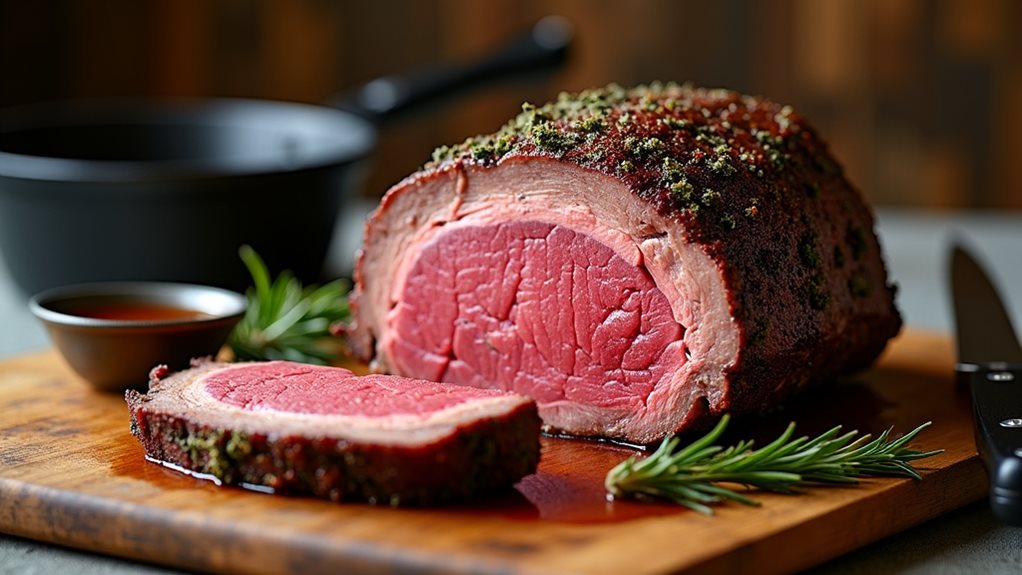
I especially love how the outer slices offer more doneness for those who prefer it, while the center remains gloriously pink for rare enthusiasts.
The self-basting effect means minimal effort with maximum flavor.
What Ingredients are in Mouthwatering Prime Rib?
When it comes to creating a truly spectacular prime rib, simplicity is the secret weapon. This classic centerpiece dish doesn’t require a long list of fancy ingredients—just quality meat and the right seasoning. The beauty of prime rib lies in letting the natural flavors of the beef shine through, with just enough improvement to create that mouthwatering crust we all dream about.
Ingredients:
- Prime rib roast (size according to your needs)
- Rock salt (generous amount for coating)
The quality of your prime rib roast makes all the difference in this recipe. Look for well-marbled meat with a nice fat cap, which will baste the roast naturally during cooking. Some butchers sell “choice” or “prime” grades—and while prime grade costs more, it typically offers superior marbling and tenderness. The rock salt creates a magnificent crust that seals in juices, but don’t worry—the final result won’t taste overly salty. You might consider having some fresh herbs on hand like rosemary or thyme to serve alongside, though they’re not required for the cooking process itself.
How to Make this Mouthwatering Prime Rib
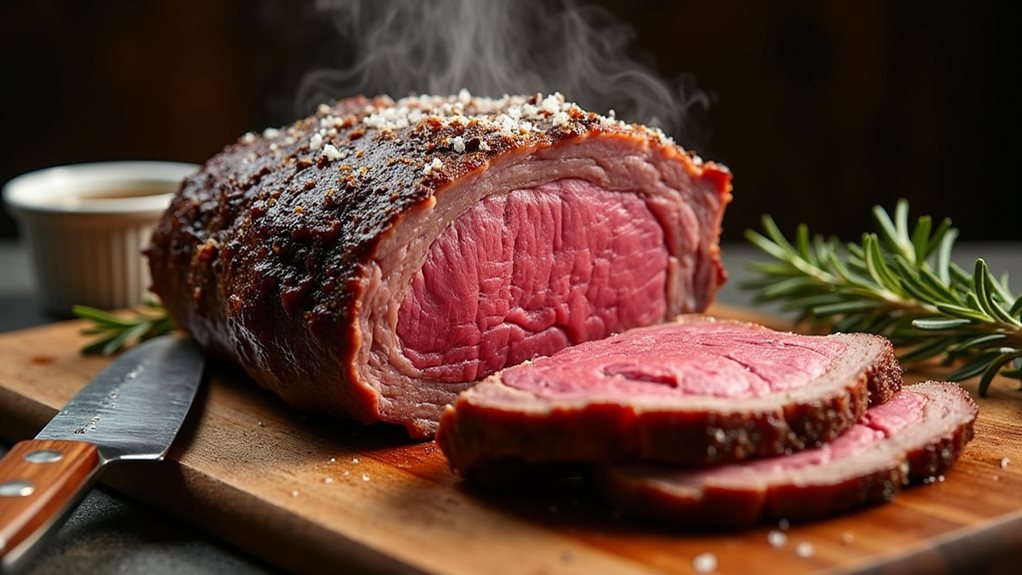
Making the perfect prime rib might seem intimidating, but it’s actually one of the simplest showstopper meals you can prepare. Start by allowing your prime rib (use as many as you need for your gathering) to come to room temperature—this guarantees even cooking throughout this magnificent cut.
While you’re waiting, preheat your oven to a scorching 500 degrees. This initial blast of heat creates that beautiful, flavorful crust we all dream about.
Once your meat has lost its chill, generously coat the entire prime rib with rock salt. Don’t be shy here—that salt creates a phenomenal crust while sealing in all those succulent juices.
Place your seasoned prime rib on a baking rack positioned inside a roasting pan, then slide it into your preheated oven for exactly 15 minutes. A high-quality commercial roasting pan will ensure even heat distribution and better results for your holiday centerpiece. After that initial sear, reduce the temperature to 350 degrees and continue baking for 15 minutes per pound. The math is simple, the results are divine.
When your timer signals perfection, turn off the oven but leave the meat inside for a few additional minutes. This resting period allows the juices to redistribute throughout the meat, resulting in moist, tender slices from edge to edge.
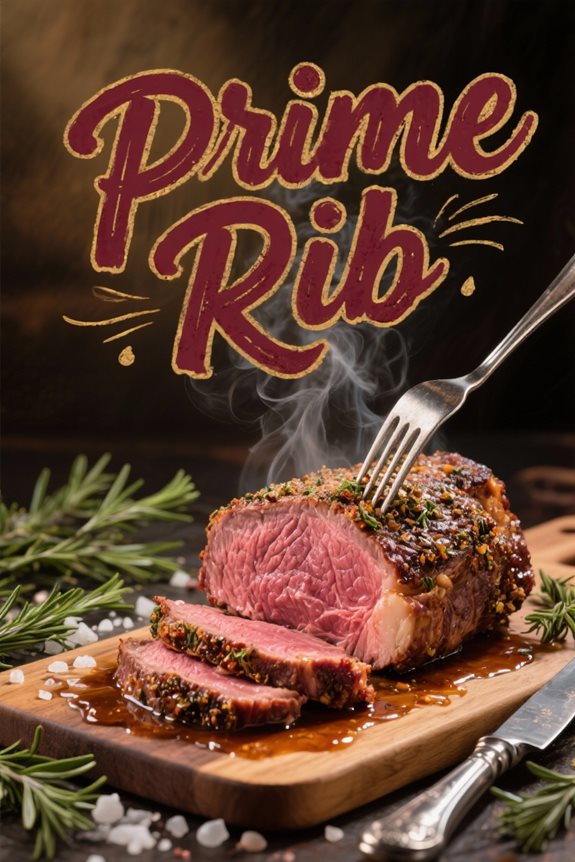
For serving, simply cut the butcher’s string and watch as the rib bones practically fall away from the meat. Slice to your preferred thickness—thinner for more formal presentations, thicker for those who appreciate a substantial bite.
And here’s a little tip for hosting: the end pieces will always be more done than the center cuts, perfect for accommodating guests who prefer their meat with less pink.
Couldn’t you just taste it already? Those juicy, tender slices paired with your favorite sides will have everyone convinced you’ve been secretly training as a professional chef.
Mouthwatering Prime Rib Substitutions and Variations
Though the classic rock salt method creates a stunning prime rib, I’ve discovered several variations that can transform this centerpiece into something truly extraordinary.
For an herb-crusted alternative, I recommend coating your roast with a mixture of rosemary, thyme, garlic, and olive oil before cooking. This infuses the meat with aromatic flavors that complement its natural richness.
You can also try a coffee-rubbed prime rib by combining ground coffee with brown sugar, paprika, and cayenne for a complex, slightly sweet crust with subtle heat.
For those who prefer bolder flavors, a horseradish and black pepper crust delivers magnificent results.
If you’re feeling adventurous, consider smoking your prime rib for 2-3 hours before finishing it in the oven—this creates remarkable depth while maintaining that perfect medium-rare center.
What to Serve with Mouthwatering Prime Rib
A perfectly cooked prime rib deserves complementary side dishes that enhance its rich, savory profile without overshadowing the star of the meal.
I recommend pairing this luxurious cut with classic accompaniments like creamy horseradish sauce, which cuts through the meat’s richness with its pleasant heat.
For sides, consider roasted garlic mashed potatoes or a gratin dauphinois that mirrors the prime rib’s decadence.
Yorkshire puddings offer a traditional touch, their airy texture perfect for soaking up flavorful juices.
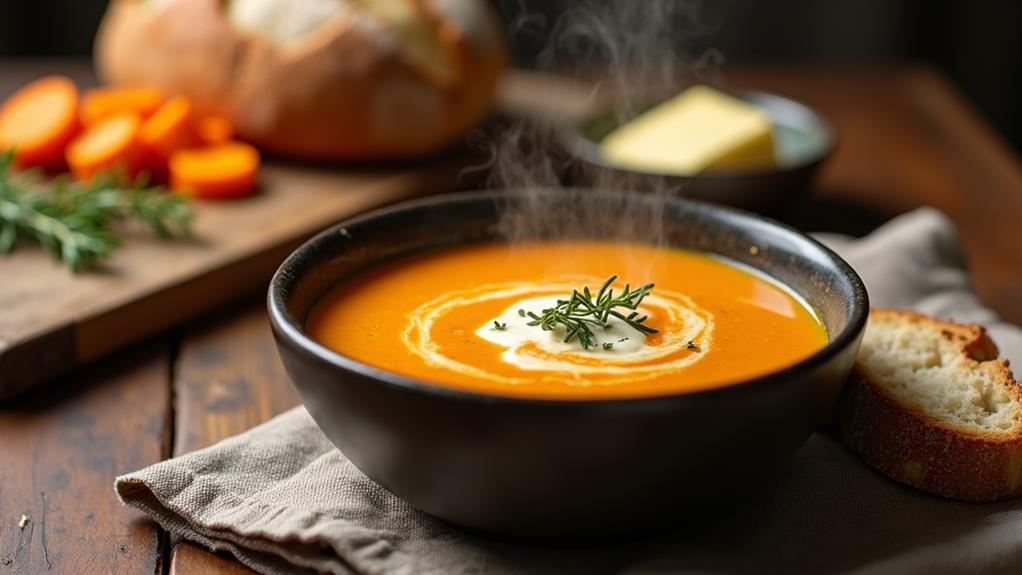
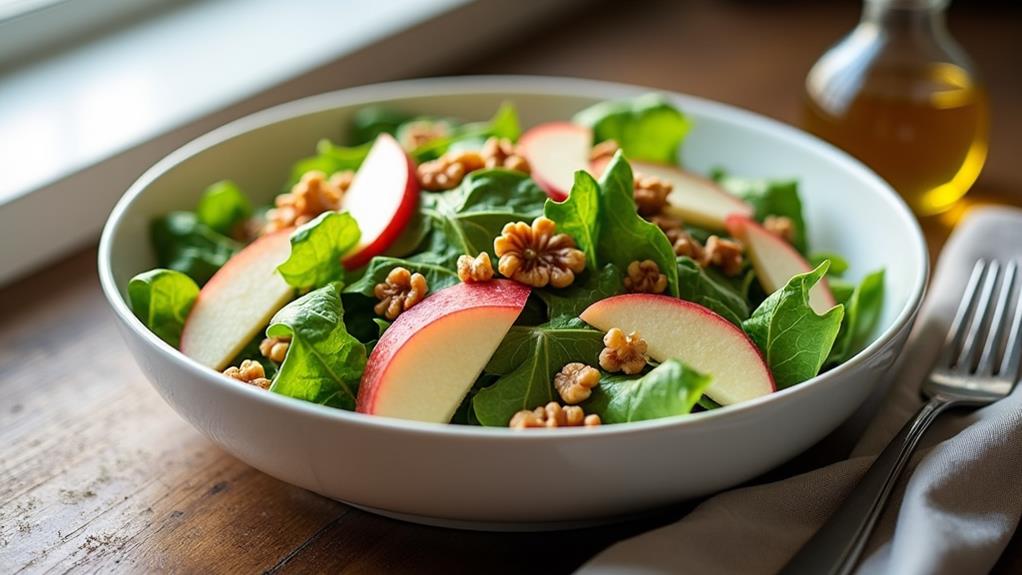
For vegetables, I suggest simple preparations—roasted asparagus, glazed carrots, or a bright green salad with a light vinaigrette to balance the meal.
Don’t forget a bold red wine like Cabernet Sauvignon or Malbec to complete your dining experience. Their robust tannins complement the beef’s richness wonderfully.
Final Thoughts
Prime rib stands as one of the most impressive dishes you can serve, combining simplicity in preparation with unmatched elegance at the table.
I’ve found that the key to perfect prime rib lies in respecting the quality of the meat itself—allowing its natural flavors to shine through minimal seasoning and precise cooking techniques.
Don’t be intimidated by this classic centerpiece. With the right temperature monitoring and proper resting time, you’ll achieve restaurant-quality results in your own kitchen.
Remember that each roast is unique, so trust your thermometer over strict timing guidelines.
For truly exceptional results, allow your prime rib to rest for 15-20 minutes after cooking to redistribute the juices and elevate your roast from good to extraordinary.
I encourage you to make prime rib part of your special occasion repertoire. The memories created around a beautifully presented roast, surrounded by complementary sides and appreciative guests, will last far longer than the meal itself.