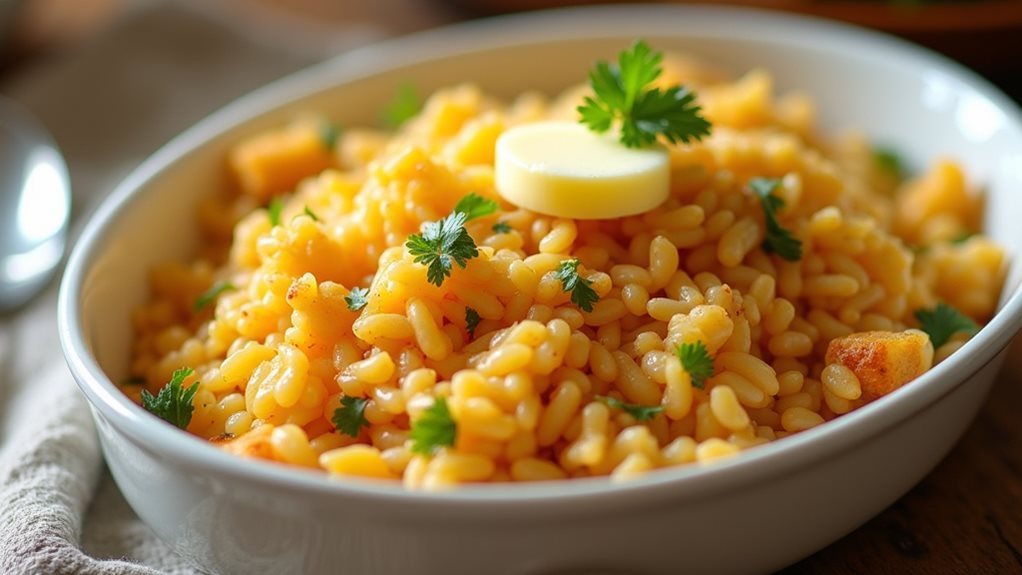

I’ve been making pilaf for years, and it’s become my go-to rice dish whenever I want to enhance a simple meal. The beauty of pilaf lies in its technique—sautéing the rice in butter or oil before adding liquid creates those perfectly separate, fluffy grains that absorb every bit of flavor from your broth and aromatics. Unlike plain steamed rice, pilaf offers endless possibilities for customization with vegetables, spices, and proteins. Let me show you how to create this versatile dish that will transform your weeknight dinners.
Key Takeaways
- Pilaf is a rice dish where grains are toasted in fat before cooking in broth until fluffy and separate.
- Traditional pilaf often includes toasted noodles or vermicelli for added texture and nutty flavor.
- The dish typically uses aromatics like onions and spices, with regional variations incorporating local ingredients.
- Cooking pilaf involves bringing liquid to boil, then simmering covered on low heat for 20-25 minutes.
- Pilaf pairs well with various proteins including chicken, fish, and lamb, making it a versatile side dish.
Why You’ll Love this Golden Buttery Pilaf
Simplicity meets elegance in this golden buttery pilaf that transforms ordinary rice into a standout side dish with minimal effort.
I’ve found that the magic happens when those fine egg noodles toast to a beautiful amber color in butter, creating a nutty foundation that enhances the entire dish.
What I love about this recipe is how the chicken broth infuses every grain with savory depth while the cooking process yields the perfect texture—never mushy, always distinct.
You’ll appreciate how this pilaf pairs with practically anything, from roasted chicken to grilled fish or vegetarian mains.
The 25-minute cooking time means you can prepare your entrée while it simmers, making dinner coordination effortless.
And with just five simple ingredients, it’s likely you already have everything you need in your pantry.
What Ingredients are in Golden Buttery Pilaf?
Pilaf is a wonderfully versatile rice dish that forms the perfect foundation for so many meals. The golden, buttery version we’re making today gets its rich color and flavor from butter-browned noodles mixed with rice.
It’s a simple yet elegant side dish that pairs beautifully with almost any protein, from roasted chicken to grilled fish or even a hearty vegetable stew.
- 1/2 cup fine egg noodles (uncooked), broken into pieces
- 2 tablespoons butter or margarine
- 1 (10 3/4 oz.) can chicken broth
- 1/3 cup water
- 1/2 cup raw regular rice
When shopping for these ingredients, quality matters but doesn’t need to break the bank. Regular long-grain white rice works perfectly, though you could experiment with jasmine rice for a more aromatic result.
The egg noodles should be the thin, fine variety—not the wider ones used for casseroles. And while homemade chicken stock would be divine, a good-quality canned broth saves time without sacrificing too much flavor.
The beauty of this recipe is its simplicity, allowing the buttery, toasted flavor of the noodles to really shine through.
How to Make this Golden Buttery Pilaf
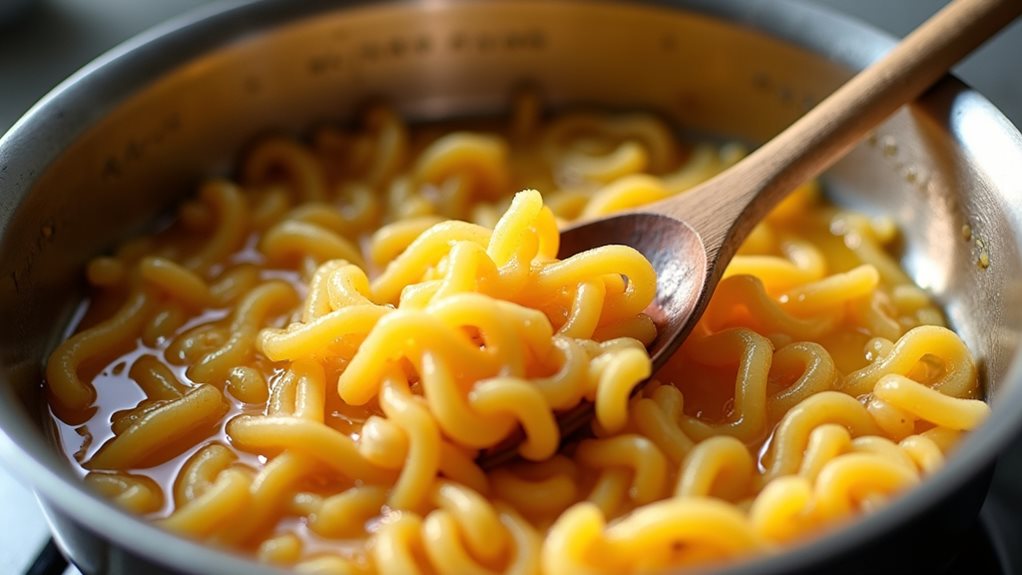
This simple pilaf starts with a vital flavor-building step—browning 1/2 cup of fine egg noodles (broken into pieces) in 2 tablespoons of butter. The transformation happens right in your saucepan, where the noodles develop a gorgeous golden color and nutty aroma as you stir them frequently.
This toasting process might seem minor, but trust me, it creates the foundation for the pilaf’s distinctive flavor profile.
Once your noodles have reached that perfect amber hue, it’s time to add the remaining ingredients: one 10 3/4 oz. can of chicken broth, 1/3 cup of water, and 1/2 cup of raw regular rice.
Give everything a good stir as the mixture comes to a boil—this helps distribute the toasted noodles throughout the rice. Then comes the hands-off part: simply cover the pan and reduce the heat to low.
The magic happens as the grains slowly absorb the savory liquid, becoming tender and flavorful. After about 20 to 25 minutes, check if all the liquid has been absorbed, and you’ll have roughly 2 cups of perfectly cooked pilaf.
For consistent results every time, consider using a professional rice cooker that maintains precise temperature control throughout the cooking process.
The finished dish offers a wonderful textural contrast between the rice and those golden noodle pieces.
Golden Buttery Pilaf Substitutions and Variations
While the classic recipe creates a delicious side dish, you’ll find that pilaf offers endless opportunities for customization to suit your taste preferences or pantry availability.
You can easily swap the chicken broth for vegetable or beef stock, depending on what you’re serving alongside it. For a heartier version, I recommend adding sautéed mushrooms, diced carrots, or peas during the last 5 minutes of cooking.
Don’t hesitate to experiment with different grains—brown rice, quinoa, or bulgur wheat work beautifully, though cooking times will vary.
For aromatic variations, try adding a pinch of saffron, cardamom, or curry powder when you add the liquid.
If you’re serving a special meal, consider folding in toasted almonds, pine nuts, or dried cranberries just before serving for added texture and flavor complexity.
What to Serve with Golden Buttery Pilaf
Because of its versatile flavor profile and comforting texture, Golden Buttery Pilaf pairs beautifully with a wide range of main dishes. I recommend serving it alongside roasted chicken, grilled salmon, or pan-seared lamb chops for a memorable meal.
The pilaf’s subtle buttery notes complement the rich flavors of beef stew or braised short ribs exceptionally well.
For vegetarian options, I’ve found that roasted vegetables like bell peppers, zucchini, and eggplant create a satisfying combination with this pilaf. You can also serve it with hearty mushroom dishes or vegetable curries.
Don’t forget about adding a fresh component—a simple green salad with vinaigrette or steamed broccoli will balance the meal nicely.
When entertaining, I place the pilaf in the center of the table, letting its golden color elevate the presentation.
Final Thoughts
After experimenting with this pilaf recipe for years, I’ve come to appreciate its remarkable versatility and foolproof nature. The combination of toasted noodles and rice creates a textural contrast that enhances any meal, while the chicken broth infuses each grain with savory depth.
What makes this recipe special is its adaptability—you can easily double it for gatherings or customize it with herbs, spices, or vegetables.
I’ve found that allowing the pilaf to rest for 5 minutes after cooking improves its texture greatly. Remember that different stovetops may require slight adjustments to cooking time, so check occasionally during your first attempt.
Unlike Italian arborio rice, which provides creaminess in dishes like risotto, pilaf rice should maintain distinct grains after cooking.
Master this basic technique, and you’ll have a reliable side dish that complements nearly any protein. It’s a timeless classic for good reason.