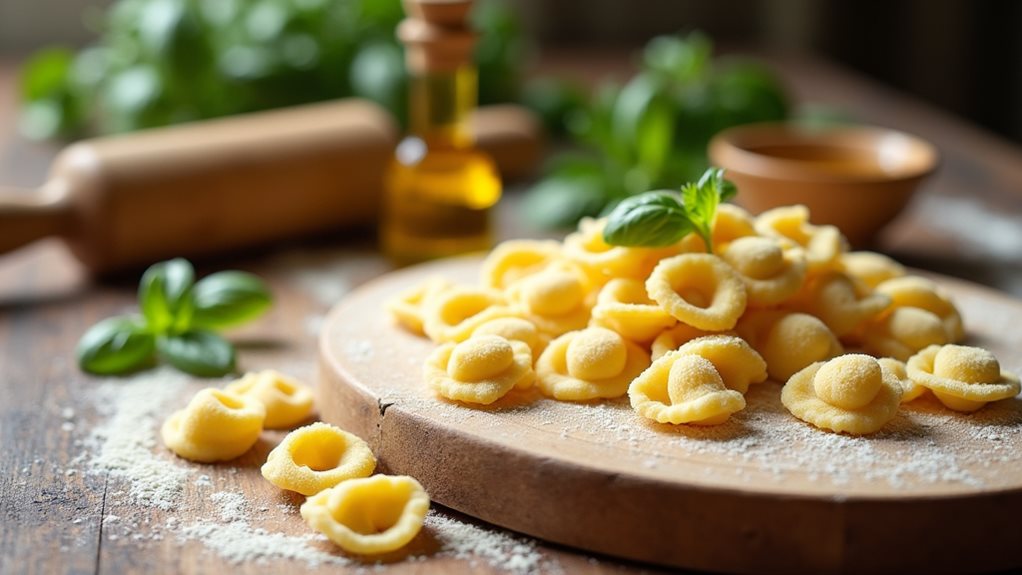
I’ve always believed that the simplest pasta shapes often deliver the most satisfying dining experiences. Orecchiette, with its charming “little ears” shape, holds a special place in my kitchen repertoire. The slightly thicker center with thinner edges creates the perfect vessel for capturing robust sauces and chunky ingredients. When you make these by hand, you’re connecting with centuries of Italian tradition while creating something that no factory-produced pasta can match. Let me show you why these little pasta gems deserve a spot in your culinary arsenal.
Key Takeaways
- Orecchiette is a “little ear” shaped pasta from Puglia that captures sauces well due to its unique form.
- Traditional orecchiette is made from semolina dough sliced, rolled, cut, and shaped by hand.
- The pasta features a thicker center with thinner edges, creating excellent textural contrast when cooked.
- Classic pairings include broccoli rabe (rapini) with sausage or simple combinations with tomatoes and cheese.
- You can create variations using whole wheat flour or by adding herbs and vegetables to the dough.
Why You’ll Love these Handcrafted Orecchiette
Three remarkable qualities make handcrafted orecchiette a pasta lover’s dream.
First, their unique “little ear” shape creates the perfect vessel for capturing sauces, guaranteeing every bite delivers maximum flavor. I’ve found that the slightly thicker center with thinner edges provides an incredible textural contrast that you simply can’t get from factory-made pasta.
Second, the semolina dough delivers a satisfying al dente chew that holds up beautifully against hearty sauces like ragù or broccoli rabe with sausage.
Finally, there’s something deeply satisfying about creating these little pasta ears with your own hands. The rhythmic motion of pressing and shaping becomes almost meditative, connecting you to centuries of Italian culinary tradition in your very own kitchen.
What Ingredients are in Handcrafted Orecchiette?
Making homemade orecchiette is a labor of love, but the results are so worth it. These little “ears” of pasta have a unique texture and shape that beautifully catch sauce in their slight cup. The beauty of orecchiette lies in its simplicity—you only need a handful of ingredients to create these rustic pasta shapes that transport you straight to Puglia, the heel of Italy’s boot where this pasta originates.
Ingredients for Handcrafted Orecchiette:
- Semolina Dough (see page 162 reference)
- All-purpose flour, for dusting
- Semolina, for dusting
The real magic of orecchiette isn’t just in the ingredients but in the technique. Notice how simple the ingredient list is? That’s because traditional pasta making relies on quality ingredients and skilled hands rather than complex combinations.
When shopping for your ingredients, try to find a good quality semolina flour—it makes all the difference in the final texture. The semolina gives the pasta its characteristic slight chew and helps the sauce cling to each piece. The all-purpose flour and extra semolina are just for dusting your work surface and keeping the shaped pasta from sticking together.
How to Make these Handcrafted Orecchiette
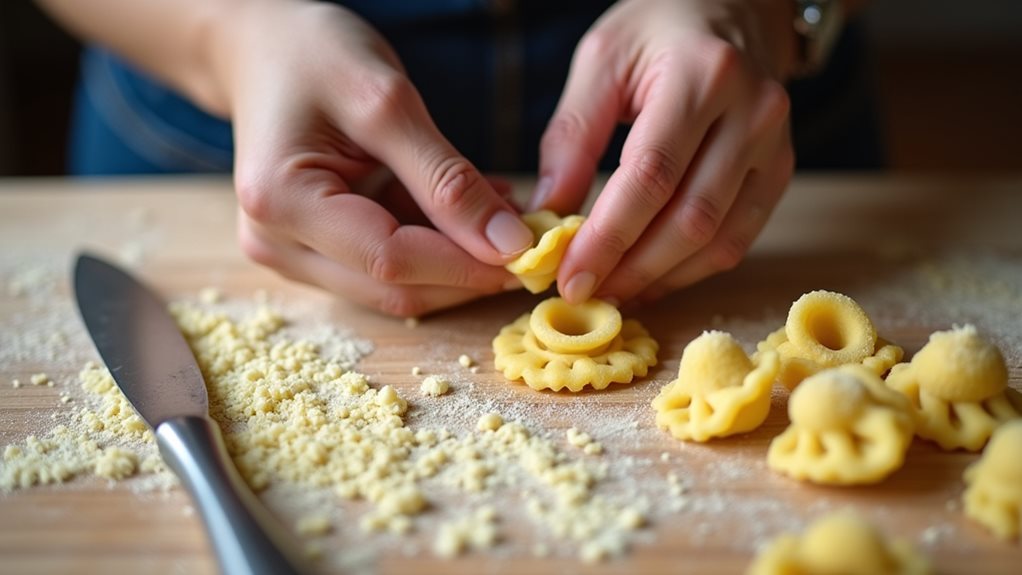
Making orecchiette by hand might seem intimidating at first, but there’s something truly therapeutic about forming each little “ear” of pasta with your own fingers.
Begin with your prepared semolina dough, slicing it into 1-inch-thick slabs, then cutting each slab into 1-inch-wide sections. Roll each section on a clean, dry surface into tubes about ¼ inch thick—nothing fancy, just simple little pasta ropes waiting to be transformed.
Now for the fun part. After cutting your tubes into 1-inch pieces (and discarding those awkward end bits), dust a slightly textured cutting board with a touch of all-purpose flour.
Take one segment, place it with the cut end facing you, and press the flat side of a table knife into the dough, dragging it away from you to create a small disk. This motion is where the magic happens. You’ll then invert this disk onto your index finger (pressed side down) and use your other hand to gently pull the edges around your finger, creating that characteristic ear shape.
The little dimple you create will later catch all that delicious sauce. Place your finished orecchiette onto a baking sheet dusted with semolina, and continue until you’ve worked through all your dough segments.
These little pasta ears can be used immediately, but they’ll also keep nicely in the refrigerator for up to a day if covered with plastic wrap. For longer storage, freeze them on the baking sheet until firm, then transfer to sealable bags or containers (just make sure to dust off any excess semolina first).
They’ll keep in the freezer for up to two weeks—any longer and they might start drying out and cracking. The process is wonderfully meditative once you get into a rhythm, and there’s nothing quite like the satisfaction of serving pasta you’ve shaped with your own hands. While handcrafting is traditional, a professional pasta maker set can significantly speed up production when making larger batches for special occasions.
Handcrafted Orecchiette Substitutions and Variations
While traditional orecchiette relies on semolina dough, several adaptations can transform this classic pasta shape to suit various dietary needs or flavor preferences.
I’ve found that substituting up to half the semolina with whole wheat flour creates a heartier pasta with more fiber, though you’ll need slightly more water in your dough. For gluten-free versions, I recommend a blend of rice flour and tapioca starch, which maintains the pasta’s distinctive texture.
You can also incorporate herbs or vegetables into your dough for flavor variations.
Try adding finely chopped spinach (squeeze out excess moisture first), dried herbs like basil or oregano, or even a teaspoon of tomato paste. These modifications will alter both the color and taste profile of your orecchiette, creating personalized versions of this traditional Puglian pasta.
What to Serve with Handcrafted Orecchiette
Traditional Puglian cuisine offers the perfect blueprint for pairing with your homemade orecchiette, as this ear-shaped pasta was designed to capture rustic, robust sauces in its distinctive cup-like form.
I recommend tossing your fresh pasta with rapini (broccoli rabe) sautéed with garlic, red pepper flakes, and anchovy—a classic combination that delivers the perfect balance of bitter greens and savory depth.
For a heartier option, try orecchiette with sausage and broccoli, where the meaty bits nestle perfectly into the pasta’s hollow.
Don’t overlook simpler pairings like cherry tomatoes, basil, and ricotta salata, which allow the pasta’s texture to shine.
Whatever sauce you choose, remember that orecchiette’s sturdy structure can withstand bold flavors that might overwhelm more delicate pasta shapes.
Final Thoughts
As you’ve traveled through the art of crafting orecchiette, I’ve found that patience becomes your greatest ally in mastering this traditional pasta shape. The transformation from simple semolina dough to those distinctive little ears represents more than just a cooking technique—it’s a connection to centuries of Italian culinary tradition.
Don’t be discouraged if your first attempts aren’t perfect. Each orecchiette you shape improves your technique, and soon your fingers will develop the muscle memory needed for consistent results.
Remember that the slight irregularities in homemade pasta are what make it special and distinctly yours. Whether served with robust sauces like broccoli rabe and sausage or simpler preparations, your handcrafted orecchiette will enhance any meal beyond what store-bought versions can offer. Much like the arborio rice in mushroom risotto, the right pasta provides the essential foundation that allows other flavors to shine through.