I’ve been making okonomiyaki for years, and it never fails to impress both family and first-time guests. This savory Japanese pancake transforms humble cabbage into a crave-worthy meal that’s crispy outside yet tender inside. The beauty lies in its adaptability—you can customize it with your favorite proteins and vegetables while the traditional toppings add complex umami flavors. Once you master the simple technique of flipping these golden discs, you’ll discover why this street food has become a global sensation.
Key Takeaways
- Okonomiyaki is a savory Japanese dish often called “Japanese pizza” or “Japanese pancake” with a crispy exterior and tender interior.
- The dish features a nutritious base of cabbage mixed with flour, eggs, and protein like chicken, shrimp, or pork belly.
- Preparation involves combining vegetables with a batter of eggs, flour, and stock, then cooking until golden brown.
- Traditional toppings include okonomiyaki sauce, Japanese mayonnaise, dried seaweed (aonori), and bonito flakes.
- Okonomiyaki can be customized with various proteins and vegetables, with gluten-free and vegetarian adaptations available.
Why You’ll Love this Savory Japanese Okonomiyaki
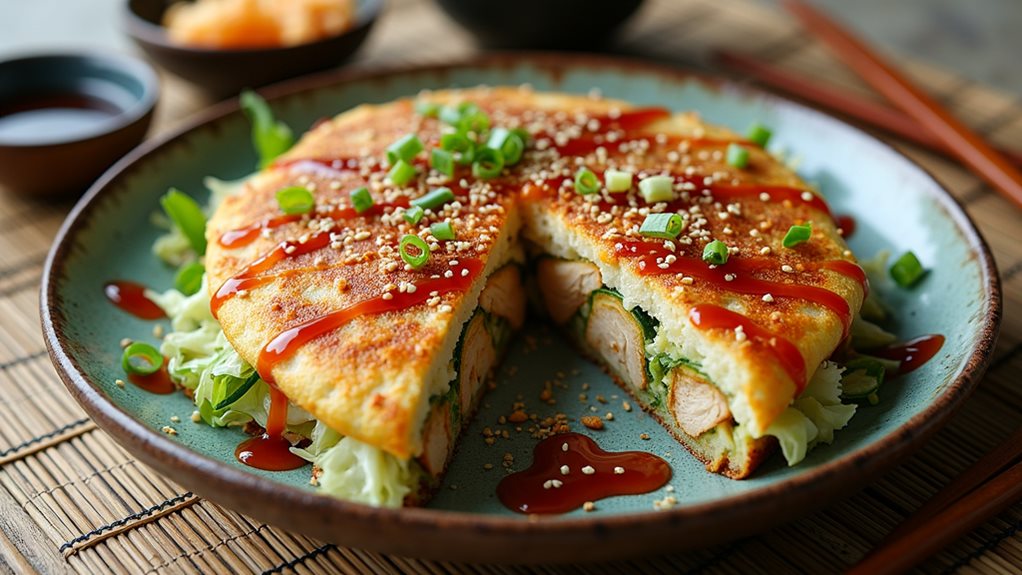
What makes okonomiyaki special is its contrasting textures: crispy exterior giving way to a tender, vegetable-packed interior.
The combination of cabbage, carrots, and zucchini creates a nutritious base, while the chicken adds satisfying protein.
I love how the sesame oil imparts a subtle nuttiness that enhances the entire dish.
What Ingredients are in Savory Japanese Okonomiyaki?
Okonomiyaki is often called “Japanese pizza” or “Japanese pancake,” but really, it’s a category all its own. This savory dish combines a flour-based batter with cabbage and various mix-ins, then gets topped with special sauces and bonito flakes. The name literally means “grilled as you like it,” which perfectly captures its customizable nature.
Let’s break down what goes into this delicious comfort food.
- 1 cup chopped cooked chicken
- 1 1/2 cups thinly sliced napa cabbage
- 1/4 cup shredded carrots
- 3 green onions, chopped
- 12 fresh green beans, cut into 1/2 inch pieces
- 1 small green bell pepper, cut into thin strips
- 1 small zucchini, cut into thin strips
- 3 eggs, lightly beaten
- 3/4 cup all-purpose flour
- 3/4 cup chicken stock
- 2 teaspoons soy sauce
- 1 teaspoon vegetable oil
- 1/4 teaspoon toasted sesame oil
While this recipe calls for chicken as the protein, many traditional versions use pork belly, seafood, or keep it vegetarian. The vegetables can also be swapped based on what’s in season or your personal preferences.
Can’t find napa cabbage? Regular green cabbage works too, though it might be slightly less tender. The chicken stock adds flavor, but vegetable stock makes a fine substitute for those avoiding meat.
And don’t forget the toppings! Though not included in the ingredient list, authentic okonomiyaki is often finished with okonomiyaki sauce (similar to Worcestershire), Japanese mayonnaise, dried seaweed, and bonito flakes for that extra umami punch.
How to Make this Savory Japanese Okonomiyaki

Making okonomiyaki is a delightful process that combines simple ingredients into a savory pancake-like dish. Start by preparing all your vegetables and proteins – 1 cup of chopped cooked chicken, 1½ cups of thinly sliced napa cabbage, ¼ cup of shredded carrots, 3 chopped green onions, 12 fresh green beans cut into ½-inch pieces, 1 small green bell pepper cut into thin strips, and 1 small zucchini cut into thin strips.
Combine all these colorful ingredients in a large bowl, creating a vibrant mixture that forms the heart of your okonomiyaki. The variety of textures here is what makes this dish so interesting – crisp cabbage, tender chicken, crunchy bell peppers. Who knew so many vegetables could come together so beautifully?
Now for the batter, which will bind everything together. In a separate bowl, lightly beat 3 eggs, then mix in ¾ cup of all-purpose flour, ¾ cup of chicken stock, and 2 teaspoons of soy sauce until silky.
Pour this mixture over your chicken and vegetable medley, making sure to coat everything thoroughly. Heat 1 teaspoon of vegetable oil with ¼ teaspoon of toasted sesame oil in a skillet over medium heat. The sesame oil gives that distinctive nutty aroma that’s absolutely worth the extra ingredient.
Scoop about ¼ cup of the batter mixture into the hot skillet to form a 2½-inch circle, cover, and cook for about 4 minutes until the bottom turns a beautiful golden brown. For the best results, use a professional stainless steel skillet that distributes heat evenly and creates that perfect crisp exterior. Flip carefully (a wide spatula works wonders here), and cook for another 4 minutes until cooked through.
Once done, let them drain on paper towels to remove any excess oil. And there you have it – traditional Japanese okonomiyaki ready to be devoured, perhaps with a drizzle of okonomiyaki sauce and a sprinkle of bonito flakes if you’re feeling fancy.
Savory Japanese Okonomiyaki Substitutions and Variations
The beauty of Japanese okonomiyaki lies in its adaptability, which is evident right in its name—”okonomi” means “what you like” and “yaki” means “grilled.”
While the traditional recipe provides a fantastic foundation, I’ve found that substitutions and variations can transform this dish to accommodate dietary restrictions, pantry limitations, or simply different taste preferences.
For protein alternatives, try shrimp, thinly sliced pork belly, or tofu instead of chicken.
Gluten-free? Swap all-purpose flour with rice flour or chickpea flour.
You can substitute any vegetables you have on hand—shredded Brussels sprouts work wonderfully in place of cabbage, while sweet potatoes can replace carrots.
For a vegetarian version, use vegetable stock instead of chicken stock and add mushrooms for umami depth.
Don’t have sesame oil? A dash of tahini adds similar nutty flavor.
What to Serve with Savory Japanese Okonomiyaki
While enjoying the savory pancake as a standalone meal works perfectly well, pairing okonomiyaki with complementary dishes improves the dining experience to a complete Japanese feast.
I recommend serving it with miso soup, which provides a warm, umami-rich counterpoint to the hearty pancake. A simple cucumber sunomono salad, dressed with rice vinegar and a touch of sugar, offers a revitalizing contrast to the richness of okonomiyaki.
For beverages, I suggest cold Japanese beer, which cuts through the savory flavors beautifully, or hot green tea for a non-alcoholic option.
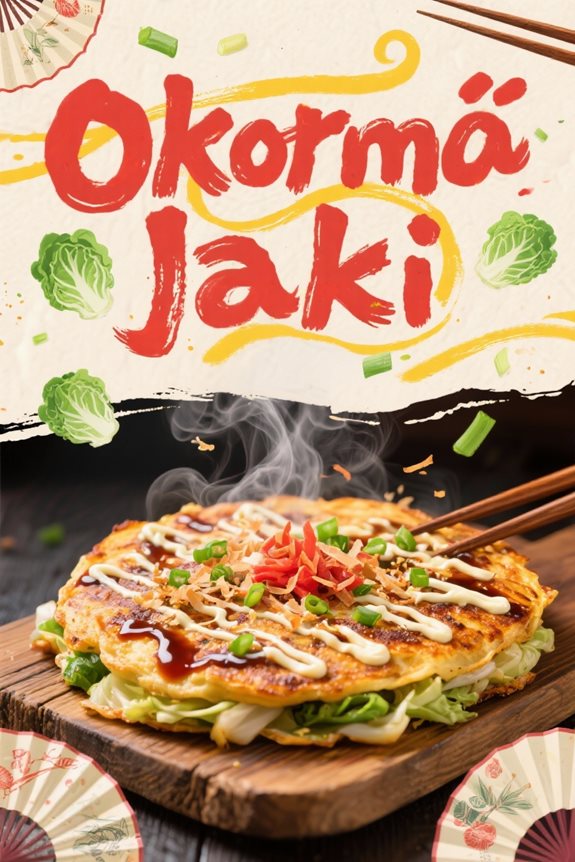
Don’t forget the traditional condiments: drizzle your okonomiyaki with Kewpie mayonnaise, okonomiyaki sauce, sprinkle with aonori (seaweed flakes), and top with bonito flakes that dance from the heat.
Final Thoughts
After exploring the delightful world of okonomiyaki, I’ve come to appreciate how this versatile Japanese pancake embodies the creative spirit of home cooking.
The beauty of this dish lies in its adaptability—you can customize it with whatever ingredients you have on hand, making it perfect for using up leftovers or experimenting with new flavor combinations.
I encourage you to try making okonomiyaki at home, where you’ll discover it’s much simpler than it appears.
Don’t worry about achieving perfection on your first attempt; each pancake becomes easier to prepare than the last.
Remember that in Japan, okonomiyaki translates roughly to “grilled as you like it,” which perfectly captures its accommodating nature.
Whether you follow my recipe exactly or create your own variation, the joy of okonomiyaki comes from making it your own.
Much like American barbecue traditions that celebrate regional specialties reflecting cultural influences and historical backgrounds, okonomiyaki represents Japan’s own distinctive culinary heritage.