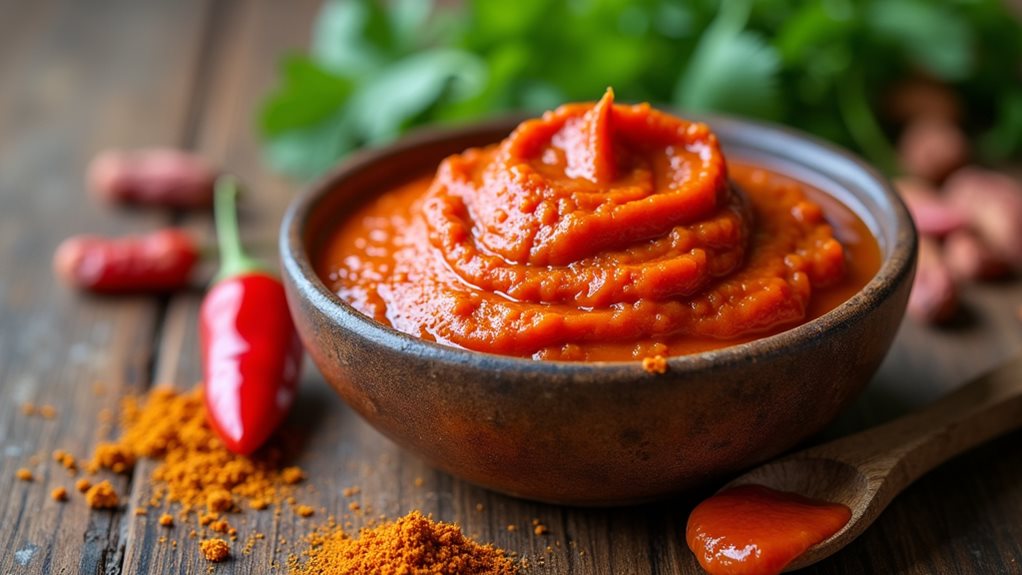
I’ve been obsessed with harissa ever since my first taste of this fiery North African chili paste. The complex blend of bird’s eye chiles, aromatic garlic, and warm spices creates a condiment that transforms ordinary dishes into extraordinary meals. Whether you’re looking to add depth to roasted vegetables or enhance your grilled meats, homemade harissa delivers unmatched flavor and authenticity. Let me show you why this versatile paste deserves a permanent spot in your culinary arsenal.
Key Takeaways
- Harissa is a North African chili paste made with hot peppers, garlic, spices, herbs, and olive oil.
- The condiment balances heat from chiles with aromatic ingredients like garlic, coriander, cumin, and mint.
- Homemade harissa offers more authentic flavor than store-bought versions and can be preserved under olive oil.
- It can be customized with different chile varieties, smokiness levels, and additional ingredients like preserved lemon.
- Harissa versatility extends to enhancing vegetables, meats, dips, grains, and bread-based dishes.
Why You’ll Love this Fiery Homemade Harissa
This homemade harissa offers an explosion of authentic North African flavors that simply can’t be matched by store-bought versions.
I’ve created this recipe to capture the perfect balance of heat from bird’s eye chiles, aromatic depth from garlic and spices, and freshness from herbs. You’ll appreciate how this versatile condiment transforms ordinary dishes into extraordinary meals with just a small spoonful.
What makes this harissa special is the preservation method—storing it under a protective layer of olive oil keeps it fresh while infusing additional flavor.
I love that nothing goes to waste; even the infused oil becomes a valuable ingredient for future cooking. The combination of coriander, cumin, mint, and fresh cilantro creates complex layers of flavor that develop and deepen over time.
What Ingredients are in Fiery Homemade Harissa?
Harissa is a fiery North African chile paste that adds incredible depth and heat to any dish. This versatile condiment relies on birds eye chiles for its signature kick, along with aromatic spices and fresh herbs that create a complex flavor profile.
Making it at home allows you to control the heat level and enjoy a fresher taste than store-bought versions.
- 6 ounces birds eye chiles (seeded and stems removed)
- 12 cloves garlic (peeled)
- 1 tablespoon ground coriander
- 1 tablespoon ground cumin
- 1 tablespoon salt
- 1 tablespoon dried mint
- 1/2 cup chopped fresh cilantro
- 1/2 cup olive oil
When selecting your ingredients, the quality of your chiles matters tremendously. Birds eye chiles provide authentic heat, but you could substitute other hot peppers if needed—just know it will alter the flavor profile slightly.
The olive oil serves a dual purpose: it helps blend the paste and acts as a preservative layer when storing. For the freshest flavor, try to use recently purchased spices rather than ones that have been sitting in your cabinet for years.
And don’t worry about the seemingly large amount of garlic—it mellows beautifully when combined with the other ingredients.
How to Make this Fiery Homemade Harissa
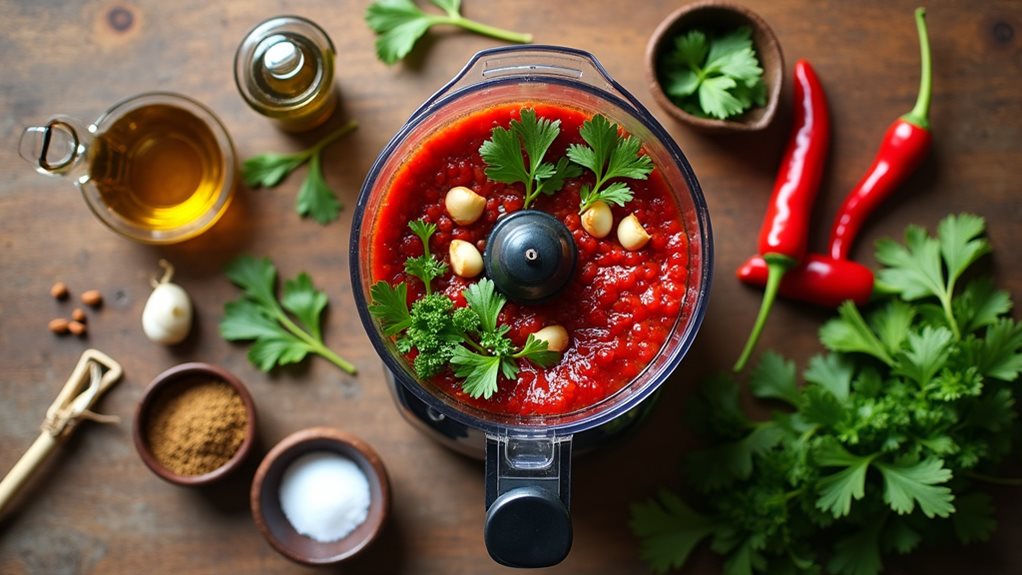
Making homemade harissa couldn’t be simpler, and the results are infinitely more flavorful than anything you’ll find at the store. Start by gathering your ingredients: 6 ounces of birds eye chiles (with seeds and stems removed), 12 cloves of peeled garlic, 1 tablespoon each of ground coriander, ground cumin, salt, and dried mint, plus 1/2 cup of chopped fresh cilantro and 1/2 cup of olive oil.
These fiery little peppers mean business, so you might want to wear gloves when handling them—unless you enjoy the surprise of touching your eye hours later and discovering exactly how long chile oils can linger on skin.
Once your ingredients are prepped, simply place the chiles, garlic, spices, salt, mint, and cilantro into a food processor or blender. The Kitchen Food Processor Deluxe makes quick work of creating the perfect harissa consistency while preserving all the vibrant flavors. Give everything a whirl until it forms a thick paste, adding a bit of the olive oil if the mixture seems too dry to blend properly.
The beautiful thing about harissa is how adaptable it is—want it creamier? Process longer. Prefer a bit more texture? Just pulse until you reach your desired consistency.
When you’re satisfied with the texture, transfer your harissa to a clean jar or bowl, and pour the remaining olive oil over the top to create a protective layer. This oil barrier is vital, not merely decorative—it helps preserve your harissa and keeps it fresher longer in the refrigerator.
And can we talk about the bonus? That infused oil becomes flavor gold for future cooking projects.
Remember to always maintain that protective oil layer on top of your harissa each time you use some. Just spoon out what you need, then make sure the surface is again covered with oil before returning it to the fridge.
When you eventually run out of the harissa paste, don’t toss that remaining oil—it’s packed with all those complex spices and chile flavors. Use it to add instant depth to roasted vegetables, drizzle it over eggs, or toss it with pasta. Talk about getting more bang for your culinary buck.
Fiery Homemade Harissa Substitutions and Variations
While the traditional recipe creates a magnificent harissa paste, don’t feel constrained by the exact ingredients listed.
I’ve experimented with substituting different chile varieties when bird’s eye peppers aren’t available—try Fresno, cayenne, or even dried ancho chiles for varying heat levels and flavor profiles.
For a smokier version, incorporate 1-2 teaspoons of smoked paprika or use fire-roasted red peppers in place of some chiles.
If you’re not a cilantro fan, flat-leaf parsley works beautifully as an alternative.
I sometimes add a tablespoon of tomato paste for additional body and sweetness or include preserved lemon for a citrusy tang.
The oil can be customized too—try avocado oil for a neutral base or a robust extra virgin olive oil when you want that distinctive Mediterranean character to shine through.
What to Serve with Fiery Homemade Harissa
Once you’ve prepared this vibrant North African chile paste, the culinary possibilities broaden dramatically across your kitchen repertoire.
I love adding a dollop to roasted vegetables, particularly cauliflower or carrots, where the spicy complexity amplifies their natural sweetness.
Harissa transforms ordinary proteins too—try rubbing it on chicken before roasting, stirring into lamb stews, or spreading on fish fillets before grilling.
It’s exceptional when swirled into hummus or yogurt for an instant dip that’ll impress guests.
Don’t overlook its potential in grain dishes; I often stir a teaspoon into couscous or rice for incredible depth.
For a simple yet satisfying lunch, spread harissa on crusty bread with a fried egg on top—the runny yolk mellows the heat perfectly.
Final Thoughts
Harissa stands as one of North Africa’s greatest culinary gifts to the world—a versatile chile paste that can transform ordinary dishes into extraordinary meals.
I’ve found that making harissa at home allows me to control the heat level and customize it to my personal taste, something you’ll never achieve with store-bought versions. This spicy condiment pairs exceptionally well with coconut milk dishes for a unique fusion of North African heat and tropical creaminess.