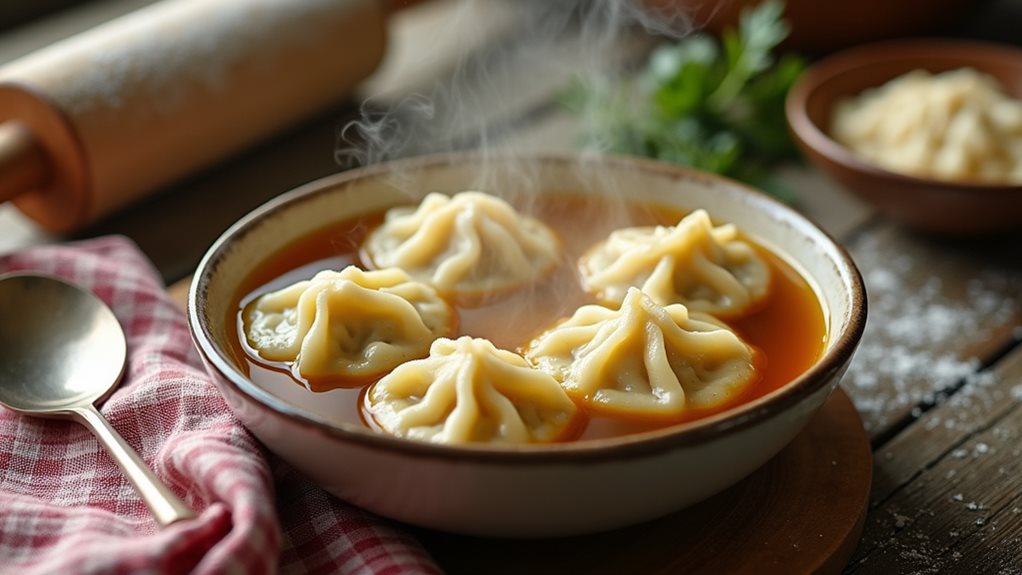
I’ve been making gyoza for years, and I’m excited to share my secrets for creating these irresistible Japanese dumplings at home. There’s something magical about biting through that perfectly crispy bottom into a juicy, flavorful filling. Whether you’re a complete beginner or looking to perfect your technique, I’ll walk you through every step to guarantee your gyoza turns out spectacular. Wait until you discover my special folding method that keeps all that savory goodness locked inside.
Key Takeaways
- Gyoza are Japanese dumplings typically filled with ground meat and vegetables, then pan-fried and steamed.
- Traditional gyoza feature a crispy golden bottom with a tender steamed top for contrasting textures.
- Common fillings include ground pork, beef, or chicken combined with cabbage, green onions, and seasonings.
- Gyoza are typically served with a dipping sauce made from soy sauce, vinegar, and sometimes chili oil.
- They can be prepared as appetizers or main dishes and paired with rice, soup, or vegetables.
Why You’ll Love these Juicy Homemade Gyoza
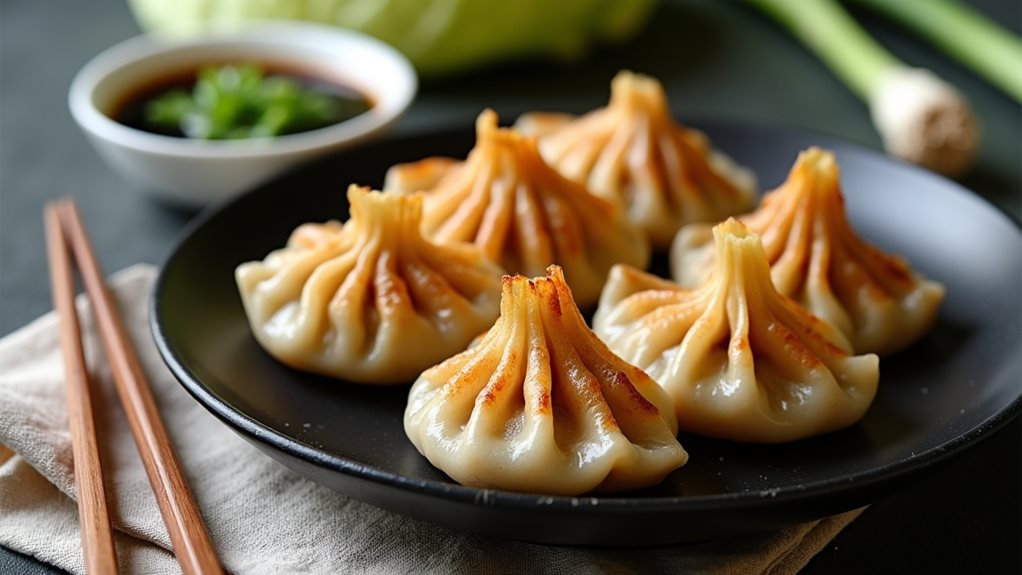
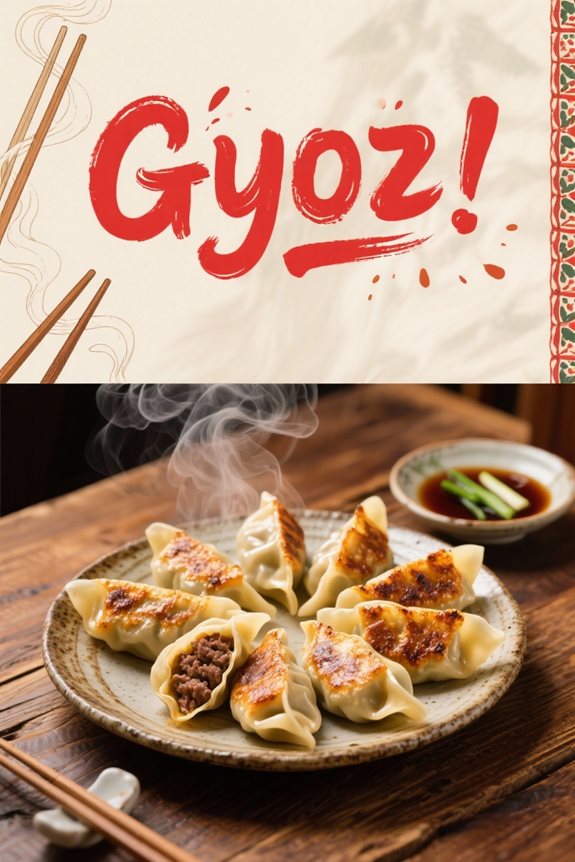
When you bite into these perfectly crisp yet tender homemade gyoza, you’ll understand why they’ve become a staple in my kitchen. The contrast between the golden, crispy bottom and the delicate steamed top creates a textural masterpiece that’s impossible to resist.
I’ve perfected this recipe through countless iterations, balancing the savory ground beef with fresh cabbage and green onions. Each dumpling delivers a burst of umami flavor, improved by simple seasonings that don’t overwhelm the natural ingredients.
What I love most is their versatility—serve them as appetizers at dinner parties or enjoy them as a complete meal.
They’re surprisingly straightforward to prepare, despite their impressive appearance. The folding technique becomes meditative once you’ve mastered it, transforming basic ingredients into elegant, restaurant-quality dumplings.
What Ingredients are in Juicy Homemade Gyoza?
Making delicious homemade gyoza isn’t as complicated as you might think. The secret to truly juicy gyoza lies in using the right balance of meat, vegetables, and seasonings, all wrapped in those delicate wonton wrappers.
With just a handful of ingredients, you can create these savory little dumplings that rival your favorite restaurant versions.
- 1 pound ground beef
- 1 egg
- 1/2 to 3/4 cup finely chopped cabbage
- 1/2 cup finely chopped green onion
- Salt and pepper to taste
- 1 package wonton wraps
- Water (for sealing the wrappers)
- Oil (for cooking)
While this recipe calls for ground beef, many traditional gyoza recipes use ground pork or a mixture of pork and beef for added flavor. Feel free to substitute according to your preferences.
The cabbage adds moisture and a slight crunch, while the green onions bring a mild, aromatic flavor. Don’t skimp on seasoning with salt and pepper—proper seasoning makes all the difference between bland and flavorful gyoza.
And remember, having a small bowl of water nearby makes the wrapping process much easier, as you’ll need to dampen the edges of the wonton wrappers to create a proper seal.
How to Make these Juicy Homemade Gyoza
Making gyoza at home is surprisingly simple and so rewarding. Start by preparing your filling—combine 1 lb. of ground beef, 1 egg, 1/2 to 3/4 cup of finely chopped cabbage, and 1/2 cup of finely chopped green onion in a large bowl.
Season with salt and pepper to taste, then mix everything thoroughly until well combined. The cabbage adds a lovely crunch while the green onions bring that perfect aromatic bite to these dumplings.
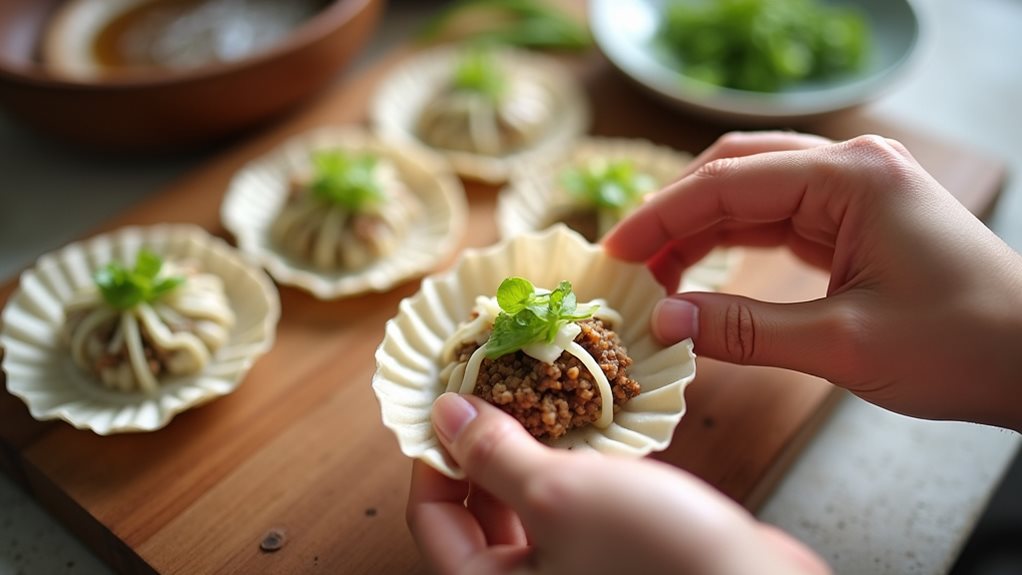
Now comes the fun part—assembly! Take your package of wonton wraps (available in most grocery stores) and place about a tablespoon of the meat mixture in the center of each wrap.
Have a small bowl of water nearby, as you’ll need it for sealing. Dip your fingers in the water and wet all sides of the wonton wrap, then fold it over into a triangle shape. Press the edges down firmly to seal, gently flattening the meat mixture inside.
Don’t overstuff them or they might burst during cooking, and nobody wants to see their precious filling escape into the pan!
Once all your gyoza are assembled, heat a bit of oil in a skillet and cook until they’re golden brown on the bottom and the filling is thoroughly cooked.
The transformation from raw ingredients to these plump, juicy dumplings is nothing short of magical.
For even more efficiency when preparing ingredients, a professional spiralizer can help you create perfectly shredded cabbage in seconds.
Juicy Homemade Gyoza Substitutions and Variations
While the classic gyoza recipe calls for ground beef, you’ll find that these delicious dumplings are incredibly versatile and adaptable to whatever ingredients you have on hand.
I’ve experimented with ground pork, chicken, and turkey as excellent meat alternatives, each bringing their own unique flavor profiles to the filling.
For vegetarian options, I recommend a mixture of finely chopped mushrooms, tofu, and minced vegetables.
You can also experiment with different vegetables beyond cabbage—try adding grated carrots, spinach, or water chestnuts for extra texture and nutrients.
Don’t be afraid to incorporate additional seasonings like minced ginger, garlic, or sesame oil to improve the flavor profile.
If wonton wrappers aren’t available, you can substitute with round dumpling wrappers or even make your own dough with flour and water.
What to Serve with Juicy Homemade Gyoza
When preparing a complete meal featuring juicy homemade gyoza, I’ve found that complementary side dishes and dipping sauces can transform these dumplings into an extraordinary dining experience.
Traditional accompaniments include a simple soy-vinegar dipping sauce with a touch of chili oil or a ponzu sauce for citrusy brightness.
For side dishes, consider serving steamed rice to balance the flavors, a light miso soup for warmth, or a crisp Asian-inspired slaw with sesame dressing.
Edamame makes an excellent starter, while pickled vegetables provide palate-cleansing acidity between bites.
For a more substantial meal, pair your gyoza with stir-fried vegetables or a small portion of teriyaki chicken.
Remember that gyoza typically serves as part of a larger spread rather than standing alone.
Final Thoughts
Gyoza represents more than just a delicious appetizer or side dish in Japanese cuisine—it’s a versatile culinary tradition that brings people together.
Whether you’re folding these dumplings with family on a weekend afternoon or serving them at a dinner party, the process of creating gyoza can be as rewarding as eating them.
I hope this guide has inspired you to try making gyoza at home.
Don’t worry if your first attempts aren’t perfect—my early gyoza certainly weren’t! With practice, you’ll develop your own technique for folding and cooking these savory treats.
Remember that while the recipe I’ve shared uses beef, you can easily substitute pork, chicken, or vegetables to suit your preferences.
Similar to how fresh thyme leaves enhance the earthy flavors in traditional mushroom risotto, adding fresh herbs to your gyoza filling can elevate the dish to new heights.
Next time you’re craving something special, give homemade gyoza a try. I promise it’s worth the effort.