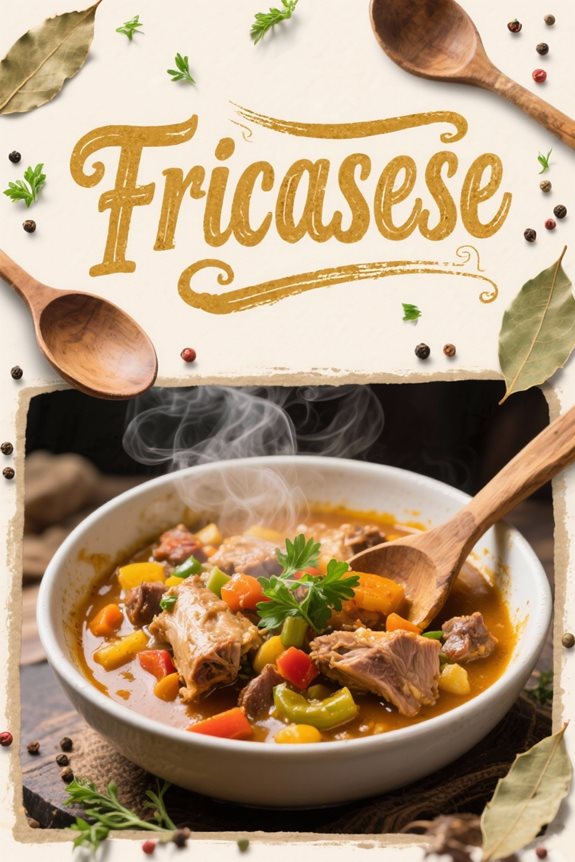
I’m always drawn to fricassee when I want a meal that’s both comforting and impressive. This classic cooking technique transforms humble ingredients like turkey necks into something extraordinary through gentle simmering in a flavorful broth. What makes fricassee special isn’t just its rich taste, but its adaptability—you can customize it with whatever vegetables or seasonings you have on hand. The magic happens when those tender meat pieces absorb the surrounding flavors, creating something far greater than the sum of its parts.
Key Takeaways
- Fricassee is a cooking method involving meat cut into pieces, sautéed, and then braised in a sauce or gravy.
- The dish typically features white meat like chicken, veal, or turkey that’s cooked without browning first.
- Fricassee sauce is usually thickened with eggs or cream, giving it a distinctive rich texture.
- Traditional fricassee bridges the gap between a sauté and a stew, creating a comforting one-pot meal.
- Regional variations exist across French, Creole, and Southern American cuisines, each with unique spice profiles.
Why You’ll Love this Soothing Turkey Neck Fricassee
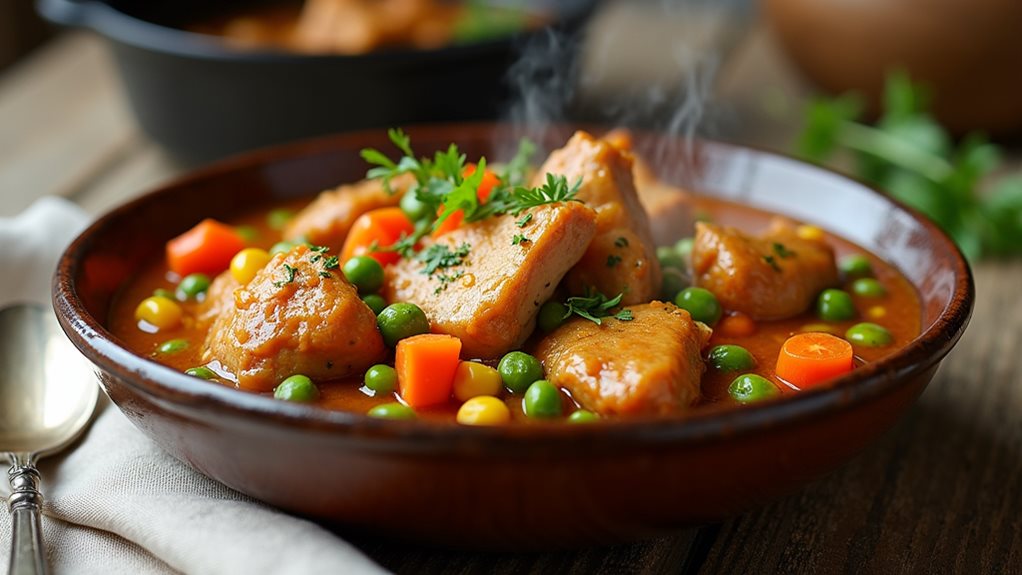
When comfort food calls on a chilly evening, nothing satisfies quite like this hearty turkey neck fricassee. I’ve found that this humble dish transforms often-overlooked turkey necks into a deeply satisfying meal that’s both economical and nourishing.
The slow simmering process allows the meat to become remarkably tender while creating a rich, flavorful broth.
What makes this fricassee special is its versatility. The gentle infusion of ginger adds unexpected warmth, while the frozen mixed vegetables provide convenience without sacrificing nutrition.
I particularly appreciate how the flour-broth solution creates just the right consistency—not too thick, not too thin. This one-pot wonder requires minimal active cooking time, letting you tend to other tasks while dinner fundamentally prepares itself.
It’s the perfect introduction to cooking with turkey necks if you’ve never tried them before.
What Ingredients are in Soothing Turkey Neck Fricassee?
Turkey neck fricassee is one of those humble, comforting dishes that reminds me of simpler times.
There’s something deeply satisfying about transforming an often-overlooked part of the turkey into a hearty, warming meal that stretches your grocery budget. The combination of tender meat simmered slowly with vegetables creates a dish that’s greater than the sum of its parts.
And the best part? You don’t need fancy ingredients to make something truly delicious.
Ingredients:
- 1 package Brady Brook turkey necks (32 oz)
- 32 oz water
- 1 teaspoon salt
- 1/4 teaspoon pepper
- 1/4 teaspoon ginger
- 1/2 teaspoon dry parsley flakes
- 1 tablespoon butter
- 1 package (20 oz) frozen mixed vegetables
- 3 tablespoons flour
When shopping for this recipe, don’t worry if you can’t find Brady Brook specifically—any brand of turkey necks will work just fine.
The frozen mixed vegetables provide convenience and consistency, but you could certainly substitute fresh vegetables if you prefer, adjusting the cooking time accordingly.
The flour creates that lovely, slightly thickened broth that distinguishes a proper fricassee from a simple stew.
And while the spices are minimal, they provide just enough flavor without overwhelming the natural taste of the turkey.
This is comfort food at its most honest.
How to Make this Soothing Turkey Neck Fricassee
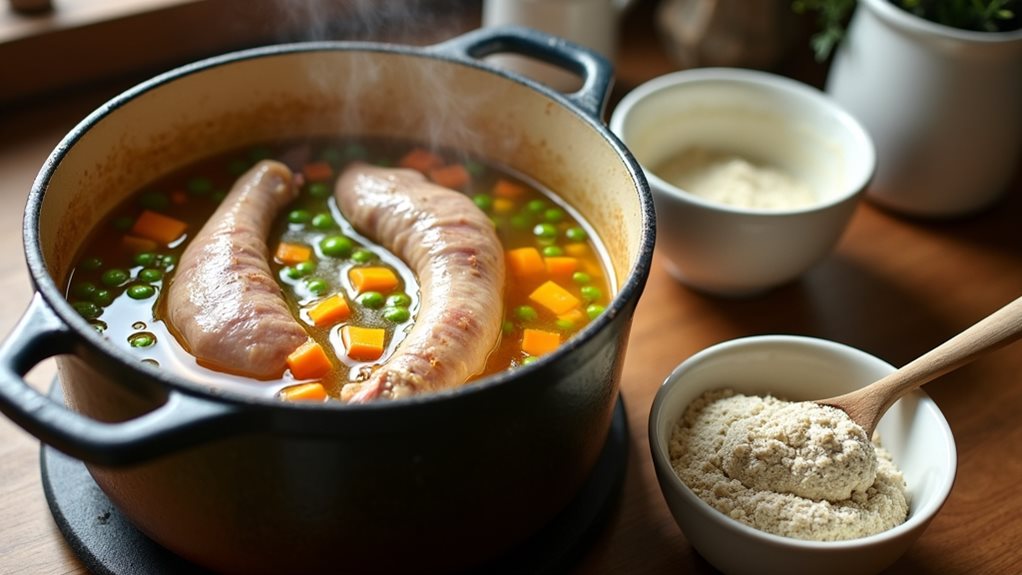
Start by gathering all your ingredients for this comforting dish.
You’ll need one package of Brady Brook turkey necks, which mightn’t be the most glamorous cut of meat, but trust me, they create the most flavorful broth you can imagine.
Pour 32 ounces of hot water into a stew pot, then add 1 teaspoon of salt, 1/4 teaspoon each of pepper and ginger, 1/2 teaspoon of dry parsley flakes, and 1 tablespoon of butter.
These simple seasonings work magic with the turkey necks to create a deeply satisfying base for our fricassee.
Add those turkey necks to the seasoned water and let everything simmer until the meat is almost tender.
The necks need time to release their rich flavor and become fall-off-the-bone soft, which is exactly what we want for a proper fricassee.
When the meat is nearly done, toss in one 20-ounce package of frozen mixed vegetables and cook according to the package instructions.
While that’s happening, it’s time for the most important step that transforms this from soup to fricassee—the thickening.
In a small saucer, mix 3 tablespoons of flour with some of the hot broth from your pot until you’ve created a semi-thin solution with no lumps.
Who needs fancy roux when this simple trick works so well?
For easier preparation of your vegetables, consider using a Commercial Food Processor Deluxe to quickly dice and slice ingredients for a more uniform result.
Slowly pour this mixture back into the pot, stirring constantly to avoid clumps, and watch as your fricassee transforms into that perfectly thickened consistency that clings beautifully to each spoonful.
Soothing Turkey Neck Fricassee Substitutions and Variations
Although the classic recipe calls for Brady Brook turkey necks, you’ll find several worthy substitutions if you can’t locate this specific brand. Any quality turkey necks will work beautifully, or you can opt for chicken necks for a milder flavor profile.
In a pinch, I’ve even used turkey wings or drumsticks with excellent results.
For the vegetables, feel free to customize beyond the frozen mixed variety. I sometimes create a medley of fresh seasonal vegetables—diced carrots, celery, and peas make a wonderful combination when added at appropriate cooking times.
To improve the flavor profile, consider adding a bay leaf or small diced onion to the broth. For a richer fricassee, you can substitute chicken broth for some or all of the water.
What to Serve with Soothing Turkey Neck Fricassee
Now that you’ve mastered the basic fricassee recipe and its variations, let’s explore the perfect accompaniments to round out your meal.
I recommend serving this hearty dish over a bed of fluffy white rice or buttered egg noodles to soak up the delicious gravy. Crusty French bread or homemade biscuits make excellent vehicles for mopping up any remaining sauce.
For a complete dinner, I suggest a crisp garden salad with a light vinaigrette to balance the richness of the fricassee.
If you’re looking to add more vegetables, consider roasted root vegetables or steamed greens like collards or kale. A glass of medium-bodied white wine, such as Chardonnay or Viognier, pairs beautifully with the savory flavors of this comforting dish.
Final Thoughts
When I reflect on this traditional fricassee recipe, I’m reminded of why this humble dish has endured through generations of home cooking. The simmering of turkey necks creates a depth of flavor that simply can’t be rushed, transforming affordable ingredients into something truly special.
What I appreciate most about this recipe is its versatility. You can adjust the seasonings to your taste, swap in different vegetables based on what’s in season, or even use chicken instead of turkey necks if that’s what you have on hand.
The technique of thickening with a flour-broth solution remains the key to achieving that classic fricassee consistency.
I hope you’ll try this comforting dish on your own table soon, perhaps starting a new tradition in your family’s culinary repertoire. Like chicken pot pie, fricassee has historical roots as a practical method for transforming available ingredients into a hearty, satisfying meal.