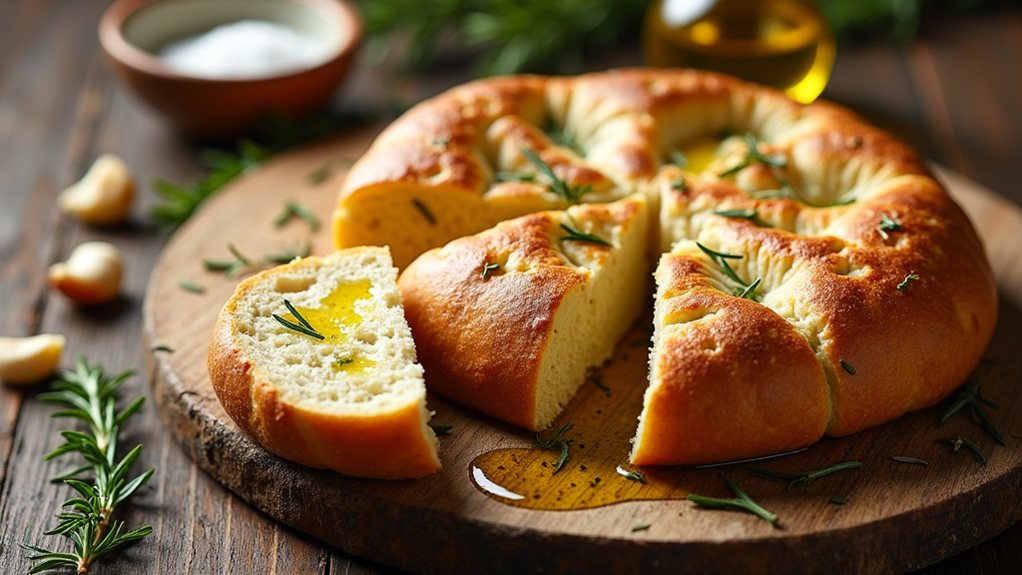
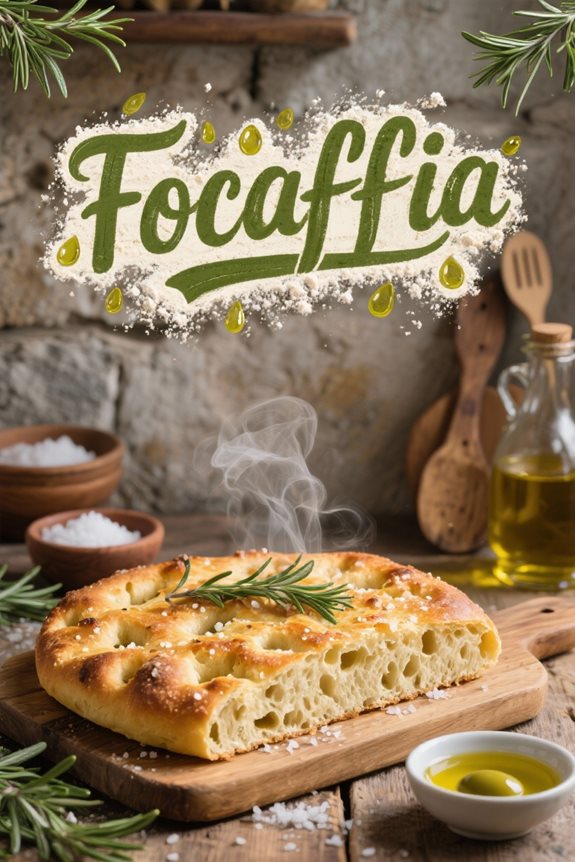
I’ve spent years perfecting my focaccia recipe, and I’m thrilled to share it with you today. This rustic Italian bread, with its dimpled surface and herb-infused crumb, transforms ordinary meals into memorable experiences. Unlike standard bread, focaccia’s magic lies in its generous olive oil and the technique of pressing those signature indentations before baking. What makes this recipe special isn’t just the ingredients but the little secrets I’ll reveal about handling the dough just right.
Key Takeaways
- Focaccia is an authentic Italian flatbread with a crispy exterior and soft, pillowy interior.
- Made with simple ingredients including flour, yeast, water, olive oil, and salt.
- Versatile bread that serves as an appetizer, sandwich base, or accompaniment to soups and salads.
- Traditional preparation involves kneading the dough thoroughly and allowing it to rise until doubled in size.
- Can be customized with various toppings like herbs, cherry tomatoes, caramelized onions, olives, or cheese.
Why You’ll Love this Rustic Italian Focaccia
Bread lovers, prepare to be enchanted by this authentic Italian focaccia that combines simplicity with extraordinary flavor.
I’ve designed this recipe to bring the true essence of Italian bakeries right into your kitchen, with a perfectly crisp exterior and pillowy interior that’s impossible to resist.
What makes this focaccia special is its versatility—you can enjoy it as an appetizer, sandwich base, or accompaniment to soups and salads.
The olive oil creates that signature golden crust, while the optional fresh herbs infuse every bite with aromatic delight.
I particularly love how the coarse salt crystals add unexpected pops of flavor throughout the bread.
Plus, despite its artisanal appearance, you’ll find the technique straightforward enough for even novice bakers to master.
What Ingredients are in Rustic Italian Focaccia?
Rustic Italian focaccia is one of those simple yet magical breads that transforms basic pantry ingredients into something absolutely divine. With just a handful of staples like flour, yeast, water, and olive oil, you can create a pillowy, golden bread that’s perfect for dipping, sandwiches, or simply enjoying on its own. The beauty of focaccia lies in its simplicity—the ingredients are few but the flavor is tremendous.
Ingredients for Homemade Focaccia:
- 1 envelope active dry yeast
- 1½ cups warm water
- Pinch of sugar
- 2 teaspoons coarse or kosher salt (divided)
- 4 tablespoons olive oil (divided)
- 4 cups all-purpose flour
- 2 teaspoons minced fresh rosemary or thyme (optional, but highly recommended)
The quality of ingredients matters when making something as simple as focaccia. For the best results, use a good quality olive oil since its flavor will really shine through in the finished bread. The herbs are technically optional, but they add such wonderful aromatic flavor that I’d consider them almost crucial. You can experiment with different herbs or even add toppings like cherry tomatoes, olives, or thinly sliced onions once you’ve mastered the basic recipe. And don’t skimp on the salt—that final sprinkle of coarse salt before baking creates those delightful little bursts of flavor in every bite.
How to Make this Rustic Italian Focaccia
To begin this delicious focaccia, you’ll need to activate 1 envelope of yeast in a cup with 1/4 cup warm water and a pinch of sugar. Let this mixture stand for about 5 minutes until it becomes foamy and active. This is how you know your yeast is ready to work its magic!
Transfer this mixture to a larger bowl and add the remaining 1 1/4 cups of water, 1 1/2 teaspoons of coarse salt, and 2 tablespoons of olive oil. This liquid base will create the perfect environment for developing those lovely air pockets that make focaccia so special.
Now comes the flour—start by stirring in 2 cups until the mixture is even, then gradually add another cup along with 2 teaspoons of minced fresh rosemary or thyme (or both if you’re feeling adventurous). The herbs are optional but highly recommended for that authentic Italian flavor profile.
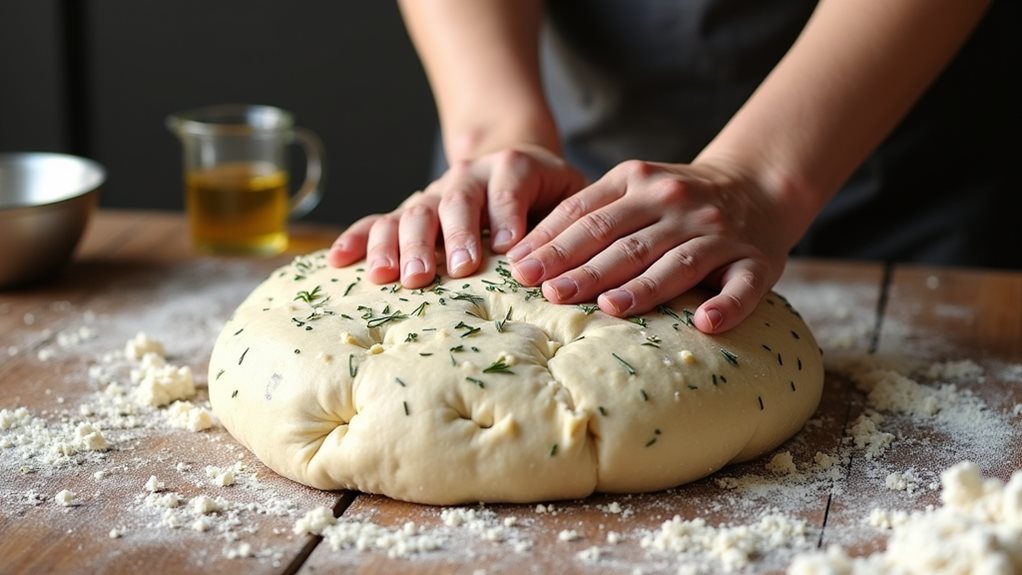
Once well combined, turn the dough onto a floured surface and prepare for a mini arm workout. Knead the dough for at least 10 minutes, incorporating the remaining cup of flour as needed to achieve an even, elastic consistency. The dough will remain somewhat soft, which is exactly what we want for that perfect texture.
Place your beautiful dough ball in an oiled bowl, cover it, and let it rise until doubled in size. For best results, use a stainless steel bowl from a professional cookware set to maintain consistent temperature during the rising process. During this time, the yeast works quietly, creating the airy structure that makes focaccia so irresistibly light and pillowy.
Rustic Italian Focaccia Substitutions and Variations
While your focaccia dough rises, let’s explore the wonderful world of substitutions and variations that make this Italian flatbread so versatile.
I often swap all-purpose flour with whole wheat or a gluten-free blend (just add 1/4 teaspoon xanthan gum). Don’t have fresh herbs? Dried rosemary or thyme works well—just use 1/3 the amount.
For toppings, I love pressing cherry tomatoes, caramelized onions, or olives into the dough before baking. You can also add grated parmesan, crumbled feta, or thinly sliced garlic to the top.
For a sweeter version, I sometimes drizzle honey and sprinkle sea salt after baking. If you’re short on olive oil, avocado oil makes a respectable substitute, though you’ll miss some of that distinctive Mediterranean flavor.
What to Serve with Rustic Italian Focaccia
Once your golden-brown focaccia emerges from the oven, you’ll want to pair it with complementary foods that enhance its rustic charm and flavor profile.
I recommend serving it alongside a robust tomato soup, where you can tear off chunks for dipping, or as part of an antipasto spread with cured meats, aged cheeses, and marinated vegetables.
For a more substantial meal, focaccia makes an excellent sandwich bread—try slicing it horizontally and filling with roasted vegetables, fresh mozzarella, and basil.
It also pairs beautifully with hearty pasta dishes, soaking up rich sauces with its porous texture.
During summer months, I enjoy serving focaccia with a simple caprese salad or alongside grilled seafood for a Mediterranean-inspired feast that lets the bread’s olive oil and herb flavors shine.
Final Thoughts
Focaccia stands as one of the most rewarding breads you’ll ever create in your home kitchen. The satisfaction of watching that yeasty dough transform into a golden, dimpled masterpiece is unmatched in the baking world.
I’ve found that even beginners can achieve impressive results with this forgiving Italian classic. Don’t be afraid to experiment beyond the traditional rosemary topping. I’ve tried everything from caramelized onions to cherry tomatoes with spectacular results.
Remember that your focaccia will develop even more character if you allow the dough adequate rising time—patience truly pays off.
For a truly impressive presentation, consider arranging your toppings in artistic garnishes that complement the rustic nature of the bread while adding visual dimension.
Keep this recipe in your regular rotation, and you’ll soon discover why this ancient bread has endured for centuries. It’s versatile, impressive, and captures the essence of rustic Italian baking in every bite.