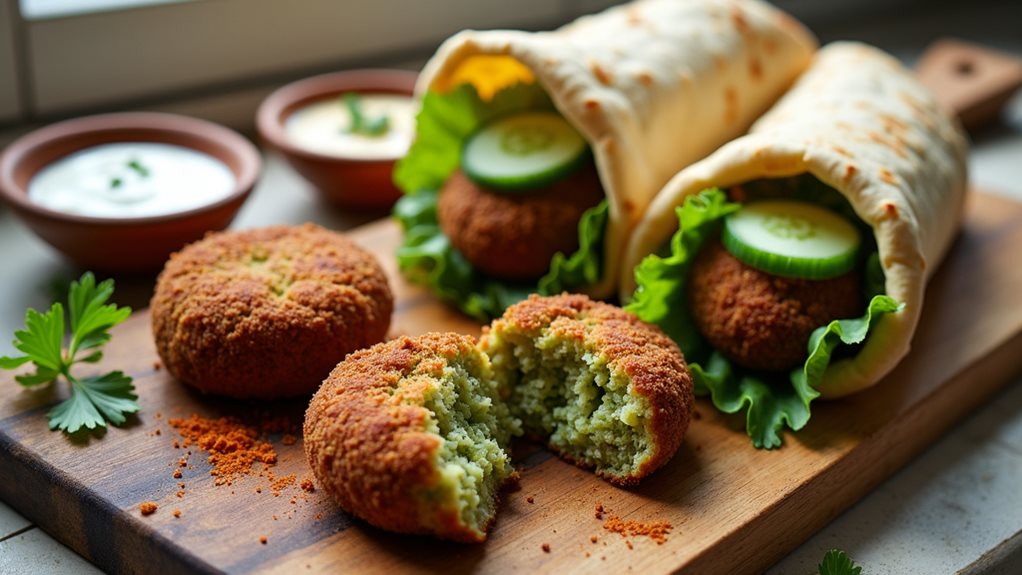
I’ve discovered that the best homemade falafels aren’t just delicious—they’re life-changing. After years of trial and error, I’ve perfected a recipe that delivers that authentic crispy exterior with a tender, herb-infused interior that’ll transport you straight to the streets of Tel Aviv. If you’ve ever had a disappointing, dry falafel or thought they were too complicated to make at home, I’m about to change your mind. The secret lies in a technique most recipes completely overlook.
Key Takeaways
- Falafel is a traditional Mediterranean dish made from dried chickpeas soaked overnight and blended with herbs and spices.
- The mixture is shaped into patties and fried until crispy on the outside while remaining tender inside.
- Key spices include cumin, allspice, and a touch of red pepper for authentic Mediterranean flavor.
- Falafel is traditionally served in pita pockets with yogurt-tahini sauce and fresh vegetables.
- Variations include Egyptian-style with fava beans, gluten-free options with lettuce wraps, and different herb combinations.
Why You’ll Love these Crispy Mediterranean Falafels
Perfection in every bite, these crispy Mediterranean falafels will transform your homemade dining experience.
I’ve crafted this recipe to deliver authentic flavor with the perfect texture—golden brown exteriors giving way to a tender, herb-infused interior.
You’ll appreciate how the dried chickpeas, soaked overnight rather than using canned, create that distinctive falafel consistency that won’t fall apart during cooking.
The blend of cilantro, cumin, and allspice brings together the quintessential Mediterranean profile, while the addition of leeks offers a subtle complexity most recipes lack.
I’ve balanced the heat with just enough red pepper to wake up your palate without overwhelming it.
Paired with the cooling Yogurt-Tahini Dip and tucked into warm pita pockets, these falafels deliver restaurant-quality results right from your kitchen.
What Ingredients are in Crispy Mediterranean Falafels?
Falafel is a beloved Mediterranean dish that’s crispy on the outside and tender on the inside. These flavorful chickpea patties are packed with herbs and spices, making them perfect for stuffing into warm pita bread with a creamy yogurt-tahini sauce.
The traditional recipe starts with dried chickpeas rather than canned, which gives the falafel that authentic texture and taste we all crave.
- 1½ cups dried chickpeas (garbanzo beans, about 12 oz.)
- 2 cups chopped fresh cilantro
- 1 teaspoon cumin
- 1 teaspoon allspice
- ¼ teaspoon salt
- ¼ teaspoon black pepper
- ⅛ teaspoon ground red pepper
- 5 garlic cloves, peeled
- 1 onion, quartered
- 1 leek, trimmed and cut into 3 pieces
- 6 tablespoons olive oil, divided
- 8 (6-inch) pitas, cut in half
- Yogurt-Tahini Dip (for serving)
One important thing to note about these ingredients is the soaking time for the chickpeas. You’ll need to plan ahead since they require 8 hours of soaking before you can proceed with the recipe.
This step can’t be rushed, as properly soaked chickpeas create the right texture for authentic falafel. Also, while some recipes call for canned chickpeas, using dried beans is what gives these falafels their distinctive crumbly-yet-cohesive texture that canned versions just can’t match.
The combination of fresh herbs and aromatic spices is what makes these Mediterranean falafels truly special.
How to Make these Crispy Mediterranean Falafels
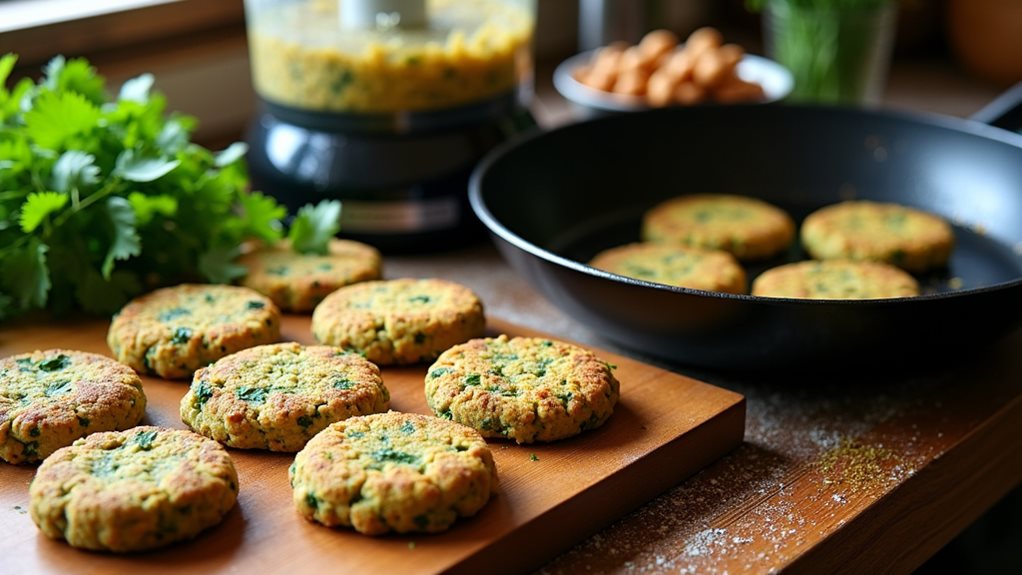
Making authentic falafel starts with proper preparation of the chickpeas. You’ll need 1½ cups of dried chickpeas (about 12 ounces), which must be sorted, washed, and soaked for a full 8 hours. This soaking step is non-negotiable, folks—it softens the beans perfectly without cooking them, which would make your falafels mushy rather than crispy. After soaking, drain those plump chickpeas completely.
Now for the fun part: combining flavors. In your food processor, add the soaked chickpeas, 2 cups of chopped fresh cilantro, 1 teaspoon each of cumin and allspice, ¼ teaspoon each of salt and black pepper, ⅛ teaspoon of ground red pepper, 5 peeled garlic cloves, 1 quartered onion, and 1 trimmed leek cut into 3 pieces.
Pulse until the mixture resembles coarse meal—not too velvety, not too chunky. Just right. Shape this mixture into 16 equal patties, about ½ inch thick each. The texture should hold together when pressed, but still feel somewhat loose.
Next, heat 2 tablespoons of olive oil (you’ll use 6 tablespoons total, divided into three batches) in a large non-stick skillet. Cook about 5 patties at a time for 3 minutes on each side until they develop that gorgeous golden-brown crust that makes falafel so irresistible. For high-volume preparation, a commercial falafel maker can significantly increase production efficiency while maintaining consistent quality. Repeat with remaining oil and patties.
Finally, serve by spreading 1 tablespoon of Yogurt-Tahini Dip in each pita half and stuffing with a falafel patty. One serving includes two stuffed pita halves—enough to satisfy but still leave you wanting more.
Crispy Mediterranean Falafels Substitutions and Variations
While traditional falafel recipes like the one above create authentic Mediterranean flavors, you’ll be pleased to know several substitutions and variations can accommodate dietary restrictions or ingredient availability without sacrificing that signature crispy texture.
For gluten-free diets, replace pita with lettuce wraps or gluten-free flatbreads. If you’re avoiding chickpeas, try using fava beans instead—they’re actually traditional in Egyptian falafel.
Don’t have fresh cilantro? Parsley works beautifully, giving a slightly different but equally delicious herbaceous note. For a spicier version, double the red pepper or add a diced jalapeño to the mixture.
I’ve found that adding a tablespoon of sesame seeds creates extra crunch, while a splash of lemon juice brightens the entire flavor profile.
What to Serve with Crispy Mediterranean Falafels
When you’ve perfected your crispy Mediterranean falafels, the perfect accompaniments can elevate your meal from satisfying to spectacular.
I recommend starting with a classic yogurt-tahini sauce, which provides a creamy contrast to the crispy exterior of your falafels.
Fresh vegetables are crucial partners—try a simple Israeli salad with diced tomatoes, cucumbers, and red onions dressed with lemon juice and olive oil.
For a more substantial meal, I serve my falafels in warm pita pockets with pickled turnips, fresh herbs like mint and parsley, and a drizzle of hot sauce.
Don’t forget about sides like tabbouleh, hummus, or roasted eggplant spread.
These traditional Mediterranean offerings create a balanced feast that showcases your falafels while providing complementary flavors and textures.
Final Thoughts
As you commence your falafel-making adventure, remember that patience and practice lead to perfection. I’ve found that the key to exceptional falafel lies in properly soaked chickpeas and a well-balanced spice mixture.
Don’t rush the soaking process—those eight hours are crucial for developing the right texture.
While making falafel requires some time investment, the results are well worth the effort. You’ll create a dish that’s not just economical but also nutritionally superior to most restaurant versions.
Consider pairing your falafel with a side of mushroom risotto for a complete Mediterranean-inspired meal that balances flavors and textures beautifully.
I encourage you to experiment with the basic recipe once you’ve mastered it, perhaps adding fresh herbs like parsley or adjusting the spice levels to suit your preference. The versatility of falafel makes it perfect for meal prep, family dinners, or impressive entertaining options.