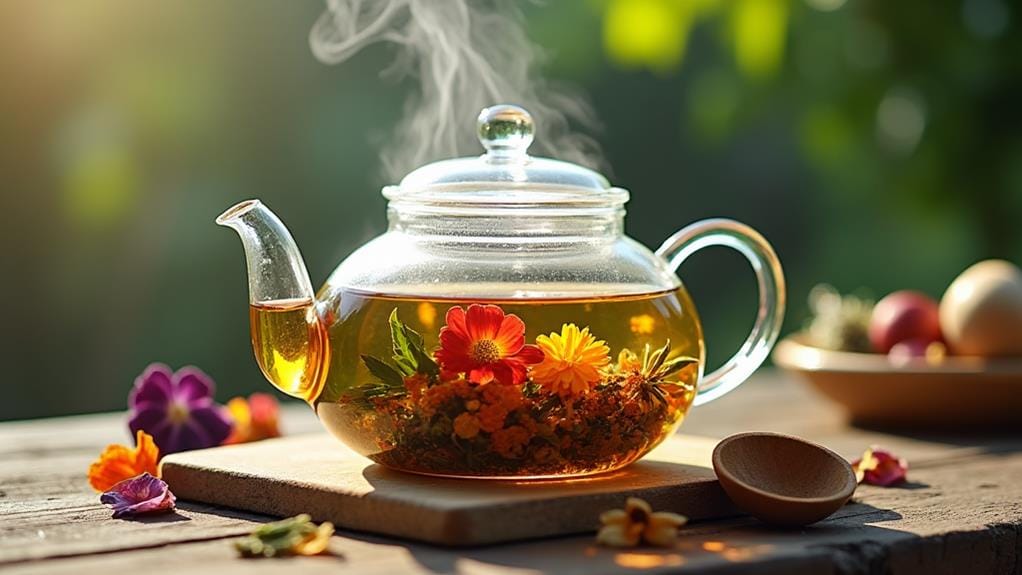
To master herbal tea infusions, start by selecting premium organic herbs and spices. Invest in quality tools like infusers and kettles for optimal brewing. Experiment with hot and cold brewing methods, adjusting steeping times and temperatures to suit different herbs. Create custom blends by combining complementary flavors, and enhance your teas with natural garnishes like edible flowers or citrus zest. Store dried herbs in airtight containers away from light and heat, and refrigerate prepared infusions. By fine-tuning your technique and exploring various combinations, you'll unlock nature's secrets and craft the perfect cup. Dive deeper to uncover more about this ancient art and its myriad benefits.
Selecting Premium Herbs and Spices
Countless herbs and spices can elevate your herbal tea infusions, but choosing premium quality ingredients is crucial. When embarking on your herb sourcing journey, prioritize organic, whole-leaf options whenever possible. These retain more of their natural oils and flavors, resulting in richer, more nuanced infusions.
Don't shy away from exploring local farmers' markets or specialty tea shops, where you'll often find fresher, more diverse selections.
As you build your herbal repertoire, consider flavor pairing to create unique and harmonious blends. Combine complementary tastes like the sweetness of chamomile with the brightness of lemon verbena, or the earthiness of rooibos with the warmth of cinnamon. Experiment with different ratios to find your perfect balance.
Remember, the quality of your water matters too; filtered or spring water will let the true flavors of your carefully selected herbs shine through.
Store your herbs in airtight containers away from light and heat to preserve their potency. By focusing on premium ingredients and thoughtful combinations, you'll unlock a world of possibilities in your herbal tea creations.
Essential Tools for Tea Infusion
To create the perfect herbal tea infusion, you'll need to equip yourself with the right tools.
Start by investing in quality tea infusers and strainers, which will allow you to easily steep loose herbs and remove them when brewing is complete.
You'll also want to consider purchasing a reliable kettle or teapot for heating water to the ideal temperature, along with precise measuring tools to ensure consistent ratios of herbs to water in your infusions.
Tea Infusers and Strainers
When it comes to brewing the perfect cup of herbal tea, tea infusers and strainers are indispensable tools. These innovative devices come in various shapes and sizes, each designed to enhance your tea-making experience.
You'll find an array of infuser types, from classic ball infusers to modern silicone models shaped like animals or plants. For loose-leaf enthusiasts, mesh ball infusers offer ample space for tea leaves to expand, resulting in a more flavorful brew.
Strainer materials play a crucial role in the infusion process. Stainless steel strainers are durable and easy to clean, while silicone options provide flexibility and heat resistance. You might also explore bamboo strainers for an eco-friendly alternative.
When selecting your infuser or strainer, consider the size of your tea leaves and the vessel you'll be using. Fine mesh strainers work best for smaller leaves, preventing them from escaping into your cup. For larger leaves or whole herbs, opt for infusers with wider openings to allow proper expansion and flavor release.
Quality Kettles and Teapots
Quality kettles and teapots are the backbone of any serious tea enthusiast's arsenal. These essential tools play a crucial role in extracting the full flavor and aroma from your herbal infusions.
When selecting a kettle, consider innovative materials like glass or stainless steel, which offer superior heat retention and don't impart any unwanted flavors to your water. Look for kettles with precise temperature controls, allowing you to heat water to the perfect degree for different herbs.
Teapot designs have evolved significantly, offering exciting options for the modern tea lover. Explore teapots with built-in infusers, which simplify the brewing process and make cleanup a breeze.
Some cutting-edge designs feature double-walled construction, keeping your tea hot for longer periods without burning your hands. For those who value aesthetics alongside functionality, there are teapots crafted from beautiful, heat-resistant borosilicate glass that allow you to watch your herbs unfurl as they steep.
When choosing your kettle and teapot, prioritize durability, ease of use, and compatibility with your preferred brewing methods to elevate your herbal tea experience.
Precise Measuring Tools
Precision is the key to consistently delightful herbal tea infusions. To achieve this, you'll need reliable measuring tools that can accurately portion your herbs and water.
Digital scales are indispensable for weighing loose herbs, allowing you to replicate successful blends and experiment with new ratios. Opt for a scale with 0.1-gram precision to capture subtle variations in leaf weights.
Measuring spoons are equally crucial for both loose herbs and pre-packaged tea blends. Invest in a set of stainless steel spoons with clear markings, ranging from 1/8 teaspoon to 1 tablespoon. These will help you maintain consistency across different batches and adjust recipes with confidence.
For water measurement, consider a glass measuring cup with easy-to-read markings. This tool ensures you're using the correct amount of water for your desired strength and serving size.
Hot vs. Cold Brewing Methods
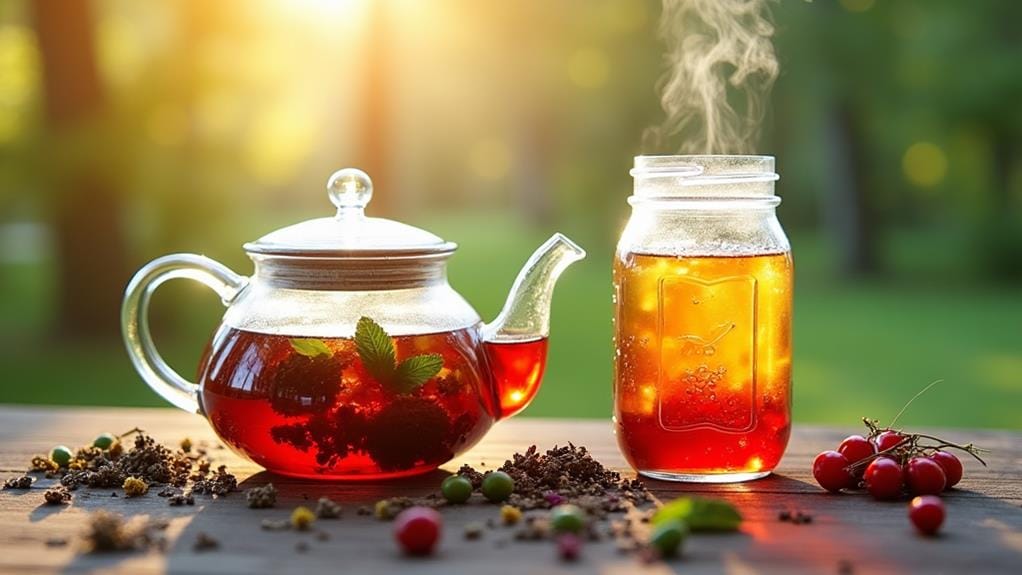
When you're exploring hot and cold brewing methods for herbal tea infusions, you'll notice that temperature significantly influences the flavor profile of your brew.
You'll find that hot brewing typically requires shorter steeping times, often just a few minutes, while cold brewing can take several hours to achieve the desired taste.
Additionally, the brewing temperature affects how various nutrients are extracted from the herbs, with some compounds more readily released in hot water and others better preserved through cold brewing techniques.
Temperature Affects Flavor Profile
The temperature at which you brew your herbal tea can significantly impact its flavor profile. When you use hot water, you'll extract more flavor compounds quickly, resulting in a bolder, more intense taste. This traditional brewing technique is ideal for herbs with tough leaves or roots, as the heat helps break down their cellular structure, releasing more of their essence into your cup.
On the other hand, cold brewing offers a gentler extraction process. By steeping your herbs in cold water for an extended period, typically overnight, you'll create a smoother, less bitter infusion. This method is particularly effective for delicate herbs and flowers, preserving their subtle nuances and aromatic qualities.
To optimize your brewing techniques, experiment with different temperatures. Start with hot water at around 200°F (93°C) for robust herbs like peppermint or ginger. For more delicate blends, try a slightly lower temperature of 175°F (79°C).
If you're cold brewing, use room temperature or refrigerated water and allow 8-12 hours for infusion. By mastering these temperature variations, you'll unlock a whole new spectrum of flavors in your herbal tea adventures.
Steeping Time Differences
Diving into the world of steeping times, you'll find that hot and cold brewing methods require vastly different approaches.
When it comes to hot brewing, you'll typically steep your herbs for a shorter duration, usually between 3 to 10 minutes, depending on the specific blend. This quick infusion extracts the delicate flavors and aromatic compounds without risking over-extraction or bitterness.
Cold brewing, on the other hand, is a game-changer for innovative tea enthusiasts. This method involves steeping herbs in cold water for an extended period, often 8 to 12 hours or overnight. The result? A smooth, refreshing infusion with a unique flavor profile.
To master these steeping techniques and achieve the perfect flavor balance, consider the following:
- Experiment with different steeping times for each herb
- Use a timer to ensure consistency in your brews
- Take notes on taste differences to refine your process
Nutrient Extraction Variations
Many tea enthusiasts often overlook the significant impact that brewing methods have on nutrient extraction. When it comes to herbal tea infusions, the choice between hot and cold brewing techniques can significantly affect the final product's nutritional profile.
Hot brewing, the traditional method, quickly extracts water-soluble compounds, resulting in a faster infusion process. This technique is particularly effective for releasing volatile oils and aromatic compounds, enhancing the tea's flavor and aroma.
On the other hand, cold brewing offers unique advantages in terms of nutrient retention. This gentle extraction process, which typically takes several hours, preserves heat-sensitive compounds that might otherwise be degraded during hot brewing.
You'll find that cold-brewed teas often have a smoother taste and higher antioxidant content. To maximize nutrient extraction, experiment with both methods.
Try cold brewing delicate herbs like chamomile or mint overnight in the refrigerator, while using hot water for hardier roots and barks. By understanding these extraction techniques, you'll unlock the full potential of your herbal infusions, tailoring each brew to your specific health and taste preferences.
Perfecting Steeping Times and Temperatures
For optimal flavor extraction, mastering the art of steeping times and temperatures is crucial. You'll find that different herbs require varying conditions to release their full potential. By honing your herbal infusion techniques, you'll unlock a world of nuanced flavors and therapeutic benefits.
To perfect your steeping process, consider these key factors:
- Water temperature: Delicate herbs like chamomile thrive in cooler water (175°F), while robust roots like ginger prefer near-boiling temperatures (200°F).
- Steeping duration: Leaves typically need 3-5 minutes, flowers 5-7 minutes, and roots or barks 10-15 minutes.
- Herb-to-water ratio: Generally, use 1 teaspoon of dried herbs or 1 tablespoon of fresh herbs per cup of water.
Experiment with these variables to discover your ideal brew. You'll notice that over-steeping can lead to bitterness, while under-steeping may result in weak flavors.
Keep a journal to track your results and refine your methods. By mastering these elements, you'll elevate your herbal tea experience, unlocking the full spectrum of flavors and benefits nature has to offer.
Crafting Custom Herbal Tea Blends
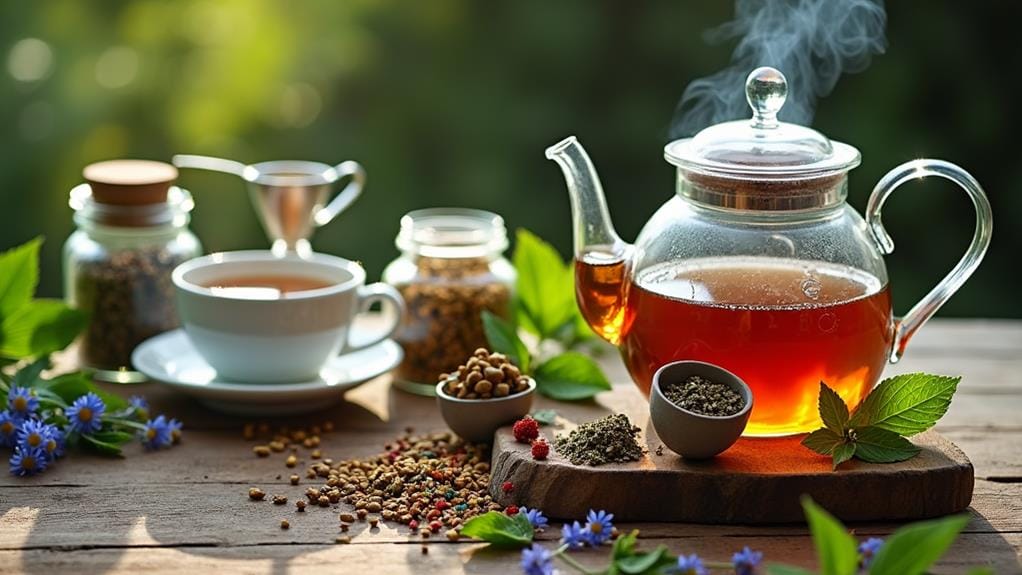
Now that you've mastered the art of steeping, it's time to explore the creative world of custom herbal tea blends. Creating your own unique combinations allows you to tailor flavors to your taste preferences and wellness goals.
To begin, familiarize yourself with herb selection strategies. Consider the primary flavor profiles: sweet, bitter, spicy, or floral. Choose a base herb, like chamomile or peppermint, then add complementary flavors to enhance or balance the blend.
When experimenting with flavor combination tips, start with small batches to refine your recipes. Pair strong flavors with milder ones, such as combining bold ginger with soothing lemon balm. Don't shy away from unexpected pairings; lavender and rosemary can create a surprisingly harmonious blend.
Consider the therapeutic properties of each herb as well, combining relaxing herbs for an evening blend or invigorating ones for a morning boost.
Keep detailed notes on your creations, including measurements and steeping times. This will help you replicate successful blends and refine less satisfactory ones.
Enhancing Flavors With Natural Garnishes
Adding natural garnishes to your herbal tea infusions can elevate both their visual appeal and flavor profile. By carefully selecting complementary ingredients, you'll create a more engaging sensory experience that delights both the eyes and taste buds.
When exploring flavor pairings, consider the base notes of your tea and choose garnishes that enhance or contrast these flavors.
To expand your garnish options, try these innovative additions:
- Edible flowers: Incorporate vibrant blooms like lavender, chamomile, or rose petals to add a delicate floral note and stunning visual element.
- Citrus zest: Grate fresh lemon, lime, or orange peel to infuse your tea with bright, aromatic oils that invigorate the senses.
- Herb sprigs: Float fresh mint, rosemary, or thyme on top of your brew to release essential oils and provide a fragrant garnish.
Experiment with unexpected combinations, such as pairing ginger slices with a sprig of basil or adding a cinnamon stick to a fruity blend.
Don't be afraid to mix textures and flavors; crushed pink peppercorns can add a surprising pop of color and subtle heat to a floral infusion.
Storing and Preserving Herbal Infusions
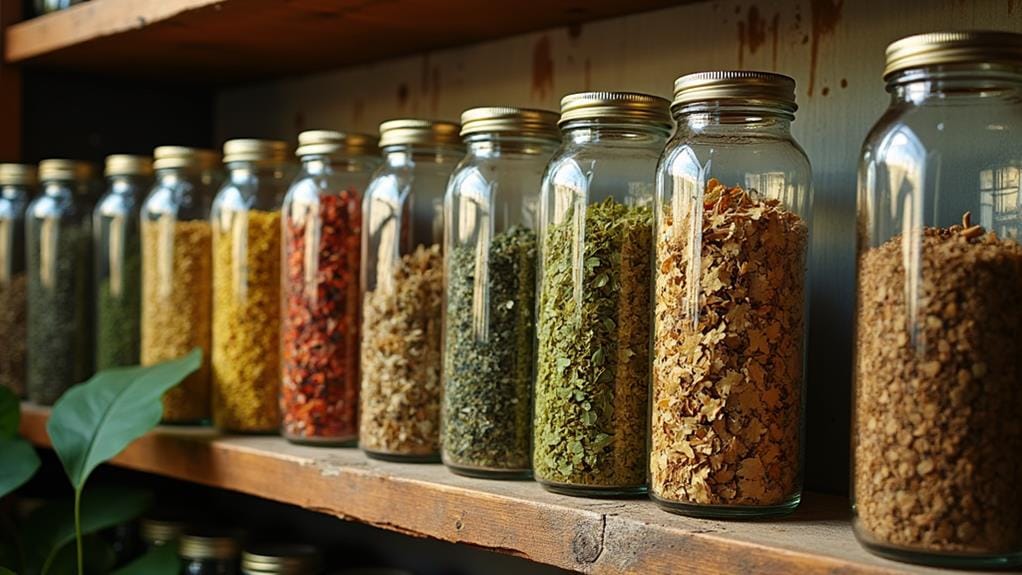
Proper storage and preservation techniques are essential for maintaining the quality and freshness of your herbal tea infusions. To maximize herb shelf life, store your dried herbs in airtight containers away from direct sunlight, heat, and moisture. Glass jars with tight-fitting lids or resealable bags are excellent choices for infusion storage methods.
Keep your herbs in a cool, dark place like a pantry or cupboard to prevent degradation of flavors and beneficial compounds.
For prepared infusions, refrigeration is key. If you've made a large batch, pour it into clean glass bottles or jars and store them in the refrigerator for up to three days.
To extend the life of your infusions, consider freezing them in ice cube trays. Once frozen, transfer the cubes to a freezer-safe container for long-term storage. This innovative method allows you to enjoy your favorite blends for weeks or even months.
When using frozen infusions, simply thaw the desired amount or add the cubes directly to hot water for an instant, refreshing drink.
Frequently Asked Questions
Can Herbal Tea Infusions Help With Specific Health Conditions?
Yes, herbal tea infusions can address specific health conditions. You'll unlock herbal benefits by mastering infusion techniques. Experiment with innovative blends to target your concerns, from boosting immunity to reducing stress. Always consult a healthcare professional for guidance.
Are There Any Potential Side Effects of Drinking Herbal Tea Infusions?
You should be aware of potential side effects when drinking herbal infusions. Herbal toxicity and individual sensitivities can cause unexpected reactions. It's crucial to research and consult experts before embracing new herbal tea practices.
How Do Herbal Tea Infusions Compare to Traditional Tea in Caffeine Content?
You'll find most herbal tea infusions are naturally caffeine-free, unlike traditional teas. They're innovative caffeine alternatives packed with herbal benefits. If you're seeking a buzz, stick to traditional tea or explore other caffeine sources for your daily pick-me-up.
Can I Use Fresh Herbs Instead of Dried Ones for Infusions?
Picture this: You've just plucked fresh mint from your garden. Yes, you can use fresh herbs for infusions! They offer vibrant flavors and potent fresh herb benefits. Experiment with different infusion techniques to unlock nature's innovative, aromatic potential in your cup.
Are There Any Herbs That Should Not Be Combined in Infusions?
You'll want to be mindful of herb compatibility when crafting infusions. Some herbs clash or neutralize each other's effects. Follow infusion guidelines and research potential interactions to create innovative, safe blends that maximize each herb's benefits.
Final Thoughts
You've now unlocked the secrets of herbal tea infusions, a universe of flavors waiting to be explored. With your newfound knowledge, you'll craft teas that could make even the most seasoned herbalist green with envy. Remember, practice makes perfect. Experiment with different herbs, temperatures, and steeping times to find your ideal brew. Don't be afraid to mix and match, creating unique blends that suit your taste. Your journey into the world of herbal teas has only just begun.