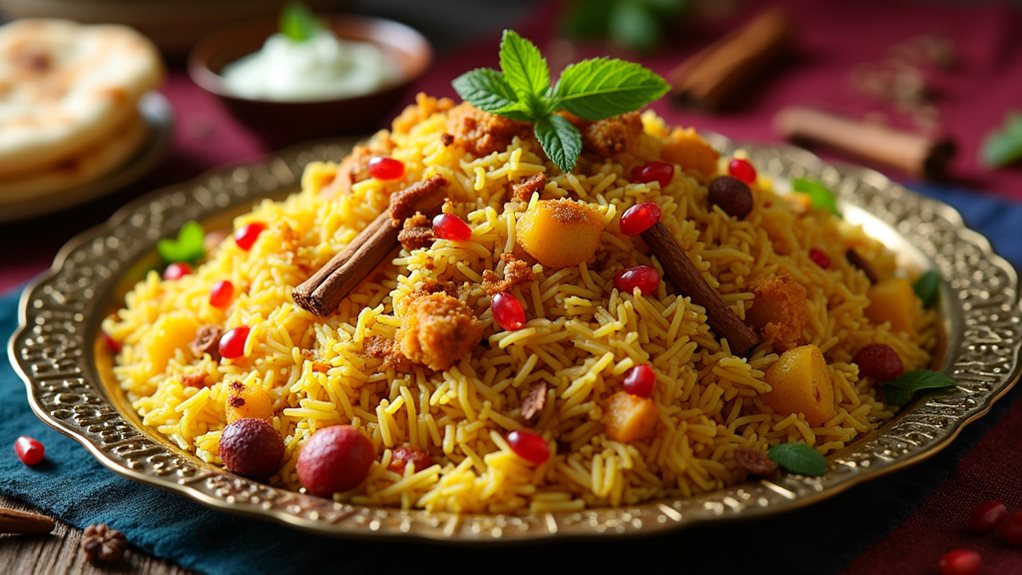

I’ve loved chicken biryani since my first bite of this aromatic Indian masterpiece. The marriage of tender chicken and fragrant basmati rice, layered with warm spices like cardamom, cinnamon, and saffron, creates a dish that’s both comforting and exotic. Don’t be intimidated by its reputation – I’ll guide you through creating this celebration-worthy meal right in your kitchen. The secret lies in the technique and timing, which transforms simple ingredients into something truly extraordinary.
Key Takeaways
- Chicken Biryani combines spiced chicken with fragrant basmati rice, featuring distinctive spices like saffron, cardamom, and cinnamon.
- The dish requires layering marinated chicken with partially cooked rice before steaming to infuse flavors throughout.
- Essential ingredients include basmati rice, chicken pieces, aromatic spices, onions, tomatoes, garlic, and ginger.
- Allowing biryani to rest after cooking is crucial for redistributing moisture and enhancing flavor development.
- Serve with cooling raita, fresh salad, and pickles for a complete meal experience that balances the bold spices.
Why You’ll Love this Aromatic Indian Chicken Biryani
What could be more satisfying than a perfectly spiced, layered chicken biryani that fills your kitchen with intoxicating aromas? This classic Indian dish combines tender chicken chunks marinated in yogurt and spices with fragrant basmati rice, creating a complete meal that’s impressive enough for special occasions but doable for weekend dinners.
I love how the saffron, cardamom, and cinnamon create complex flavor profiles that develop throughout the cooking process. The technique of layering partially cooked rice with the spiced chicken mixture allows the flavors to meld perfectly.
When you uncover the pot after the final steam, you’ll reveal golden rice studded with succulent chicken pieces and tender potatoes. The contrasting textures and bold, aromatic spices make this dish a guaranteed crowd-pleaser.
What Ingredients are in Aromatic Indian Chicken Biryani?
Chicken Biryani is a magnificent one-pot wonder that combines aromatic basmati rice, tender chicken, and a symphony of spices. The layered dish is a celebration of flavors that dance on your palate, with each component playing its unique role in creating this classic Indian feast.
Making biryani at home might seem intimidating at first, but with the right ingredients, you’ll be well on your way to creating a restaurant-quality dish.
Ingredients:
- 3 pounds boneless, skinless chicken pieces, cut into chunks
- 1 pound basmati rice
- 4 tablespoons vegetable oil (divided)
- 2 tablespoons vegetable oil (for rice)
- 4 small potatoes, peeled and halved
- 3 large onions (2 finely chopped, 1 diced)
- 2 cloves garlic, minced
- 1 tablespoon minced fresh ginger root
- 1/2 teaspoon ground ginger
- 1/2 teaspoon chili powder
- 1/2 teaspoon ground black pepper
- 1/2 teaspoon ground turmeric
- 1 teaspoon ground cumin
- 2 1/2 teaspoons salt (divided)
- 2 medium tomatoes, peeled and chopped
- 2 tablespoons plain yogurt
- 2 tablespoons chopped fresh mint leaves
- 1 pinch powdered saffron
- 6 cardamom pods (1/2 teaspoon ground + 5 whole pods)
- 3 whole cloves
- 2 cinnamon sticks (one 2-inch piece and one 1-inch piece)
- 4 cups chicken stock
When shopping for these ingredients, quality matters tremendously for authentic biryani. The basmati rice should be aged and long-grain for best results, and fresh spices will make a world of difference in the final flavor profile.
Don’t skimp on the saffron—though expensive, just a pinch transforms the dish with its distinctive color and aroma.
And while traditional biryani uses ghee (clarified butter), vegetable oil works perfectly well for those wanting a lighter version or if ghee isn’t readily available at your local store.
How to Make this Aromatic Indian Chicken Biryani
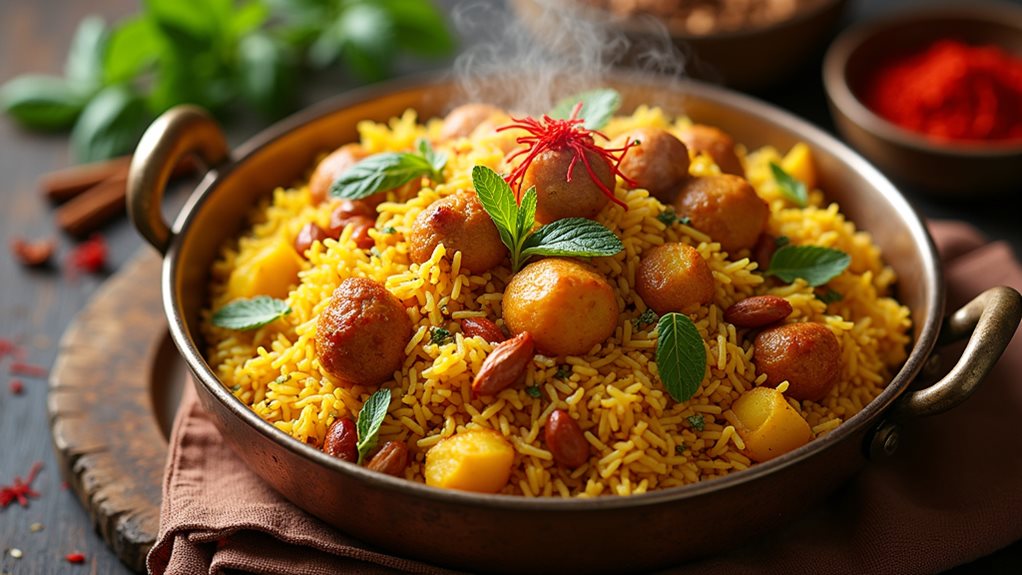
Begin your biryani adventure by heating 4 tablespoons of vegetable oil in a large skillet and frying 4 small halved potatoes until they’re beautifully browned. Remove these golden gems and set them aside—they’ll make a triumphant return later.
In the same skillet, add 2 more tablespoons of oil and sauté 2 large finely chopped onions, 2 cloves of minced garlic, and 1 tablespoon of fresh ginger root until the onions turn soft and golden. This aromatic base is where the magic starts, filling your kitchen with those unmistakable Indian cooking scents.
Now comes the spice symphony—add ½ teaspoon each of chili powder, black pepper, and turmeric, along with 1 teaspoon each of cumin and salt. Toss in 2 chopped tomatoes and cook this mixture, stirring frequently, for about 5 minutes.
Next, incorporate 2 tablespoons of plain yogurt, 2 tablespoons of fresh mint leaves, ½ teaspoon of cardamom, and a 2-inch cinnamon stick. Let this mixture simmer until the tomatoes break down completely, creating a thick, flavorful paste. This might take patience, but trust me, it’s worth every minute.
When your sauce is ready, add 3 pounds of chicken chunks, coating them thoroughly, and cook covered on low heat for 35-45 minutes until tender.
While the chicken is working its magic, prepare 1 pound of basmati rice by washing it thoroughly and draining for at least 30 minutes.
In another skillet, fry a large diced onion in 2½ tablespoons of oil until golden, then add a pinch of saffron, 5 cardamom pods, 3 cloves, a 1-inch cinnamon stick, and ½ teaspoon of ground ginger. Stir in the rice until it’s coated with all those wonderful spices.
Pour 4 cups of hot chicken stock mixed with 1½ teaspoons of salt over the rice, then gently fold in your chicken mixture and those reserved potatoes. For more authentic results, consider using an Indian pressure cooker set to achieve perfectly cooked, aromatic rice while saving significant cooking time. Bring everything to a boil, cover tightly, and reduce to very low heat for 20 minutes—and here’s the essential part—no peeking or stirring!
When the timer dings, you’ll reveal a perfectly layered, aromatic biryani ready to be served to your certainly impressed dinner guests.
Aromatic Indian Chicken Biryani Substitutions and Variations
While the traditional recipe creates a magnificent dish, you can easily adapt this biryani to suit your dietary needs or ingredient availability. For a vegetarian version, I recommend substituting the chicken with hearty vegetables like cauliflower, carrots, and peas, or with paneer cheese for protein. If you’re watching your carbs, try using cauliflower rice or brown basmati rice instead of white.
Don’t have all the spices on hand? No worries. You can use garam masala as a substitute for some of the individual spices. For a quicker version, you might use pre-cooked rotisserie chicken and reduce the simmering time. Looking for extra richness? Replace the vegetable oil with ghee for an authentic touch, or add cashews and raisins for texture contrast.
What to Serve with Aromatic Indian Chicken Biryani
Now that you’ve mastered the art of customizing your biryani, let’s focus on creating the perfect accompaniments to round out your meal.
I always serve raita—a cooling yogurt sauce with cucumber and mint—to balance the spicy flavors of biryani. A simple kachumber salad with diced tomatoes, onions, and cucumbers dressed with lemon juice adds freshness.
For additional sides, I recommend papadums (crispy lentil wafers) or naan bread for scooping up the flavorful rice.
Chutneys like mint-coriander or tamarind provide tangy contrast, while pickled vegetables offer a bright, acidic component.
Complete your spread with a sweet ending—mango kulfi or kheer (rice pudding) provides the perfect conclusion to this aromatic feast.
These accompaniments create a balanced meal that showcases the rich tradition of Indian cuisine.
Final Thoughts
After preparing chicken biryani for many years, I’ve discovered that mastering this iconic dish requires both patience and respect for the layering technique that gives it such remarkable depth.
The magic happens when fragrant rice, tender chicken, and aromatic spices meld together during that final 20 minutes of undisturbed steaming.
Don’t rush this process—biryani rewards those who take their time. Remember that each component deserves attention: properly browned potatoes, well-cooked spice paste, tender chicken, and perfectly seasoned rice.
The final result should showcase distinct layers with grains that remain separate yet infused with flavor.
Whether for family dinners or special occasions, a well-executed biryani demonstrates culinary skill while honoring traditions that have made this dish beloved across generations.
Similar to perfect roasting, allowing your biryani to properly rest after cooking is essential for redistributing moisture and optimizing flavor development.