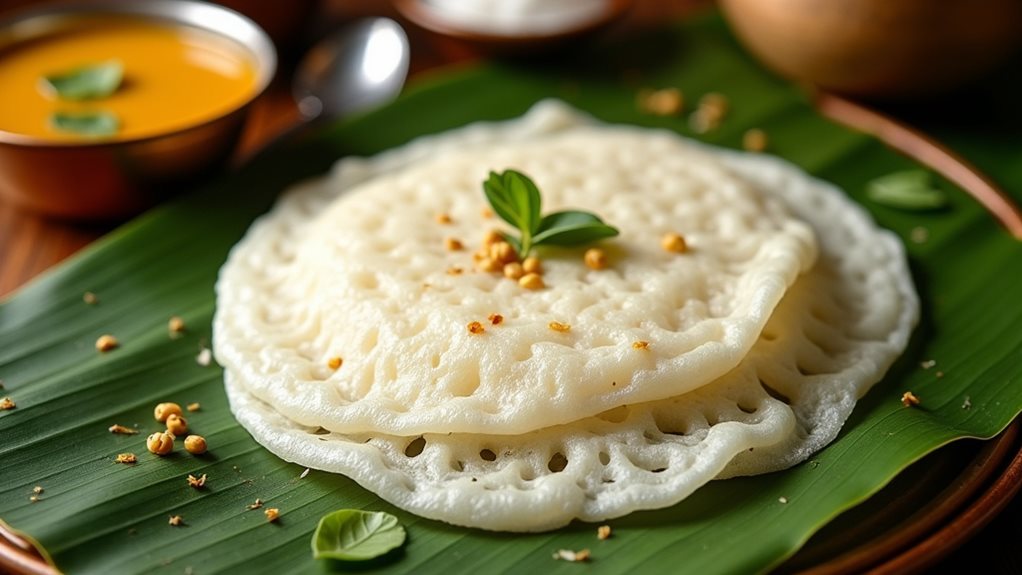

I’ve fallen in love with appams—those delicate South Indian pancakes with crispy edges and soft centers. When I first encountered them, I couldn’t believe how something so simple could deliver such complex textures and flavors. They’re naturally gluten-free, made from fermented rice batter, and offer the perfect balance of tanginess and subtle sweetness. If you’ve never tried making these versatile treasures at home, you’re missing out on one of Indian cuisine’s most satisfying creations.
Key Takeaways
- Appams are South Indian rice pancakes with lacy, crispy edges and a soft, pillowy center.
- The fermented batter combines rice, coconut milk, and yeast for a subtly tangy flavor.
- Traditional preparation requires soaking raw rice for 6 hours before grinding with coconut milk.
- Appams pair beautifully with both savory curries and sweet toppings, making them versatile.
- They’re naturally gluten-free and typically served for breakfast or as part of a larger meal.
Why You’ll Love these Irresistible South Indian Appams
Once you’ve tasted the delicate, lacy edges and pillowy center of a perfectly made appam, you’ll understand why this South Indian delicacy has captivated food enthusiasts worldwide.
I’m constantly amazed by how these rice and coconut pancakes transform simple ingredients into something extraordinary.
What makes appams irresistible is their versatility. They’re naturally gluten-free, with a subtle fermented tang that pairs beautifully with both savory curries and sweet toppings.
I appreciate how the cooking technique creates that distinctive texture contrast—crispy circumference giving way to a soft, spongy middle. Plus, they’re surprisingly easier to make than they appear, requiring just a few ingredients and some patience during fermentation.
The coconut milk adds a richness that enhances appam beyond ordinary breakfast fare to something truly special.
What Ingredients are in Irresistible South Indian Appams?
Appams are these delightful, lacy-edged South Indian pancakes with a soft, fluffy center that’s simply divine. The magic of a perfect appam lies in its simple yet precise combination of ingredients that ferment beautifully together.
When done right, they create that signature crater-like shape with crispy edges and a pillowy middle that’s just waiting to soak up whatever curry you pair it with.
- 1½ cups raw rice
- 1 whole coconut, grated
- 2 teaspoons sugar
- ⅓ cup steamed rice
- ½ teaspoon dry yeast
- 1 teaspoon salt
- Water (for coconut milk and batter)
The quality of your ingredients really matters when making authentic appams. Fresh coconut makes a world of difference compared to packaged coconut milk, though you can substitute in a pinch.
The fermentation process is essential, which is why the yeast and sugar work together to create that signature texture and slightly tangy flavor. Some traditional recipes might skip the commercial yeast in favor of natural fermentation, but this version gives you reliable results even if you’re new to South Indian cooking.
And remember, the consistency of your batter—”dropping consistency” as noted—is vital for getting those thin, crispy edges with the fluffy center that makes appams so uniquely satisfying.
How to Make these Irresistible South Indian Appams
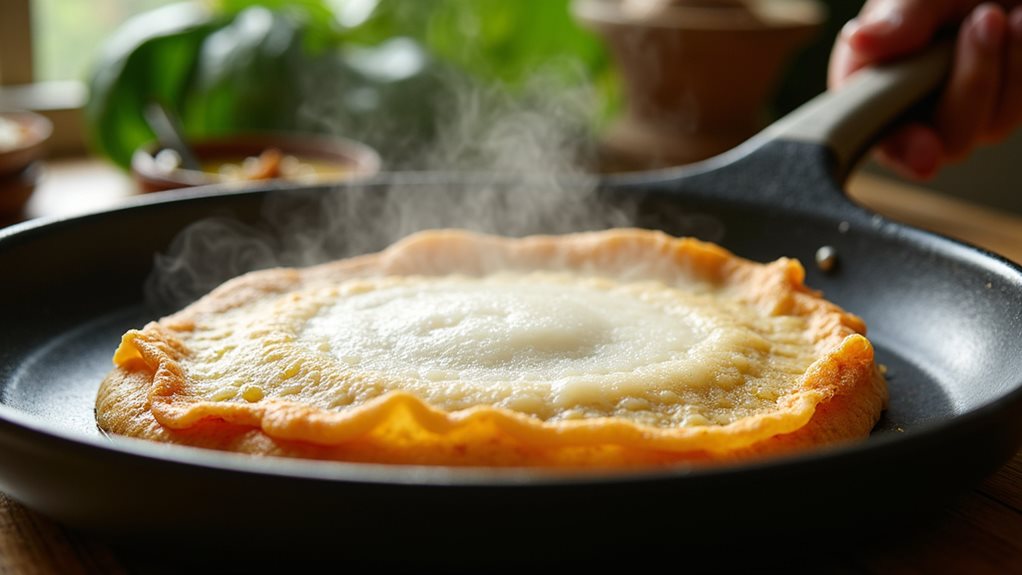
Making authentic appams at home begins with proper preparation of the ingredients. Start by washing 1 1/2 cups of raw rice and soaking it for 6 hours before draining.
While the rice soaks, grate 1 whole coconut and extract its milk by adding 2 cups of water and straining the mixture. This fresh coconut milk gives appams their distinctive rich flavor that’s impossible to replicate with substitutes.
Next comes the vital fermentation process. Grind the soaked raw rice and 1/3 cup of steamed rice together with a little coconut milk until even. Transfer this mixture to a bowl and add 2 teaspoons of sugar, the remaining coconut milk, and 1 teaspoon of salt.
In a separate small bowl, dissolve 1/2 teaspoon of dry yeast in warm water, then add this to your rice mixture and combine thoroughly. The batter should have a dropping consistency—thick enough to coat the back of a spoon but still pourable. Cover the bowl and let it ferment for 2 to 3 hours in a warm spot; you’ll know it’s ready when you see small bubbles forming on the surface and the batter has a slightly tangy aroma.
When you’re ready to cook, heat a special appam pan or a deeper non-stick tava. Pour a large spoonful of batter into the center and quickly rotate the pan to spread the batter in a thin layer around the edges while keeping it thicker in the middle.
Cover and cook for about a minute—the middle will become beautifully fluffy while the edges turn delicately thin and crisp. The perfect appam has that distinctive lacy edge with a pillowy center. For consistent results, consider investing in a professional cookware set that includes specialized pans for traditional South Indian cuisine. Serve these hot off the pan with coconut milk curry for an authentic South Indian experience that will transport your taste buds straight to Kerala.
Irresistible South Indian Appams Substitutions and Variations
Although traditional appam recipes call for specific ingredients, you can still create delicious versions with smart substitutions when necessary.
If you’re short on raw rice, try using rice flour mixed with a small amount of all-purpose flour for similar results. No fresh coconut? Canned coconut milk works wonderfully, though you’ll lose some of the authentic flavor profile.
For those avoiding yeast, a tablespoon of baking powder can provide the required lift, though the fermentation flavor will be missing.
I’ve found that adding a touch of coconut sugar instead of regular sugar improves the caramelization on the edges. For gluten-sensitive individuals, verify your rice hasn’t been processed in facilities handling wheat products.
You can also experiment with brown rice for a nuttier flavor and additional nutritional benefits.
What to Serve with Irresistible South Indian Appams
Now that you’ve mastered the art of crafting the perfect appam with various ingredient substitutions, let’s focus on what accompanies these delightful South Indian rice pancakes.
Traditional pairings include coconut milk curry, as mentioned in the recipe, which complements the appam’s subtle sweetness beautifully.
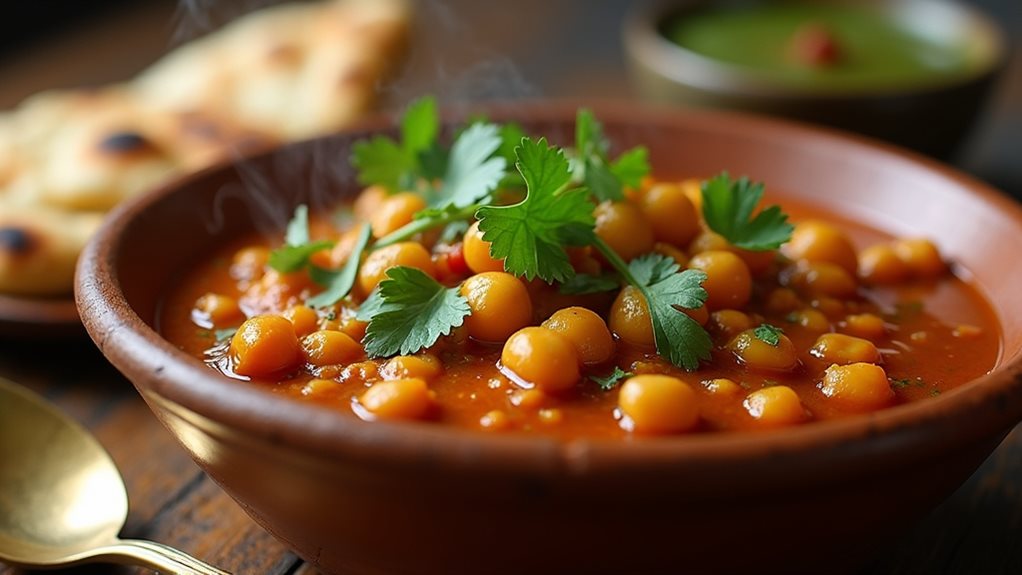
I recommend trying kadala curry (black chickpea curry), vegetable stew, or egg curry for heartier options. The appam’s lacy edges and soft center are perfect for soaking up these flavorful gravies.
For meat lovers, chicken or mutton stew makes an excellent pairing, while seafood enthusiasts might enjoy fish curry or prawns in coconut sauce.
Don’t overlook simpler accompaniments like coconut chutney or a spicy tomato-based sauce for a lighter meal.
These combinations showcase the versatility of appams in South Indian cuisine.
Final Thoughts
As I’ve guided you through the world of appams, I’ve come to appreciate how this South Indian delicacy represents both culinary tradition and adaptable home cooking.
The combination of fermented rice batter and coconut milk creates that signature crispy edge with a soft, pillowy center that’s truly irresistible.
Don’t be discouraged if your first few attempts aren’t perfect. Mastering the right consistency of the batter and the proper heat of your pan takes practice.
Remember that the fermentation process is essential—those 2-3 hours develop the flavors and textures that make appams special.
Whether you serve them with coconut milk curry as traditionally done or experiment with other pairings, these delicate rice pancakes offer a wonderful entry point into South Indian cuisine.
Just like with roasted meats, allowing your appams to rest briefly after cooking can help redistribute moisture and improve the final texture.