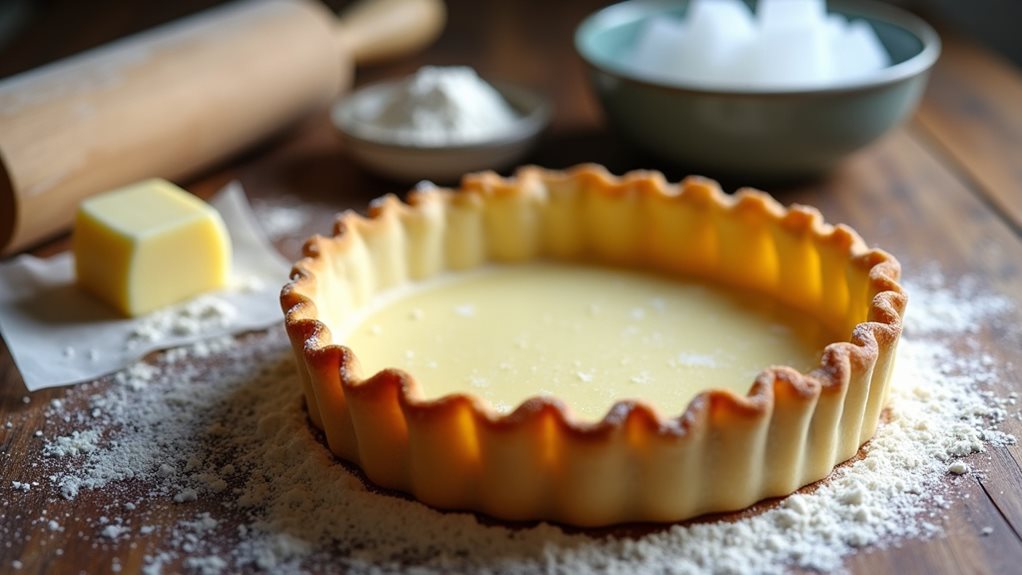
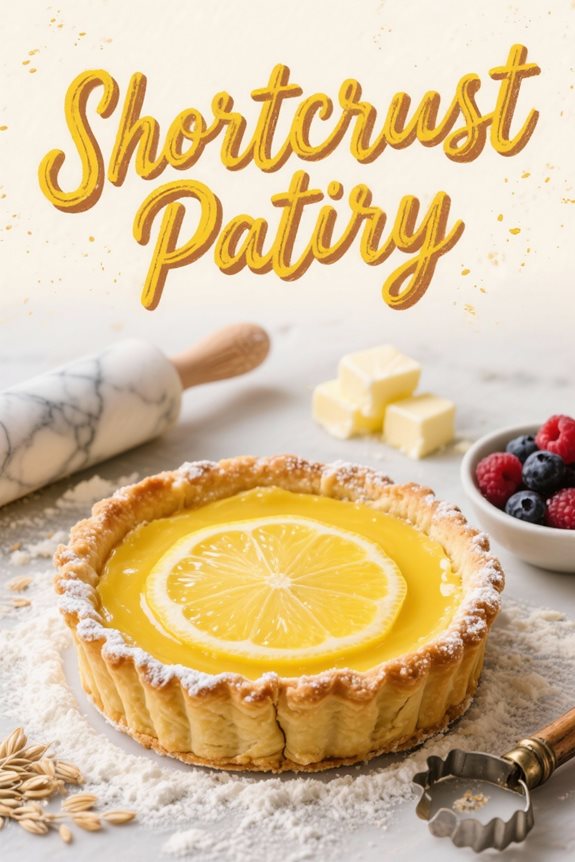
I’ve spent years perfecting my shortcrust pastry technique, and I’m excited to share it with you today. This versatile dough forms the foundation for countless dishes, from savory quiches to sweet fruit tarts. With just flour, butter, salt, and water, you’ll create a flaky, buttery base that enhances any filling you choose. The secret lies in how you handle these simple ingredients—and I’ll show you exactly how to achieve that perfect crisp texture every time.
Key Takeaways
- Shortcrust pastry combines flour, butter, salt, and water to create a flaky, versatile base for both sweet and savory dishes.
- The classic technique involves rubbing cold butter into flour until it resembles breadcrumbs, then gradually adding ice water until dough forms.
- Resting shortcrust pastry dough in the refrigerator for at least 30 minutes improves texture and prevents shrinkage during baking.
- Shortcrust can be adapted with whole wheat flour, almond flour, or gluten-free blends to accommodate different dietary needs.
- Perfect for quiches, meat pies, apple pies, and berry tarts, shortcrust pastry maintains beautiful crimped edges and buttery flavor.
Why You’ll Love this Classic Shortcrust Pastry
Whether you’re an experienced baker or just starting your culinary adventure, this classic shortcrust pastry recipe will become your go-to foundation for countless delicious creations.
I’ve refined this recipe to achieve that perfect balance of flaky texture and buttery flavor that’s crucial for both sweet and savory dishes.
What makes this pastry special is its versatility and forgiving nature. The simple ingredients—flour, butter, salt, and water—transform through proper technique into a dough that’s easy to work with.
I particularly love how it doesn’t shrink excessively during baking, maintaining beautiful crimped edges on pies and tarts.
You’ll appreciate its make-ahead convenience too; the dough actually benefits from resting in the refrigerator, giving you flexibility with your baking schedule.
What Ingredients are in Classic Shortcrust Pastry?
The classic shortcrust pastry is the backbone of so many delicious dishes, from savory quiches to sweet fruit tarts. What makes this pastry so versatile is its simple ingredient list – just a few pantry staples that come together to create that perfectly crumbly, melt-in-your-mouth texture.
When made correctly, shortcrust pastry should be crisp yet tender, with a rich buttery flavor that complements whatever filling you choose.
- 12 ounces plain flour (2 cups)
- 1 1/2 teaspoons baking powder
- 1 teaspoon salt
- 6 ounces butter
- Chilled water (added gradually)
The quality of your ingredients can make a real difference in your final pastry. Whenever possible, use cold, unsalted butter for the best flavor and texture. The water should be ice-cold, as this helps prevent the butter from melting before the pastry goes into the oven, which is key for achieving those lovely flaky layers.
Some bakers even chill their flour beforehand. And while this recipe uses plain flour, you might experiment with a mix of plain and whole wheat for a nuttier flavor, or even add a pinch of sugar if using the pastry for sweet recipes.
The possibilities? Nearly endless.
How to Make this Classic Shortcrust Pastry
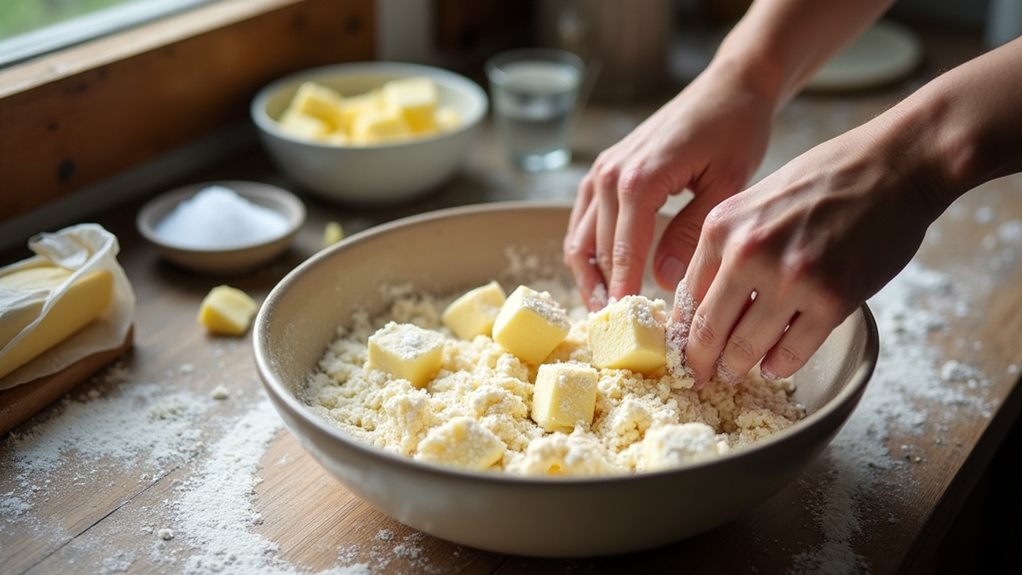
Making shortcrust pastry from scratch is surprisingly simple, and the results are so much better than store-bought. Start by gathering your ingredients: 12 ounces (2 cups) of plain flour, 1½ teaspoons of baking powder, 1 teaspoon of salt, and 6 ounces of butter. You’ll also need some chilled water on hand—the coldness matters for achieving that perfect flaky texture.
Begin by sifting the plain flour, baking powder, and salt into a large bowl. If you’re feeling modern, a food processor works brilliantly too.
Next comes the therapeutic part—rubbing that butter into the flour mixture with your fingertips until everything resembles coarse breadcrumbs. There’s something oddly satisfying about feeling the ingredients transform between your fingers, though the food processor’s pulse button offers a quicker alternative for busy bakers.
Gradually add the chilled water, a little at a time, until the mixture comes together to form a ball. The amount of water needed can vary depending on humidity and flour type, so trust your instincts here.
Once your dough has formed, wrap it tightly in cling film and pop it into the refrigerator for at least 30 minutes. This resting period isn’t just busy work—it allows the gluten to relax and the butter to chill, which prevents shrinkage during baking and creates those lovely flaky layers we all crave.
The cold dough will also be much easier to roll out without sticking to everything in sight. After resting, your shortcrust pastry is ready to be rolled out and used in your favorite sweet or savory recipes. For professional bakers looking to scale up production, investing in commercial cookie equipment can significantly streamline the pastry-making process. A versatile base for everything from quiches to fruit tarts!
Classic Shortcrust Pastry Substitutions and Variations
While traditional shortcrust pastry delivers reliable results, adventurous bakers can explore numerous substitutions and variations to customize this versatile dough.
I often replace half the all-purpose flour with whole wheat for a nuttier flavor, or incorporate almond flour for a tender, slightly sweet crust perfect for fruit tarts.
For dairy-free options, I substitute cold coconut oil or vegetable shortening for butter, maintaining the 3:2 fat-to-flour ratio.
When I need a richer pastry, I add an egg yolk and reduce the water accordingly.
For savory pies, I’ll mix in herbs, black pepper, or grated hard cheese.
Gluten-free bakers can use a quality cup-for-cup blend plus ½ teaspoon xanthan gum for structure.
What to Serve with Classic Shortcrust Pastry
Now that you’ve mastered your shortcrust pastry variations, let’s consider what pairs beautifully with this versatile foundation.
I find that shortcrust pastry works wonderfully with both savory and sweet fillings. For savory options, try classic quiches filled with spinach and feta, caramelized onion tarts, or hearty meat pies featuring slow-cooked beef or chicken.
On the sweeter side, I can’t recommend enough the timeless combination of shortcrust with fresh seasonal fruits. Apple pies, berry tarts, and lemon curd creations showcase the buttery contrast of the pastry against bright flavors.
Don’t overlook chocolate ganache tarts or custard-based desserts either. When serving, consider complementary sides like fresh cream, vanilla ice cream for sweets, or simple green salads to balance savory dishes.
Final Thoughts
After working with shortcrust pastry throughout your culinary path, you’ll discover that this versatile dough becomes a vital skill in your baking repertoire.
I’ve found that mastering this fundamental technique opens up countless possibilities for both sweet and savory creations.
Don’t be discouraged if your first attempts aren’t perfect—each time you make shortcrust, you’ll develop a better feel for the dough.
Remember that temperature control is important; keep your ingredients cold and don’t overwork the mixture.
I’ve learned that patience during the resting period pays dividends in the final texture.
The addition of vinegar or lemon juice to your dough can inhibit gluten formation, resulting in an even more tender pastry.
Whether you’re creating elegant tarts, homey pies, or rustic quiches, the humble shortcrust pastry will continue to serve as your reliable foundation, adapting to whatever culinary vision you pursue.