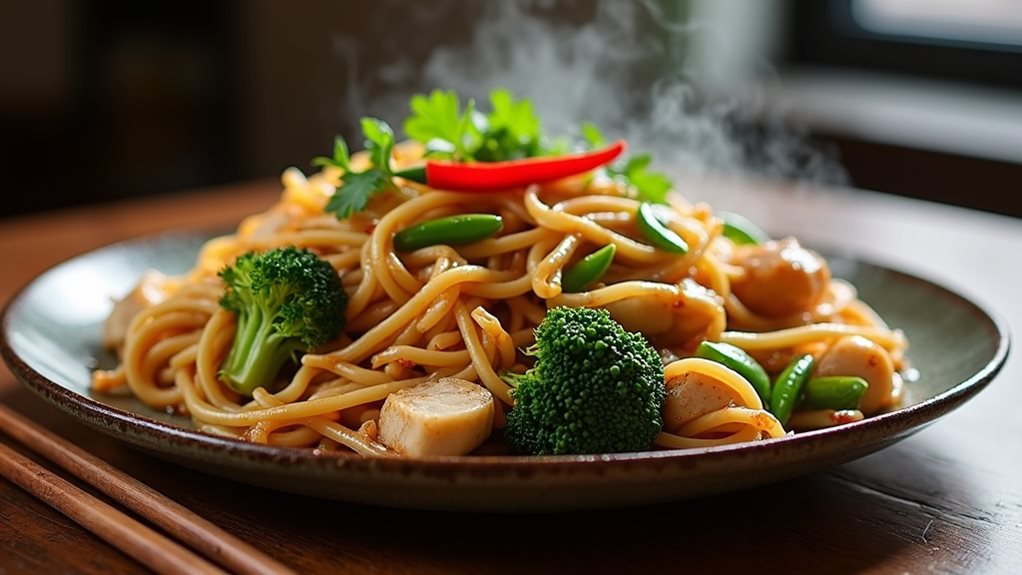
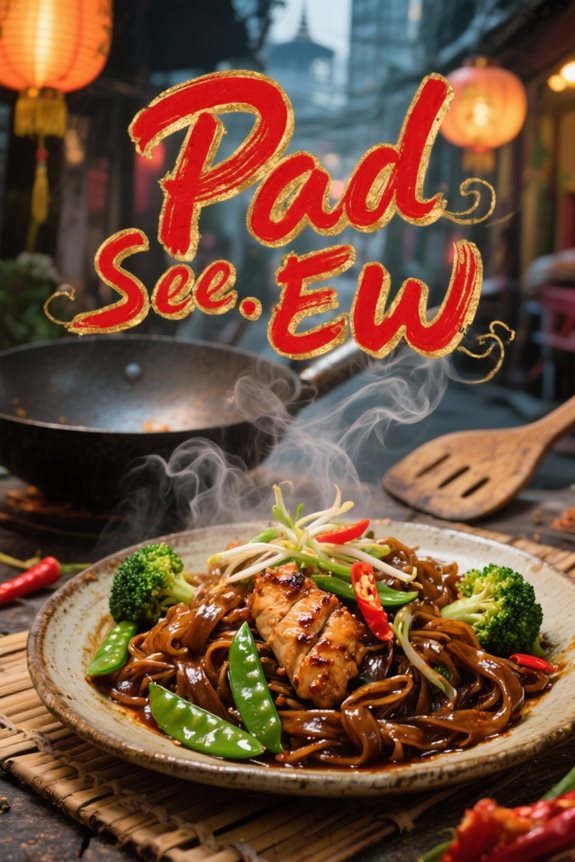
I’ve been making Pad See Ew for years, and I’m convinced it’s the ultimate weeknight comfort food. This classic Thai dish combines wide rice noodles, tender chicken, and crisp vegetables in a savory soy-based sauce that hits all the right notes. Don’t let its restaurant-quality appearance fool you—you can create this authentic stir-fry in your own kitchen with surprisingly simple techniques. The secret lies in how you balance those sweet, salty, and umami flavors…
Key Takeaways
- Pad See Ew is a popular Thai stir-fried noodle dish made with wide rice noodles, soy sauce, and typically beef.
- The dish features a distinct sweet-savory flavor profile from dark soy sauce, which also gives it its characteristic color.
- Unlike the provided Thai Chicken Noodle Stir-Fry, authentic Pad See Ew includes Chinese broccoli and often scrambled eggs.
- Pad See Ew is commonly sold by street vendors in Thailand and uses fewer vegetables than other Thai noodle dishes.
- The cooking technique involves high heat to achieve “wok hei” (breath of the wok) for a slightly charred, smoky flavor.
Why You’ll Love this Savory Thai Chicken Noodle Stir-Fry
Three incredible qualities make this Pad See Ew a standout dish in your recipe collection.
First, it’s remarkably versatile, combining tender chicken, crisp vegetables, and silky rice noodles in a savory sauce that delivers authentic Thai flavor in every bite. The combination of soy and oyster sauces creates that perfect umami depth that’s both comforting and exciting.
Second, it’s surprisingly approachable for home cooks. Despite its restaurant-quality taste, you’ll find the preparation straightforward—roasting chicken, preparing a simple sauce, and quick-stir frying. Even if you’re new to Thai cooking, you’ll achieve impressive results.
Finally, this dish offers excellent nutritional balance, incorporating protein, vegetables, and carbohydrates in one colorful, complete meal that’s as nourishing as it’s delicious.
What Ingredients are in Savory Thai Chicken Noodle Stir-Fry?
Pad See Ew is a classic Thai stir-fry dish that combines tender chicken with fresh vegetables and rice noodles in a savory sauce. The balance of soy and oyster sauces creates that signature umami flavor that makes this dish so crave-worthy. And the best part? You can customize the vegetables based on what you have available in your fridge.
- 6 chicken drumsticks
- 1/2 cup chicken stock
- 2 tablespoons soy sauce
- 2 tablespoons oyster sauce
- 1 medium red onion, halved and cut into thin wedges
- 6 ounces broccolini, cut into 1-inch pieces
- 2 cloves garlic, minced
- 1 inch fresh ginger, peeled and cut into matchsticks
- 16 ounces fresh rice vermicelli noodles
- 2 bunches baby bok choy, roughly shredded
- 5.25 ounces snow peas, trimmed
- 4 ounces bean sprouts, rinsed
- 1 fresh long red chili, thinly sliced
- Oil for cooking
When shopping for ingredients, try to find fresh rice noodles if possible, as they’ve a better texture than dried ones. The vermicelli style works well here, but you could substitute with wider rice noodles for a more traditional Pad See Ew. And don’t skip the oyster sauce—it’s what gives this dish its distinctive flavor profile. For those with dietary restrictions, there are vegetarian “oyster” sauces made from mushrooms that work quite nicely as substitutes.
How to Make this Savory Thai Chicken Noodle Stir-Fry
Start by preparing your 6 chicken drumsticks in a roasting pan. Just give them a light coating of oil and pop them into the oven for about 30 minutes, until they’re beautifully golden brown and cooked through. Using a professional convection oven would ensure even cooking and consistent browning for perfect results every time.
Once they’re done, let them cool for around 10 minutes before removing the meat from the bones.
While your chicken is roasting, you can mix together your sauce by combining 1/2 cup chicken stock, 2 tablespoons soy sauce, and 2 tablespoons oyster sauce in a small bowl. This simple mixture creates that perfect balance of savory flavors that makes Pad See Ew so irresistible.
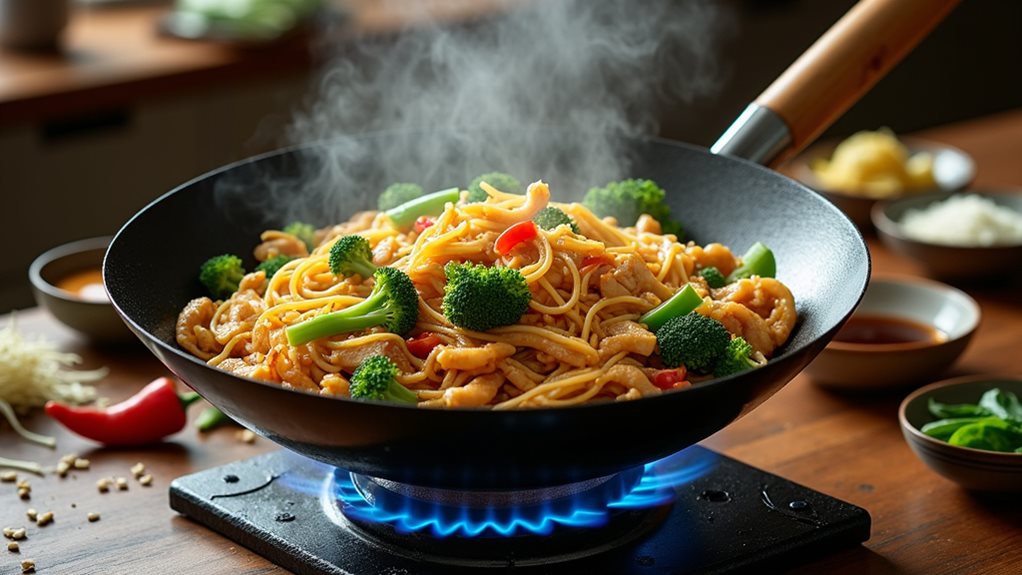
Now it’s time for the exciting part—the stir-fry! Heat your wok over high heat (and honestly, the hotter the better for that authentic wok hei flavor).
Add your medium red onion wedges with a light coat of oil and stir-fry for about 2 minutes. Then toss in 6 ounces of broccolini pieces, 2 cloves of minced garlic, and 1 inch of fresh ginger cut into matchsticks.
After another 2 minutes of stir-frying, add your chopped chicken meat, 16 ounces of soaked and drained rice vermicelli noodles, and the remaining vegetables—2 bunches of shredded baby bok choy, 5.25 ounces of trimmed snow peas, and 4 ounces of rinsed bean sprouts.
Give everything a good toss for about 2 minutes, then pour in your stock mixture and bring it all to a boil.
Divide this fragrant, steaming dish between bowls, garnish with thinly sliced fresh long red chili, and serve right away while it’s piping hot.
Savory Thai Chicken Noodle Stir-Fry Substitutions and Variations
While the classic recipe creates a delicious Pad See Ew, you can easily adapt this versatile dish to work with ingredients you have on hand or to suit your dietary preferences.
I often substitute chicken thighs for drumsticks when I want more tender meat, or I’ll use tofu for a vegetarian version. Don’t have rice vermicelli? Wide rice noodles or even egg noodles work beautifully in a pinch.
For the vegetables, feel free to swap broccolini with regular broccoli, Chinese broccoli, or even green beans. If you’re avoiding oyster sauce, try mushroom sauce for a similar umami flavor.
The beauty of this stir-fry lies in its flexibility—add more chili for heat, incorporate scrambled eggs for protein, or toss in whatever vegetables are in your refrigerator.
What to Serve with Savory Thai Chicken Noodle Stir-Fry
Four complementary dishes can transform your Pad See Ew from a standalone meal into a complete Thai dining experience.
I recommend starting with a light cucumber salad dressed with rice vinegar and a touch of sugar, which provides a revitalizing contrast to the savory noodles.
Next, consider Thai fish cakes (Tod Mun Pla) as an appetizer, offering a different protein texture alongside the chicken.
For beverages, Thai iced tea makes an excellent companion, its sweetness balancing the umami flavors in your stir-fry.
Finally, complete your spread with mango sticky rice for dessert—the coconut-infused rice and sweet mango provide the perfect conclusion to your meal.
These additions create a balanced menu that highlights different aspects of Thai cuisine without overwhelming your palate.
Final Thoughts
As you master the art of cooking Pad See Ew, you’ll discover that this traditional Thai dish offers endless opportunities for personalization and culinary creativity.
I’ve found that experimenting with different proteins—from tofu to shrimp—can transform this recipe to suit various dietary preferences while maintaining its authentic flavor profile.
Don’t hesitate to adjust the sauce components to match your taste preferences. Some home cooks prefer a slightly sweeter version with a touch of brown sugar, while others enjoy amplifying the umami with extra oyster sauce.
Remember that the key to exceptional Pad See Ew lies in high heat and quick cooking, which creates that coveted charred flavor without overcooking the vegetables.
With practice, you’ll develop your signature version that family and friends will request time and again.
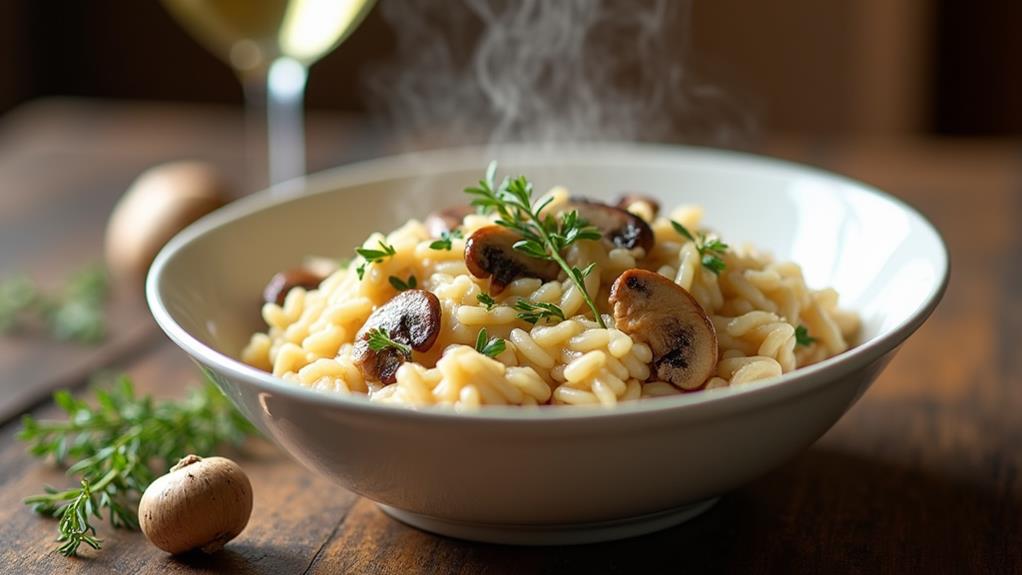
For those who enjoy exploring different culinary traditions, consider trying your hand at Italian cuisine with a mushroom risotto that similarly showcases deep umami flavors from carefully sautéed ingredients.