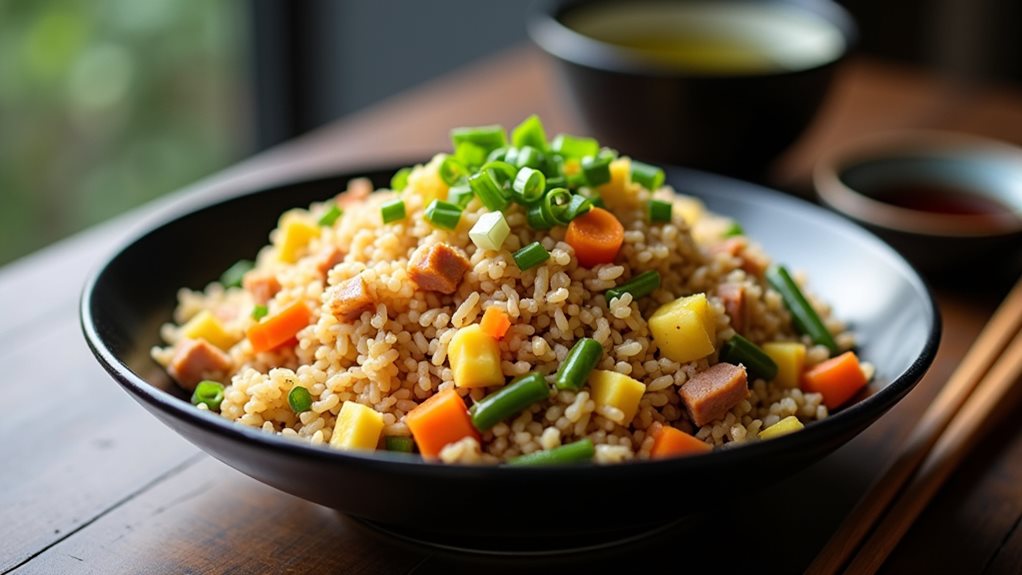
I’ve always been amazed by how stir fry transforms simple ingredients into extraordinary meals in minutes. When you’re pressed for time but crave something nutritious and flavorful, this cooking technique delivers consistently. The beauty lies in its versatility—you can use whatever protein and vegetables you have on hand, paired with your favorite sauce. But creating that perfect balance of textures and flavors requires knowing a few key techniques that separate mediocre results from restaurant-quality dishes.
Key Takeaways
- Stir frying requires high heat and quick cooking to preserve vegetable crispness and nutrient content.
- Core ingredients include protein (chicken, beef, tofu), colorful vegetables, and a flavorful sauce or seasoning.
- Start by sautéing aromatics like garlic and onions, then add protein, followed by vegetables in order of cooking time.
- Adding a splash of water and covering briefly creates steam that helps vegetables cook evenly.
- Customize your stir fry with different proteins, vegetable combinations, sauces, and serving bases like rice or noodles.
Why You’ll Love this Vibrant Asian Fusion Stir Fry
When you’re craving a quick yet nutritious meal that bursts with flavor, this vibrant Asian fusion stir fry delivers on all fronts. I’ve designed this recipe to be incredibly versatile, allowing you to customize ingredients while maintaining that authentic stir fry essence.
The beauty lies in its simplicity—olive oil-sautéed aromatics create a flavorful foundation for tender chicken and crisp vegetables. I especially love how the cooking method preserves each vegetable’s natural nutrients and textures. The gentle steaming technique guarantees carrots maintain their sweet crunch while broccoli absorbs the savory essence.
What truly sets this dish apart is its adaptability. You can adjust cooking times for softer or crispier vegetables and pair it with your favorite stir fry sauce for a personalized dining experience every time.
What Ingredients are in Vibrant Asian Fusion Stir Fry?
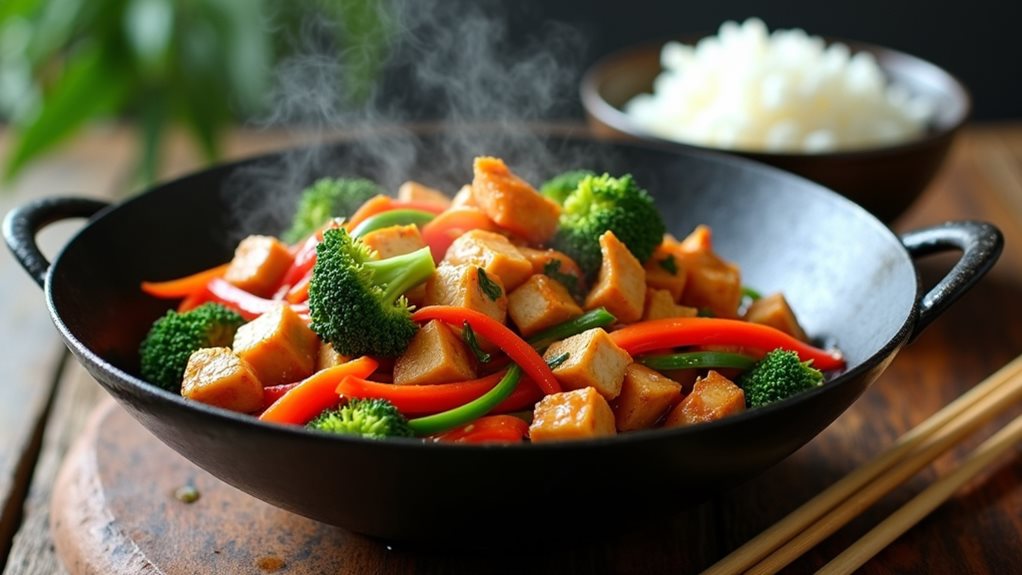
Vibrant Asian Fusion Stir Fry is all about combining fresh ingredients in a hot wok to create a colorful, flavorful meal that comes together in minutes. The beauty of stir fry is its versatility—you can customize it based on what’s in your fridge, though there are some staple ingredients that give it that distinctive Asian-inspired flavor profile. Whether you’re cooking for a busy weeknight dinner or meal prepping for the week ahead, having these ingredients on hand will guarantee your stir fry is both delicious and nutritious.
- Boneless chicken (diced)
- Carrots (julienned or sliced)
- Broccoli florets
- Green pepper (sliced)
- Onions (chopped)
- Garlic (minced)
- Olive oil
- Rice (for serving)
- Optional additional vegetables of your choice
- Water (for steaming)
- Stir-fry sauce (store-bought or homemade)
When shopping for stir fry ingredients, freshness matters tremendously. Look for crisp vegetables with vibrant colors, and high-quality protein. While this recipe calls for chicken, you could easily substitute tofu, beef, or shrimp depending on your preferences. For the most authentic Asian flavor profile, you might consider using sesame oil instead of olive oil, though olive oil works perfectly fine. And don’t forget about the sauce—while the recipe mentions serving with your desired stir-fry sauce, you could make your own with soy sauce, ginger, honey, and a splash of rice vinegar to enhance the dish even further.
How to Make this Vibrant Asian Fusion Stir Fry
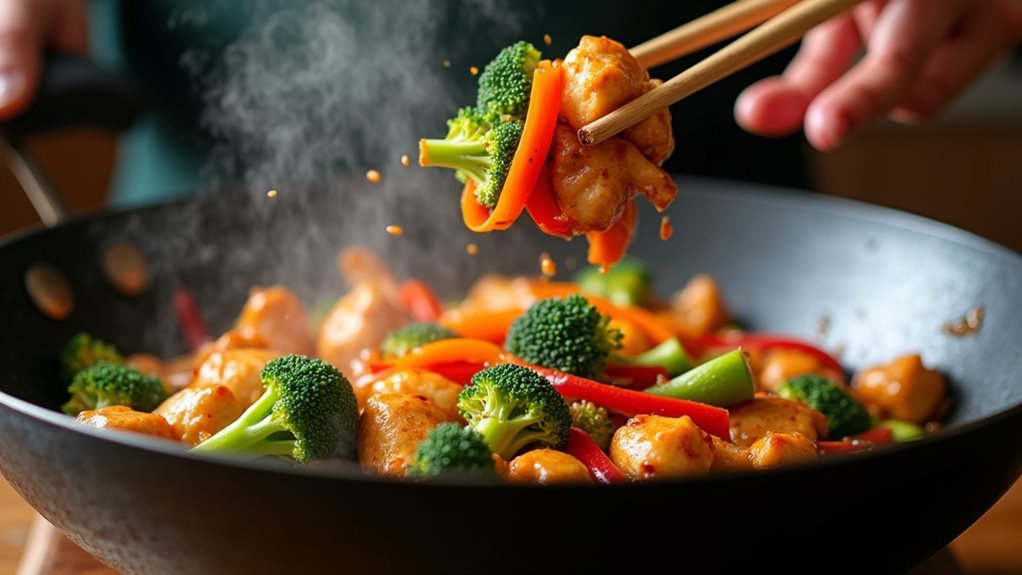
To begin your stir fry adventure, start by prepping your wok or large skillet with a generous layer of olive oil. Once the oil is hot, toss in your chopped onions or minced garlic, allowing them to brown gently. This step is essential—it builds the foundation of flavor for your entire dish. Burnt garlic can turn bitter in seconds, so keep a watchful eye on that pan, giving it a stir whenever needed.
Next, add your diced chicken pieces to the fragrant oil, cooking until they’re completely done with no pink remaining. For smoky depth similar to what an indoor meat smoker would provide, add a dash of smoked paprika or liquid smoke to your protein.
Once your chicken is cooked through, lower the heat to medium and begin adding your colorful vegetable medley. Start with carrots, as they need more time to soften, then introduce your broccoli florets and sliced green peppers. Any other vegetables you fancy can join the party too—that’s the beauty of stir fry, it welcomes creativity.
A splash of water helps create steam, which both prevents burning and helps soften those vibrant veggies. Cover your wok but remember to lift that lid periodically for a quick stir. The vegetables should simmer until they reach your preferred level of tenderness—some like them with a bit of crunch, others prefer them more tender.
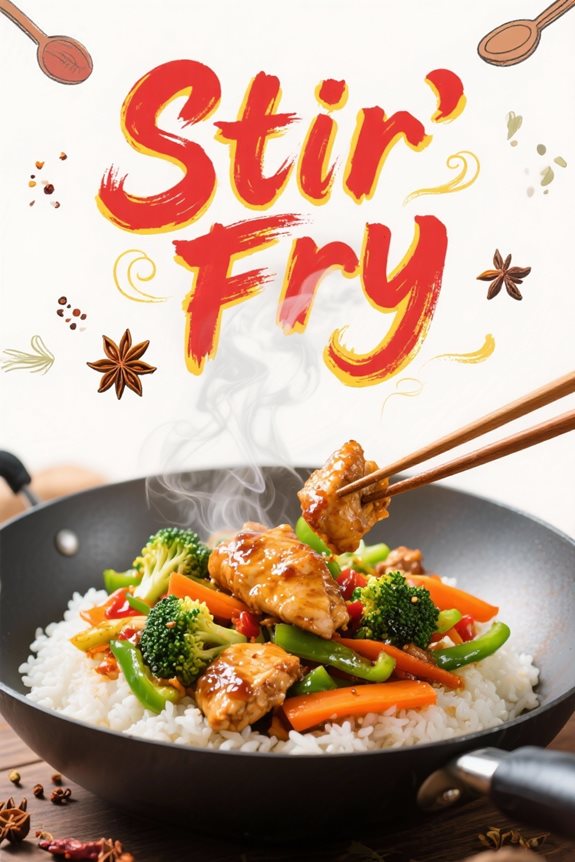
When everything is cooked to perfection, serve your creation over a bed of fluffy rice, finishing with your favorite stir-fry sauce drizzled on top. The combination of textures, colors, and flavors? Simply divine.
Vibrant Asian Fusion Stir Fry Substitutions and Variations
The beauty of a stir fry lies in its remarkable flexibility, allowing you to transform the basic recipe into countless delicious variations.
I often substitute chicken with beef strips, tofu, or shrimp depending on what’s available in my kitchen. For a vegetarian twist, I’ll double up on vegetables and add chickpeas or edamame for protein.
Don’t feel limited by the vegetable suggestions either. Snow peas, water chestnuts, baby corn, and bok choy all make excellent additions.
If you’re avoiding rice, try serving your stir fry over cauliflower rice, quinoa, or zucchini noodles.
For flavor variations, I sometimes add a tablespoon of peanut butter, a splash of coconut milk, or red curry paste to create different Asian-inspired sauces that completely transform the dish.
What to Serve with Vibrant Asian Fusion Stir Fry
While your stir fry can certainly stand as a complete meal on its own, pairing it with complementary side dishes improves the dining experience to restaurant quality.
I’ve found that steamed jasmine rice provides the perfect foundation, but don’t hesitate to experiment with brown rice or even cauliflower rice for a lower-carb option.
For a more substantial meal, I recommend adding spring rolls, dumplings, or crispy wontons that offer textural contrast to your stir fry.
A revitalizing cucumber salad with rice vinegar dressing balances the savory flavors, while miso soup makes an excellent starter.
When I’m entertaining guests, I’ll include a platter of fresh lettuce wraps with additional fillings, allowing everyone to customize their dining experience.
Don’t forget a simple fruit-based dessert to cleanse the palate afterward!
Final Thoughts
After mastering the art of stir fry, I’ve come to appreciate its remarkable versatility and efficiency in creating delicious, nutritious meals with minimal effort.
The beauty of stir fry lies in its adaptability—you can use whatever vegetables are in your refrigerator, switch proteins from chicken to tofu, or experiment with different sauces to create entirely new flavor profiles.
I encourage you to view the recipe as a framework rather than a strict formula. Trust your instincts with cooking times, as vegetables and proteins vary in how quickly they cook.
Remember that the key to successful stir fry is preparation—having all ingredients chopped and ready before heating your wok or skillet makes the actual cooking process effortless and enjoyable.
Like with quinoa salads, uniformly chopped vegetables ensure even cooking and proper caramelization throughout your dish.
Happy cooking!