I’ve discovered that ponzu sauce is one of Japan’s best-kept culinary secrets, and I’m excited to share it with you. This tangy, umami-rich condiment transformed my cooking with its perfect balance of citrus, soy, and savory depth. When I first tasted authentic ponzu, I knew my kitchen would never be the same. Beyond just dipping, it’s a versatile flavor booster that’ll raise everything from seafood to vegetables. Want to know how this simple sauce can revolutionize your meals?
Key Takeaways
- Ponzu is a Japanese citrus-based condiment combining tangy, savory, and umami flavors from lemon juice, soy sauce, and mirin.
- Traditional ingredients include citrus juice, soy sauce, mirin, and sometimes fish sauce for depth of flavor.
- It’s versatile as a dipping sauce for tempura and gyoza, a dressing for salads, or a marinade for fish and meats.
- Ponzu requires no cooking—simply whisk ingredients together and let flavors mingle for about 30 minutes before serving.
- Variations can include different citrus juices like yuzu or lime, and heat can be adjusted with crushed red pepper or hot sauce.
Why You’ll Love this Zesty Japanese Ponzu Sauce
Whether you’re looking to improve your Asian-inspired dishes or simply want to add a burst of flavor to your meals, this versatile Japanese ponzu sauce will quickly become a staple in your kitchen.
I love how this citrus-based sauce balances tangy, savory, and umami flavors with its unique combination of lemon juice, soy sauce, mirin, and fish sauce.
What makes ponzu truly special is its remarkable versatility. I use it as a dipping sauce for dumplings, a bright dressing for salads, or a marinade for proteins.
The touch of brown sugar tempers the acidity while green onions add freshness and depth.
Don’t worry if you can’t find mirin—I’ve included simple substitutions using rice wine vinegar or dry sherry that maintain ponzu’s distinctive character.
What Ingredients are in Zesty Japanese Ponzu Sauce?
Ponzu sauce is one of those magical Japanese condiments that transforms ordinary dishes into something special. The tangy, savory, slightly sweet flavor profile works wonders on everything from seared fish to dumplings.
This particular recipe creates a well-balanced ponzu that hits all the right notes—umami from the soy sauce, brightness from the citrus, and just a hint of heat to keep things interesting.
- 1 tablespoon chopped green onions
- 3 tablespoons fresh lemon juice
- 2 tablespoons mirin (sweet rice wine)
- 2 tablespoons lower-sodium soy sauce
- 1 teaspoon brown sugar
- 1/4 teaspoon crushed red pepper
- 1/4 teaspoon fish sauce
If you can’t find mirin at your local grocery store, don’t worry—there are some simple substitutions that work quite well. You can use 1 tablespoon rice wine vinegar plus 1 tablespoon water instead, or even 2 tablespoons of dry sherry.
Just remember that when using these substitutes, you’ll want to increase the brown sugar to 2 teaspoons to achieve that signature subtle sweetness that balances the acidity.
The beauty of ponzu is in its versatility, so feel free to adjust the red pepper if you prefer more or less heat.
How to Make this Zesty Japanese Ponzu Sauce
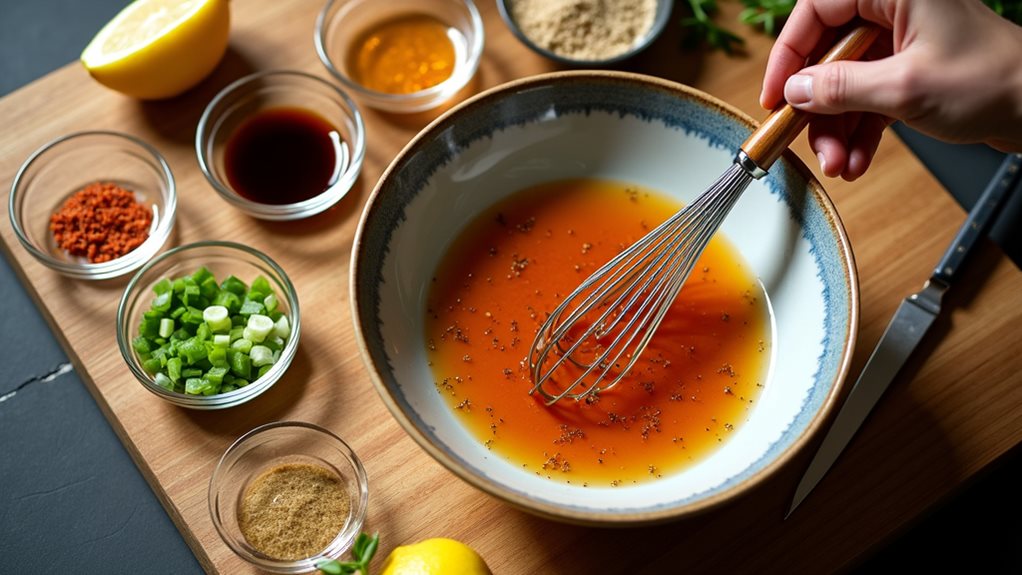
Making ponzu sauce at home is surprisingly simple, and the result is miles better than anything you’ll find in a bottle.
You’ll start by gathering your ingredients: 1 tablespoon chopped green onions, 3 tablespoons fresh lemon juice, 2 tablespoons mirin (sweet rice wine), 2 tablespoons lower-sodium soy sauce, 1 teaspoon brown sugar, 1/4 teaspoon crushed red pepper, and 1/4 teaspoon fish sauce.
These ingredients might sound like an unusual combination, but trust me, they come together to create that perfect balance of salty, sweet, and tangy that makes ponzu so irresistible.
Once you have everything measured out, simply combine all ingredients in a small bowl. Whisk everything together until the brown sugar completely dissolves—this usually takes about 30 seconds of vigorous whisking.
No cooking required! The sauce comes together in minutes, making it perfect for those nights when you want something special but don’t have a lot of time.
Can’t find mirin? No problem! You can substitute 1 tablespoon rice wine vinegar plus 1 tablespoon water, or use 2 tablespoons dry sherry instead. Just remember to increase the brown sugar to 2 teaspoons if you’re using a substitute, as you’ll need to compensate for mirin’s natural sweetness.
The finished sauce can be used immediately, but it tastes even better after the flavors have had a chance to mingle for about 30 minutes.
For precise temperature control when making delicate Japanese sauces that require heating, a premium sous vide machine can maintain consistent temperatures without risk of scorching.
Zesty Japanese Ponzu Sauce Substitutions and Variations
While the basic ponzu recipe we’ve explored is incredible on its own, you’ll find that this versatile sauce welcomes creative adaptations to suit your taste preferences or pantry limitations.
If you don’t have mirin on hand, I recommend substituting 1 tablespoon rice wine vinegar plus 1 tablespoon water, or 2 tablespoons of dry sherry—just increase the brown sugar to 2 teaspoons to balance the flavor.
For a fruitier variation, try using yuzu, blood orange, or lime juice instead of lemon.
You can also adjust the heat level by varying the amount of crushed red pepper, or substitute it with a dash of your favorite hot sauce.
For a deeper umami profile, consider adding a touch more fish sauce or incorporating a small amount of bonito flakes.
What to Serve with Zesty Japanese Ponzu Sauce
Once you’ve prepared a batch of this vibrant citrus-soy condiment, you’ll want to explore the many delicious ways to use it.
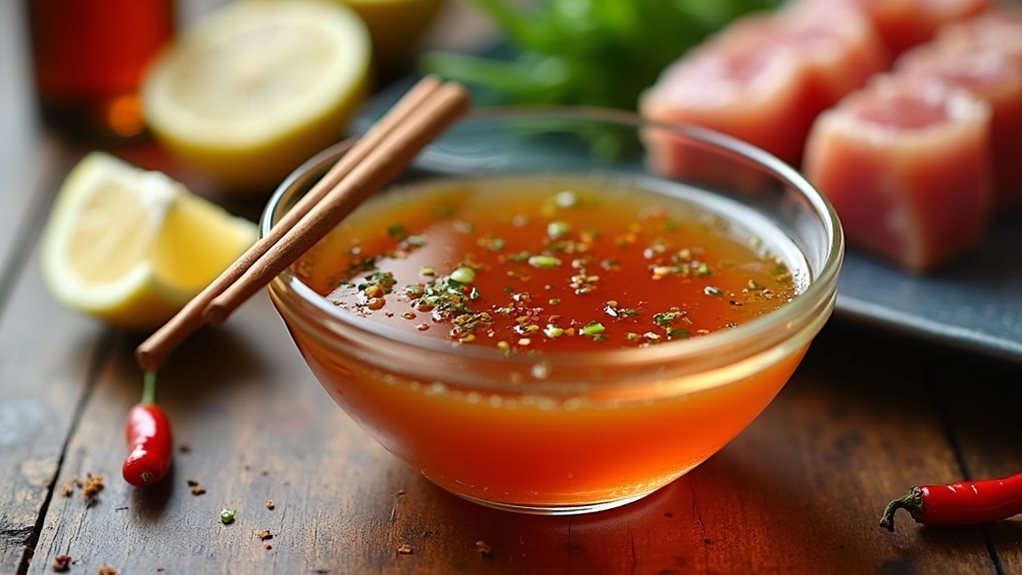
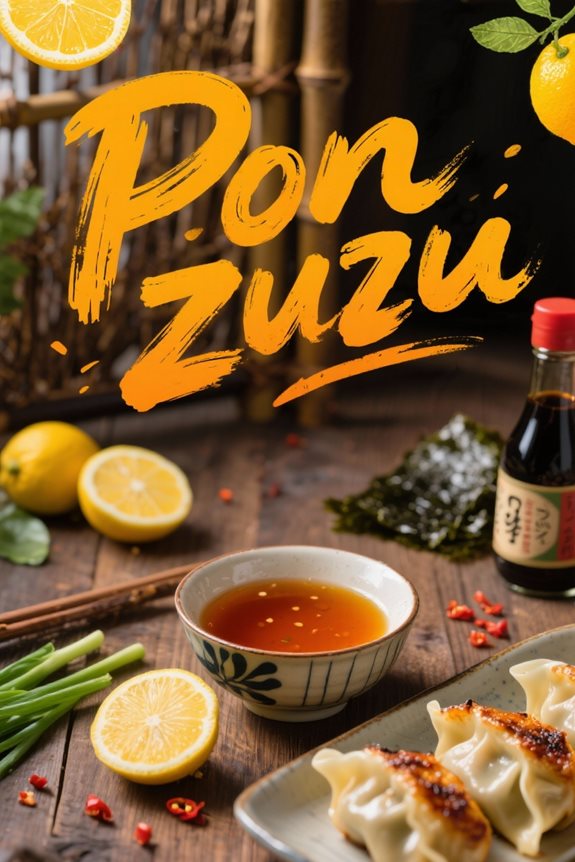
I love drizzling ponzu over grilled or seared fish, especially tuna, salmon, or white fish varieties. It’s perfect for dipping tempura vegetables, gyoza dumplings, or fresh spring rolls.
For a simple appetizer, I recommend serving ponzu alongside sashimi or as a dressing for a cold tofu dish.
You can also use it to brighten up stir-fried vegetables or drizzle it over steamed rice bowls topped with a soft-boiled egg.
The sauce’s tangy profile works wonderfully with rich meats like duck breast or pork belly, cutting through the fattiness with its citrus notes and umami depth.
Final Thoughts
Ponzu sauce represents one of Japan’s most versatile culinary treasures that I’ve come to appreciate for its perfect balance of savory, tangy, and umami flavors.
With just a few simple ingredients—citrus juice, soy sauce, mirin, and a hint of fish sauce—you can create a condiment that transforms ordinary dishes into extraordinary culinary experiences.
I encourage you to experiment with ponzu in your kitchen, whether drizzling it over grilled fish, using it as a dipping sauce for dumplings, or incorporating it into marinades.
Don’t hesitate to adjust the recipe to your taste preferences; add more citrus for brightness or a touch more sugar for sweetness.
Remember, authentic cooking isn’t about rigid rules but about finding harmony in flavors that please your palate.
The beauty of ponzu lies in its simplicity and adaptability.
For an unexpected flavor dimension, try adding a few drops of vanilla extract to your ponzu sauce when using it in marinades for grilled meats or seafood.