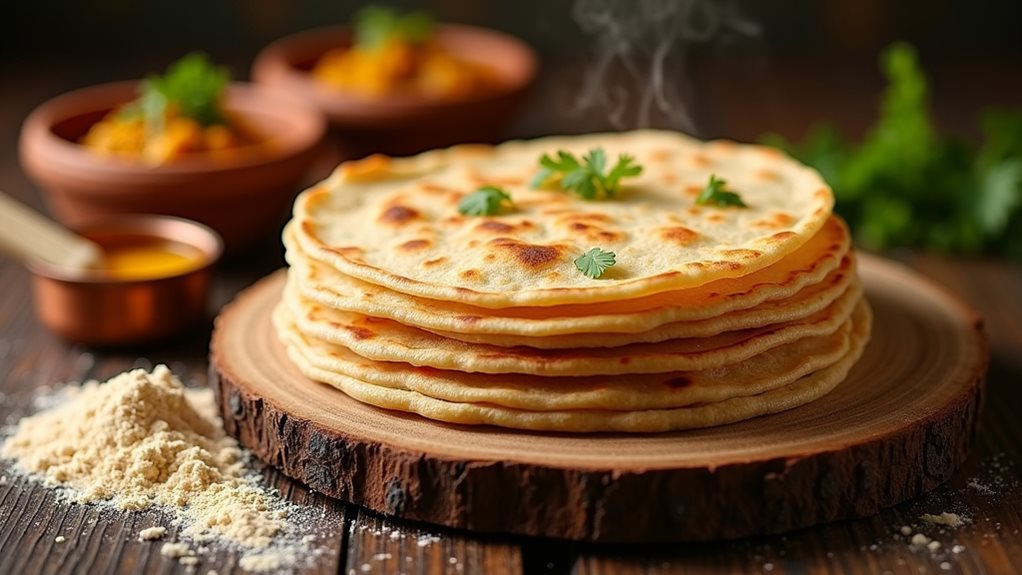
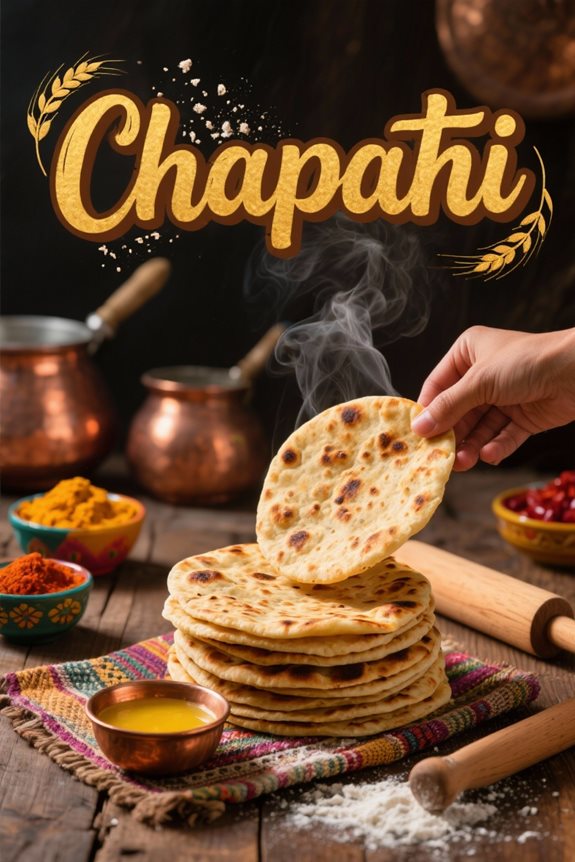
I’ve always found chapati to be one of the most comforting breads to make at home. There’s something almost magical about watching a simple mixture of flour and water transform into a golden, puffed disc of warmth. When I tear into a freshly made chapati, that perfect balance of crispy edges and soft, pillowy center makes even the simplest meal feel special. If you’ve never experienced the satisfaction of making your own, you’re about to discover why this humble flatbread deserves a permanent place in your cooking repertoire.
Key Takeaways
- Chapatis are unleavened Indian flatbreads made with flour, water, and salt, cooked on a hot pan.
- They feature a crispy exterior with soft interior and are best served warm with curries, daal, or stews.
- The dough requires minimal kneading until soft but not sticky, then is rolled into thin circles.
- Traditional chapatis use whole wheat flour, though all-purpose or mixed flour variations are common.
- Cooking involves a hot pan until golden-brown spots appear, then storing in a cloth-lined container.
Why You’ll Love these Warm Golden Chapatis
When you bite into a freshly made chapati, the delicate balance of crispy exterior and soft, pillowy interior creates an experience that’s hard to match with any other flatbread.
I’ve found that these simple flatbreads, made with just flour, water, and a touch of salt, become the perfect vehicle for sopping up flavorful soups and stews.
What makes chapatis truly special is their versatility. They don’t require fancy equipment or ingredients—just basic pantry staples and a heavy pan.
The process of rolling and cooking them, watching as they develop those characteristic golden-brown spots, brings a meditative quality to cooking.
Plus, they’re best served warm, making them ideal for creating that cozy, homemade feeling at your dinner table that everyone appreciates.
What Ingredients are in Warm Golden Chapatis?
Chapatis are a delicious, unleavened flatbread popular throughout South Asia, especially in Indian cuisine. They’re surprisingly simple to make with just a handful of basic ingredients you probably already have in your pantry.
The beauty of chapatis lies in their simplicity—they don’t require fancy equipment or exotic ingredients, just a bit of patience and technique to achieve that perfect golden-brown color with those characteristic spots.
- 1 cup all-purpose flour
- 1/2 cup water
- 1/4 teaspoon salt (optional)
- Shortening or any kind of oil for cooking
While the ingredient list is quite minimal, there are a few things to keep in mind. The quality of your flour can make a difference in the texture of your chapatis—some cooks prefer using a mix of whole wheat and all-purpose flour for a more authentic taste and nutritional improvement.
The water temperature matters too; lukewarm water helps create a softer dough. And though salt is listed as optional, a small pinch can really amplify the flavor profile, especially if you’re serving your chapatis with milder dishes.
How to Make these Warm Golden Chapatis
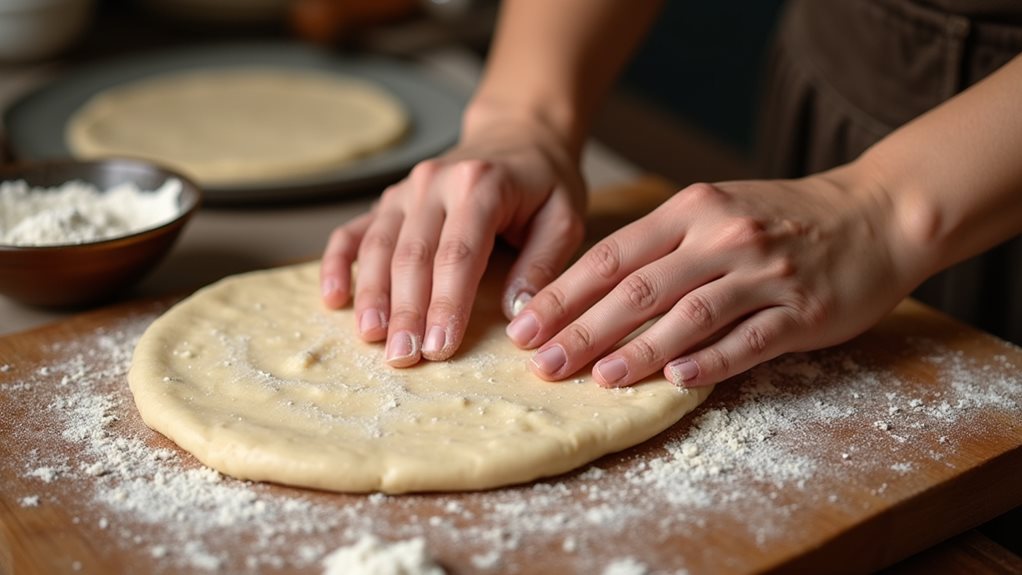
Making chapatis at home is surprisingly simple, and the results are so worth it. Start by combining 1 cup of all-purpose flour with 1/4 teaspoon of salt in a mixing bowl. Gradually add 1/2 cup of water while kneading the mixture, just like you’d with pizza dough. The key here? Getting that perfect consistency. You want the dough to be soft but not sticky—add a touch more flour or water as needed. The softer your dough, the better your chapatis will turn out. Knead for about 5 minutes until you have a sleek, pliable dough that springs back when poked.
Now comes the fun part. Break off small pieces of dough and roll them into balls about the size of a golf ball. Using a rolling pin, flatten each ball into a thin, circular shape—think slightly thicker than a tortilla. Brush a little shortening or oil onto the surface (any cooking oil works fine), then fold and roll it out again to create those lovely layers.
Heat a heavy pan until it’s nice and hot, then place your rolled chapati on it. Watch as it cooks, developing beautiful brown spots on the bottom. Flip it over, add another light brush of oil, and let the other side cook until spotted too. One more flip, a bit more cooking, and voilà—golden brown perfection. The chapati might even puff up a bit, which is always a satisfying sight.
For authentic results, consider investing in an Indian cooking appliance set which often includes specialized tools for perfect flatbreads.
Store your finished chapatis in a covered container lined with a clean kitchen towel to keep them warm and soft until serving. These delicious flatbreads are perfect for scooping up chicken or beef soup, or really any savory dish you fancy.
Warm Golden Chapatis Substitutions and Variations
While traditional chapatis are wonderful in their simplicity, I’ve found that exploring variations and substitutions can breathe new life into this classic flatbread.
Try using whole wheat flour instead of all-purpose for a nuttier flavor and additional fiber, or mix in some chickpea flour for a protein boost. If you’re avoiding gluten, a combination of rice flour and tapioca starch works surprisingly well.
For flavor improvements, consider adding a pinch of cumin, turmeric, or finely chopped herbs like cilantro to your dough.
I sometimes replace water with yogurt for a tangy twist that pairs beautifully with spicy dishes. You can also experiment with different oils – ghee offers an authentic richness, while coconut oil imparts a subtle sweetness that complements vegetable curries perfectly.
What to Serve with Warm Golden Chapatis
Because these delicate flatbreads shine brightest when paired with complementary dishes, I’ve compiled my favorite accompaniments for warm golden chapatis.
Traditional curry dishes, whether vegetarian or meat-based, make perfect partners—the chapati’s neutral flavor absorbs rich, spicy sauces beautifully. I particularly recommend serving them with butter chicken, chana masala, or saag paneer.
Don’t overlook daal (lentil soup) as a simple yet satisfying option; the chapati becomes your utensil for scooping up every flavorful bite.
For breakfast, try them with scrambled eggs and a side of yogurt. You can also create fusion meals by using chapatis as wraps for grilled vegetables and meats, similar to how you’d use tortillas.
Final Thoughts
Once you’ve mastered the art of chapati-making, you’ll discover that these versatile flatbreads can become a staple in your culinary repertoire.
I’ve found that practice truly makes perfect with chapatis—don’t be discouraged if your first few attempts aren’t perfectly round or evenly cooked.
Remember to keep your dough soft and pliable, as this is the secret to tender chapatis.
Store any leftovers in a cloth-lined container to maintain their softness, though they’re always best enjoyed fresh off the pan.
I encourage you to experiment with whole wheat flour or adding herbs to the dough for different flavors.
The satisfaction of watching a chapati puff up while cooking is matched only by the delight of sharing these warm, golden discs with family and friends.
Like medieval bread puddings, chapatis celebrate culinary resourcefulness and make excellent use of simple ingredients transformed into something delicious.