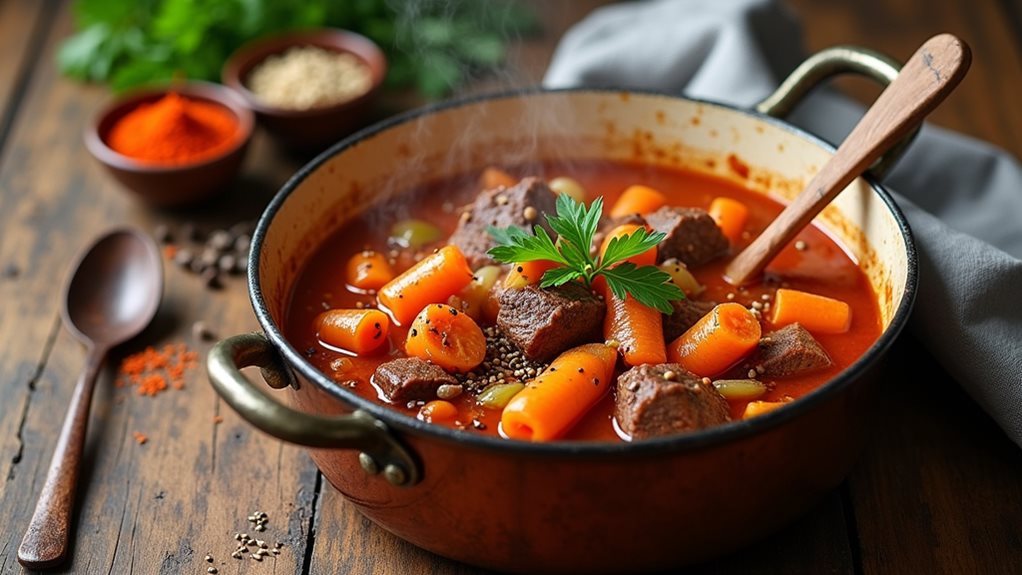
I’ve always been drawn to goulash for its perfect balance of comfort and sophistication. This traditional Hungarian dish transforms simple ingredients into something truly extraordinary through the magic of slow cooking and paprika’s distinctive flavor. Whether you’re looking for a hearty weekend meal or trying to expand your culinary repertoire, authentic goulash delivers rich taste with surprisingly little effort. The secret lies in understanding a few key techniques that separate good goulash from truly exceptional versions.
Key Takeaways
- Goulash is a traditional Hungarian dish featuring tender beef, aromatic paprika, and hearty vegetables simmered together.
- The authentic flavor relies on generous amounts of paprika combined with caraway seeds, bay leaves, and peppercorns.
- Preparation involves coating meat in a seasoned flour mixture, browning it, then slow-cooking with vegetables and spices.
- Common variations include using different meats like chicken or creating vegetarian versions with mushrooms and eggplant.
- Goulash is typically served with egg noodles, spätzle, or crusty bread to absorb the rich, flavorful sauce.
Why You’ll Love this Hungarian Goulash
When I first discovered traditional Hungarian goulash, I was immediately drawn to its rich combination of flavors and hearty satisfaction. This classic dish brings together tender beef, aromatic paprika, and hearty vegetables in a perfectly balanced sauce that’s both comforting and complex.
You’ll appreciate how the meat becomes incredibly tender after simmering with caraway seeds, bay leaves, and peppercorns, creating layers of flavor that simply can’t be rushed.
The mixture of vinegar and paprika provides that distinctive tangy-sweet profile that sets authentic goulash apart from ordinary beef stews.
What makes this recipe special is its versatility—it’s impressive enough for guests but simple enough for weeknight dinners.
Plus, the canning option allows you to preserve this delicious meal for convenient future meals.
What Ingredients are in Hungarian Goulash?
Making a hearty, traditional goulash requires quite a few ingredients, but don’t let that intimidate you. This savory dish combines rich beef with paprika and aromatic vegetables to create a comforting meal that’s worth every bit of effort. The ingredients blend together during the long simmer time, creating deep flavors that just can’t be rushed.
- 4 pounds hamburger meat
- 1/3 cup flour
- 1 tablespoon salt
- 3 tablespoons paprika
- 2 teaspoons dry mustard
- 1/3 cup oil
- 6 stalks celery, cut in half
- 1 cup water
- 1/3 cup vinegar
- 3 bay leaves
- 20 peppercorns
- 2 teaspoons caraway seeds
- 3 medium onions, cut in half
- 4 large carrots, cut in half
You might notice this recipe calls for a generous amount of paprika, which is absolutely crucial for authentic goulash flavor. Don’t skimp on this ingredient! The caraway seeds add that distinctive Central European flavor, while the combination of vegetables creates the rich base. If you’re sensitive to salt, you might want to adjust the amount, but remember that the salt helps tenderize the meat during the long cooking process. And speaking of meat, while this recipe calls for hamburger, you could substitute cubed beef chuck for a more traditional texture, though it might require a bit more cooking time.
How to Make this Hungarian Goulash
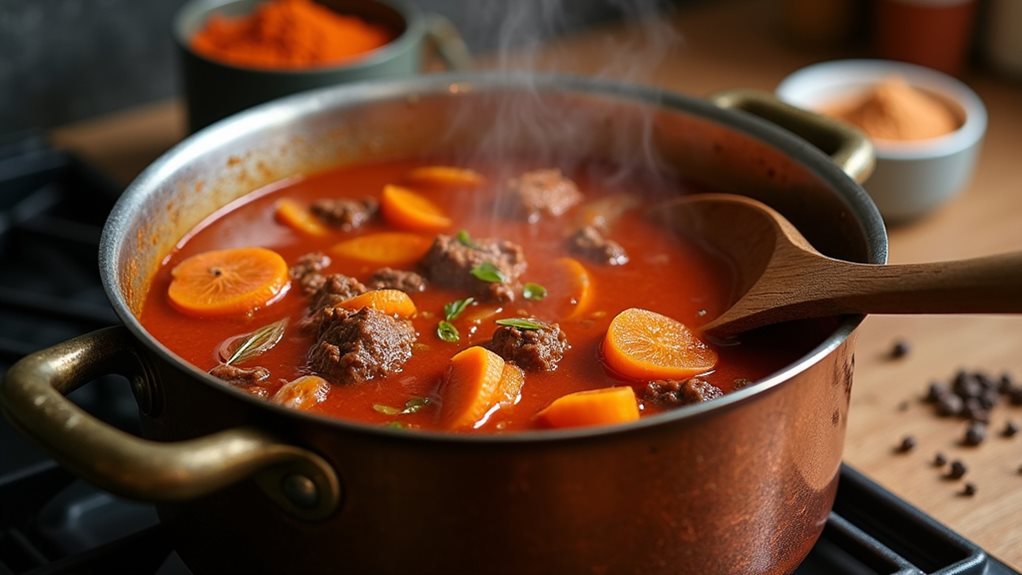
Begin by creating your flavorful coating mixture – combine 1/3 cup flour, 1 tablespoon salt, 3 tablespoons paprika, and 2 teaspoons dry mustard in a bowl. This spice blend is what gives goulash its characteristic rich color and depth of flavor.
Take your 4 pounds of hamburger meat and roll it in this flour mixture, making sure each piece gets a good coating. Then, heat 1/3 cup oil in a large pot and brown the meat slowly – patience is key here, as proper browning builds those complex flavors we’re after.
Once your meat has developed a beautiful crust, sprinkle any remaining flour mixture over the top.
Now comes the veggie parade: add 6 halved celery stalks, 3 halved medium onions, 4 halved large carrots, 1 cup water, and 1/3 cup vinegar to the pot. For the aromatic finale, toss in 3 bay leaves, 20 peppercorns, and 2 teaspoons of caraway seeds.
Cover and let everything simmer together for about 1½ to 2 hours, allowing the meat to become tender and the flavors to meld into that distinctive Hungarian harmony.
For professional results, consider using a copper stock pot which provides superior heat conductivity and temperature control when making traditional goulash.
When preserving, remove the vegetables and bay leaf, then pack the meat into sterilized jars with the sauce, processing at 10 pounds pressure (pints for 1 hour, quarts for 1 hour and 15 minutes).
The result? A richly flavored goulash that captures centuries of Hungarian culinary tradition right in your kitchen.
Hungarian Goulash Substitutions and Variations
While mastering the traditional recipe gives you an authentic taste of Hungary, I’d like to share some practical substitutions and variations that can adapt this goulash to your pantry and preferences.
If you’re avoiding red meat, try substituting chicken thighs or turkey for the hamburger, adjusting your cooking time accordingly.
Don’t have caraway seeds? Cumin provides a different but complementary flavor profile.
For a vegetarian version, replace the meat with mushrooms, eggplant, or a combination of hearty vegetables and beans.
You can also customize the heat level by incorporating hot paprika or adding a diced jalapeño.
For a creamier texture, stir in sour cream just before serving.
When time is limited, consider using a pressure cooker to reduce cooking time while still developing those rich, complex flavors.
What to Serve with Hungarian Goulash
Traditional Hungarian goulash deserves complementary sides that can balance its rich, hearty flavors and complete your dining experience.
I recommend serving it with egg noodles or spätzle, which absorb the delicious sauce beautifully. Crusty bread, particularly a rustic sourdough, works perfectly for sopping up every last bit of the paprika-infused broth.
For vegetables, consider cucumber salad with a light vinegar dressing or pickled beets, which provide a tangy contrast to the savory meat. Roasted root vegetables like parsnips or turnips also pair wonderfully with goulash.
If you’re looking for a complete Hungarian experience, add a side of cabbage slaw or braised red cabbage seasoned with caraway seeds—the same spice featured in your goulash recipe.
These sides create a balanced meal that honors this classic dish’s heritage.
Final Thoughts
Goulash, with its rich history and complex flavors, represents more than just a hearty meal—it’s a culinary tradition worth mastering in your home kitchen.
I’ve found that this classic dish, with its perfect balance of paprika, tender meat, and vegetables, never fails to bring comfort to my dinner table. Whether you’re preparing the traditional Hungarian version or the Americanized adaptation, the key lies in slow cooking and allowing the flavors to meld together.
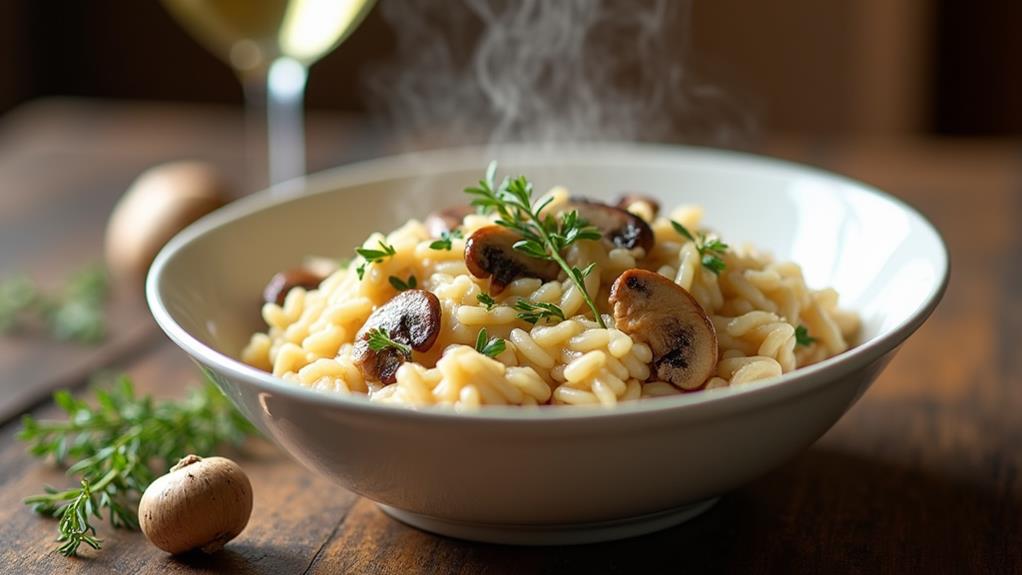
Don’t be afraid to make this recipe your own. While respecting its fundamental elements, you can adjust the spice level or vegetable mix to suit your family’s preferences. Similar to how mushroom risotto originated in the Po Valley region of northern Italy during the 14th century, goulash has its own fascinating geographical and historical roots.
Remember that goulash improves with time, making it an excellent make-ahead meal for busy weeknights or weekend gatherings.
I hope you’ll adopt this timeless dish and make it a regular part of your cooking repertoire.