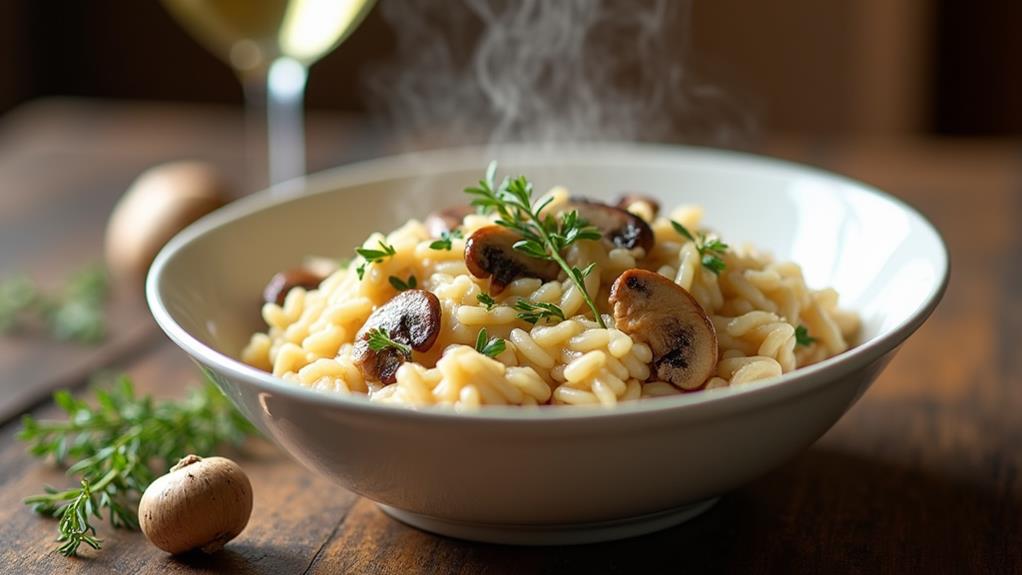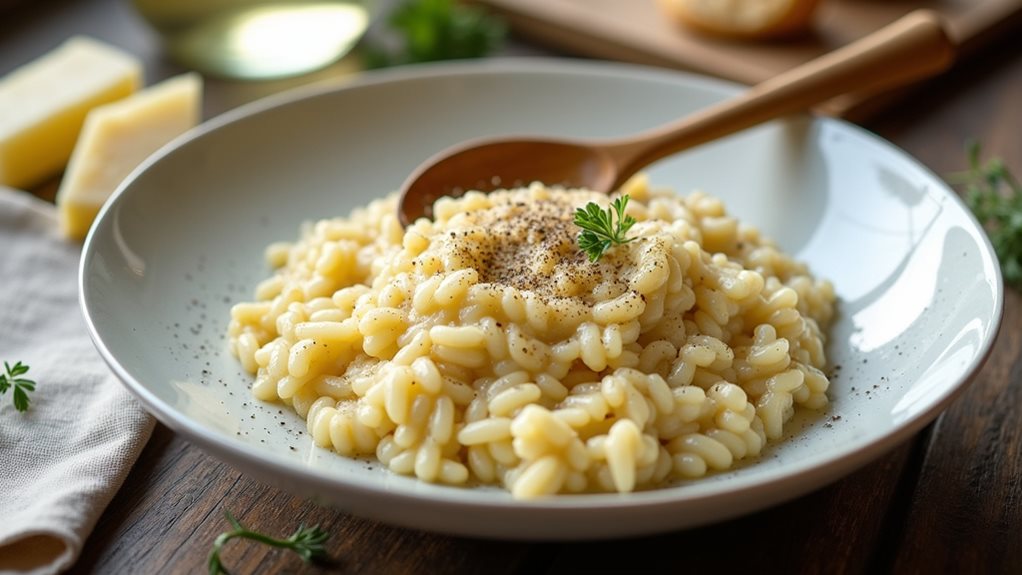

I’ve always believed that risotto embodies the perfect balance of simplicity and elegance in Italian cuisine. When I make this creamy Parmesan risotto at home, I’m reminded that patience truly rewards the cook—as each ladleful of broth transforms ordinary rice into something extraordinary. The meditative stirring creates a velvety texture that can’t be rushed, while the final addition of butter and cheese raises the dish to restaurant quality. Let me show you how to master this classic that will impress at any dinner table.
Key Takeaways
- Risotto is an Italian rice dish with a signature creamy texture achieved through gradual addition of hot broth and constant stirring.
- Arborio rice is the traditional grain used for risotto, prized for its high starch content that creates the dish’s creaminess.
- The basic risotto requires minimal ingredients: broth, rice, onions, olive oil, and Parmesan cheese.
- Risotto can be customized with various additions like mushrooms, seafood, vegetables, or different cheeses to create diverse flavors.
- The cooking technique involves adding hot broth incrementally while continuously stirring until rice reaches an al dente consistency.
Why You’ll Love this Creamy Italian Parmesan Risotto
Three remarkable qualities make this creamy Italian Parmesan risotto a standout dish for any home cook.
First, it’s deceptively simple, requiring just a handful of quality ingredients to create a restaurant-worthy meal. I’ve found that the Arborio rice’s natural starch does the heavy lifting, creating that signature creamy texture without adding cream.
Second, it’s incredibly versatile. While this classic Parmesan version shines on its own, I can easily transform it by adding seasonal vegetables, seafood, or mushrooms. The recipe provides a perfect canvas for creativity.
Finally, the meditative stirring process, adding broth gradually as the rice absorbs each addition, creates an almost therapeutic cooking experience.
This mindful approach yields perfect rice with a luxurious texture that’s simultaneously creamy and al dente.
What Ingredients are in Creamy Italian Parmesan Risotto?
Risotto is one of those classic Italian dishes that seems fancy but actually uses pretty simple ingredients. The magic happens in the cooking method, where we slowly add broth to the rice, creating that signature creamy texture without using any cream at all.
Traditional Parmesan risotto relies on just a handful of quality ingredients, with good broth and the right rice being the absolute keys to success.
- 3 cups low-salt chicken broth
- 1 medium onion, chopped
- 6 tablespoons extra virgin olive oil (use something flavorful)
- 1 1/3 cups Italian Arborio rice (raw)
- 1/3 cup grated Parmesan cheese
- 1/4 teaspoon black pepper
When shopping for risotto ingredients, quality really matters. Arborio rice is non-negotiable—it’s a short-grain rice with a high starch content that gives risotto its characteristic creaminess.
You might be tempted to substitute regular rice, but trust me, the results won’t be the same. As for the Parmesan, try to get the real Parmigiano-Reggiano and grate it yourself rather than using the pre-grated stuff in containers.
The flavor difference is night and day, and since this is such a simple dish, each ingredient needs to pull its weight.
How to Make this Creamy Italian Parmesan Risotto
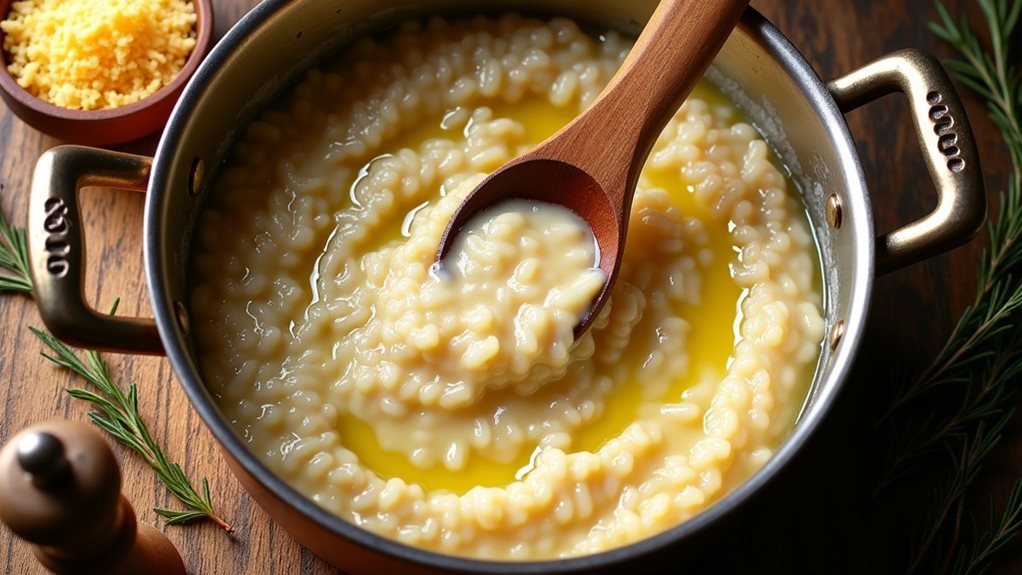
Making risotto is all about patience and attention, but trust me, the results are so worth it. Start by heating 3 cups of low-salt chicken broth in a medium pan until it reaches a gentle simmer.
While that’s happening, grab a separate pan and sauté one medium chopped onion in 6 tablespoons of extra virgin olive oil for about 3 to 5 minutes, until it becomes soft and translucent. The kitchen will start smelling amazing at this point, with that rich olive oil and sweet onion aroma mingling together.
Now comes the meditative part of risotto-making. Add 1 1/3 cups of raw Italian Arborio rice to your onions, stirring to coat each grain with that flavorful oil. This coating helps the rice release its starch slowly, which is the secret to risotto’s signature creaminess.
Then, begin the gradual process of adding the hot broth—just 1/2 cup at a time—stirring constantly until each addition is absorbed before adding the next. This might take about 20 minutes total, and yes, your arm might get a little tired from all that stirring.
Once all the broth is incorporated, test the rice for doneness. Still too firm? No problem, just add a bit more hot broth or water until it reaches that perfect al dente texture.
Finally, remove from heat and stir in 1/3 cup of grated Parmesan cheese and 1/4 teaspoon of black pepper. The cheese melts into the hot rice, creating that irresistibly creamy finish that makes risotto so special. For consistently perfect results every time, consider using a professional rice cooker to maintain ideal temperature and eliminate the need for constant stirring.
Creamy Italian Parmesan Risotto Substitutions and Variations
While the classic Italian Parmesan risotto recipe is absolutely delicious on its own, you can easily customize this versatile dish to suit your taste preferences or dietary needs.
I often substitute vegetable broth for chicken broth when serving vegetarian guests, and it works beautifully without compromising flavor. For a dairy-free version, I’ll skip the Parmesan and add nutritional yeast instead.
You can transform this basic risotto into countless variations by adding ingredients like sautéed mushrooms, roasted butternut squash, or fresh spring peas.
For a seafood twist, I’ll stir in cooked shrimp or scallops during the final minutes. Don’t be afraid to experiment with different cheeses either—pecorino, fontina, or even a mild blue cheese can create exciting flavor profiles while maintaining that signature creamy texture.
What to Serve with Creamy Italian Parmesan Risotto
When planning a menu around a delicious creamy Italian Parmesan risotto, you’ll want to contemplate complementary dishes that balance its rich texture and flavor profile.
I find that simply grilled proteins work exceptionally well—think lemon-herb chicken breasts, seared scallops, or a tender filet of salmon.
For vegetables, I recommend roasted asparagus, sautéed Brussels sprouts with pancetta, or a bright arugula salad with lemon vinaigrette.
These lighter sides cut through the creaminess of the risotto while adding nutritional balance to your meal.
If you’re serving wine, opt for a crisp Pinot Grigio or unoaked Chardonnay with seafood pairings, or a medium-bodied Sangiovese with meat dishes.
The acidity in these wines helps cleanse the palate between bites of the starchy, cheese-forward risotto.
Final Thoughts
As I’ve explored throughout this guide, risotto represents one of Italian cuisine‘s most versatile and rewarding dishes.
The technique I’ve shared—slowly adding broth while stirring continuously—creates that signature creamy texture without actual cream. Arborio rice’s starch is the secret behind this magic.
I’ve found that patience truly makes the difference between good and exceptional risotto. Don’t rush the process; let each ladle of broth absorb fully before adding more.
Remember that the finished texture should be creamy yet with each grain maintaining a slight firmness at its center.
Whether you’re making this classic Parmesan version or experimenting with other ingredients, the foundation remains the same.
Similar to how the Maillard Reaction transforms ingredients in roasting and braising, this slow cooking process unlocks risotto’s full flavor potential.
Trust your instincts as you cook, taste frequently, and soon you’ll master this Italian staple that’s impressed dinner guests for centuries.