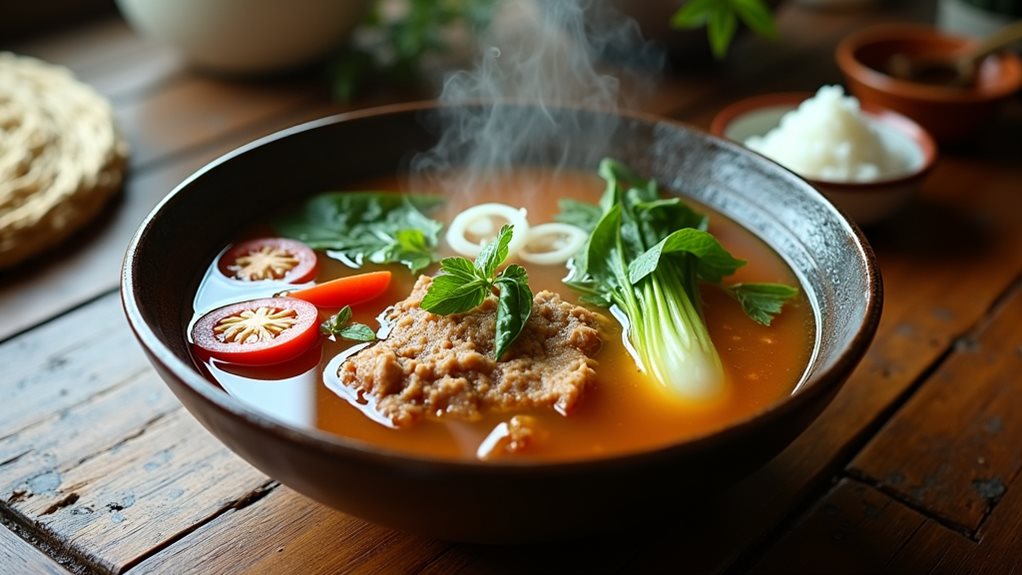
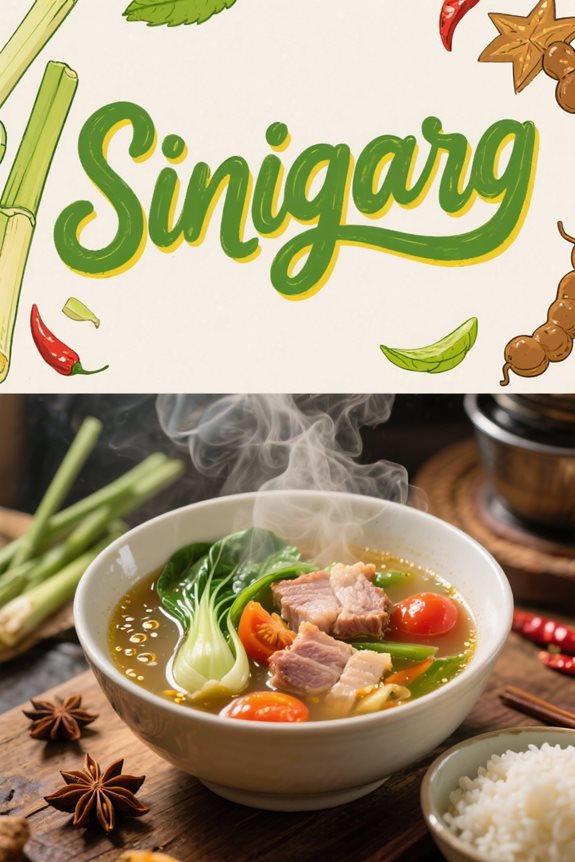
I’ve spent many years perfecting my sinigang recipe, and I’m excited to share this Filipino classic with you. This tangy, savory soup has pulled me through countless cold days with its comforting hug of sour broth, tender meat, and fresh vegetables. The balance of flavors—sour, savory, with hints of umami—creates a dish that’s both simple and complex. If you’ve never experienced the invigorating punch of a well-made sinigang, you’re in for a remarkable culinary adventure.
Key Takeaways
- Sinigang is a Filipino soup characterized by its distinctive sour and savory flavor profile.
- The dish is traditionally made with meat (pork, beef) or seafood (shrimp, fish) in a tangy broth.
- Its signature sourness comes from tamarind or packaged sinigang mix, creating its therapeutic and comforting qualities.
- Vegetables like bok choy, water spinach, or radish add nutritional value and complement the soup’s flavor.
- Sinigang is typically served with steamed white rice and fish sauce (patis) for additional seasoning.
Why You’ll Love this Heartwarming Filipino Sinigang
Comfort in a bowl, that’s what Filipino sinigang delivers with every steaming spoonful. This tangy soup, with its perfect balance of sour and savory flavors, has been a staple in Filipino households for generations.
I’m particularly fond of how versatile sinigang is—you can prepare it with pork, beef, shrimp, or fish, adapting to whatever you have on hand.
What makes this dish truly special is its therapeutic quality. The sourness from the sinigang mix cuts through rich foods, while the combination of protein and vegetables creates a complete meal.
During cold weather or when you’re feeling under the weather, nothing satisfies quite like this hot, tangy broth. It’s simple enough for weeknight cooking but impressive enough to serve guests who want to experience authentic Filipino cuisine.
What Ingredients are in Heartwarming Filipino Sinigang?
Sinigang is one of the most beloved Filipino comfort foods, known for its sour and savory broth that warms the soul on rainy days. This tangy soup can be made with various proteins, but the core ingredients remain consistent to create that distinctive flavor profile that Filipinos around the world crave.
The beauty of sinigang lies in its simplicity and how the ingredients work together to create layers of flavor.
- 1 tablespoon cooking oil
- 2 garlic cloves, mashed
- 1 large onion
- 2 roma tomatoes (or one large tomato)
- 1 tablespoon patis (fish sauce)
- 2 pounds meat (pork, beef, or seafood)
- 9 cups water
- 1 packet (1.4 oz) sinigang soup mix
- 5 small bok choy or 2 cups baby spinach
- Steamed rice for serving
- Extra patis (fish sauce) for serving
When shopping for these ingredients, the sinigang mix packet is essential—it’s what gives the soup its signature sourness, traditionally derived from tamarind. You can find it in Asian grocery stores or in the international aisle of well-stocked supermarkets.
For the protein, many Filipino families have their preference, but pork belly or shoulder cuts work wonderfully, as do shrimp for a seafood version. The vegetables can also be adjusted based on what’s available—some traditional versions include radish, eggplant, or string beans in addition to the leafy greens.
The key is maintaining that perfect balance between the sourness of the broth and the richness of the meat.
How to Make this Heartwarming Filipino Sinigang
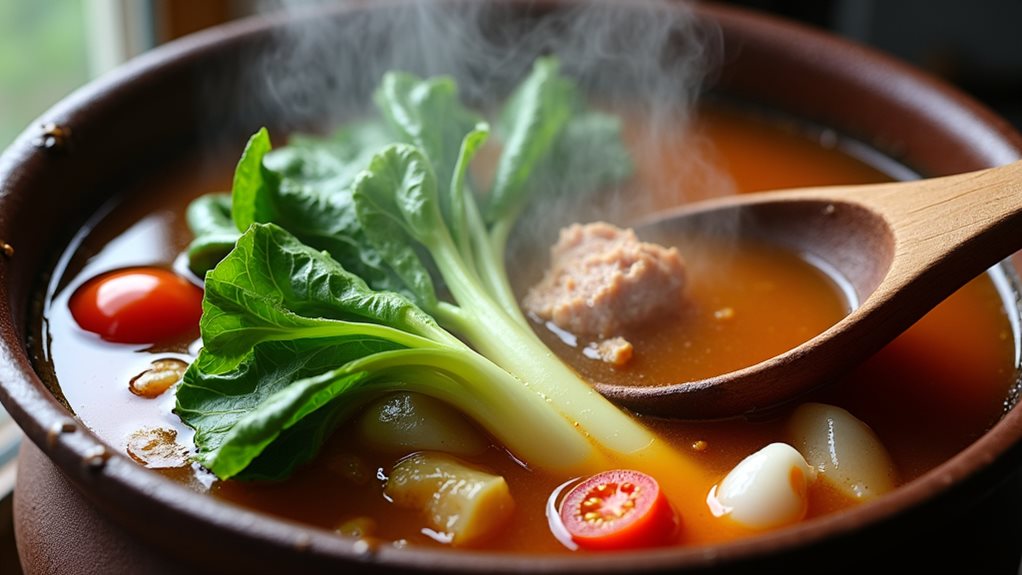
Making sinigang at home is surprisingly simple, and the results are absolutely worth it. Start by heating 1 tablespoon of oil in a large pot, then add 2 mashed garlic cloves and 1 large onion. Let them brown lightly, creating that aromatic base that makes your kitchen smell like a Filipino home.
Next, toss in 2 roma tomatoes and 1 tablespoon of patis (fish sauce), which adds that distinctive umami flavor that’s characteristic of Filipino cuisine. Add your 2 pounds of meat—pork, beef, or chicken all work beautifully—and brown it well before pouring in 9 cups of water.
Once the water comes to a rolling boil, reduce the heat to medium-low and let the meat simmer for about 40 minutes until tender. If you’re using seafood instead of meat, you’d add it now and cook for just 20 minutes—seafood cooks much faster, and nobody wants rubbery shrimp in their sinigang.
After the meat is tender, stir in a large packet (1.4 oz) of sinigang soup mix, which contains the tamarind that gives this soup its signature tangy flavor. In the final minutes, add 5 small bok choy or 2 cups of baby spinach and simmer just until the greens wilt, which takes about 5 minutes. The vibrant green against the rich broth isn’t merely visually appealing but adds a fresh contrast to the savory elements.
For even faster preparation and more tender results, consider using an Indian pressure cooker which significantly reduces cooking time while preserving the dish’s authentic flavors.
Serve your steaming bowl of sinigang with a side of rice, which helps balance the tanginess of the soup. Some extra patis on the table lets everyone adjust the saltiness to their liking.
The beauty of sinigang is in its balance—sour, savory, with just enough salt and the freshness of vegetables. It’s the kind of dish that feels like a warm hug on a cold day, or the perfect comfort when you’re feeling under the weather. And while it might seem like a lot of steps, they flow naturally, and before you know it, you’ve created something truly special.
Heartwarming Filipino Sinigang Substitutions and Variations
While the basic sinigang recipe creates a soul-satisfying soup, you can easily adapt it to your taste preferences or available ingredients.
I’ve found that tamarind paste works wonderfully if you can’t find the sinigang soup packet, starting with 2-3 tablespoons and adjusting to taste. For protein variations, you can substitute pork with shrimp, fish, beef, or even chicken—each creating a distinctive flavor profile.
Don’t hesitate to experiment with vegetables either. Traditional Filipino versions might include water spinach (kangkong), radish, or string beans instead of bok choy.
If you’re looking to reduce sodium, use less fish sauce and add a squeeze of lemon or lime at the end. I’ve discovered that adding a small unripe mango can introduce a pleasant tanginess when tamarind isn’t available.
What to Serve with Heartwarming Filipino Sinigang
When enjoying a steaming bowl of sinigang, what accompaniments will improve this tangy Filipino soup to a complete meal experience?
The classic pairing is steamed white rice, which provides the perfect neutral canvas to balance the soup’s sour flavor profile. I always serve mine with a small dish of patis (fish sauce) on the side, allowing my guests to adjust the saltiness to their preference.
For a complete Filipino meal, I recommend adding crispy fried fish or pork belly as side dishes.
Fresh sliced tomatoes with a sprinkle of salt make a revitalizing counterpoint, while ensaladang talong (eggplant salad) offers textural contrast.
Don’t forget sawsawan—dipping sauces like soy sauce with calamansi—to round out this comforting meal experience.
Final Thoughts
After exploring the delicious world of sinigang, I’ve come to appreciate this Filipino soup as more than just a meal—it’s a cultural touchstone that brings comfort through its perfect balance of sour, savory, and umami flavors.
This versatile dish adapts beautifully to whatever protein you have on hand, whether it’s pork, seafood, or even a vegetarian version.
What makes sinigang special is its accessibility—with modern soup packets available, even beginners can create authentic flavors without hunting down hard-to-find tamarind or other souring agents.
I encourage you to make this recipe your own by adjusting the sourness and spice levels to suit your taste.
Remember that sinigang isn’t just food; it’s a celebration of Filipino culinary heritage that continues to bring people together around steaming bowls of tangy comfort.
Like the gradual broth addition technique used in risotto, sinigang’s flavors develop beautifully when you allow ingredients to simmer together slowly, creating a harmonious blend of tastes.