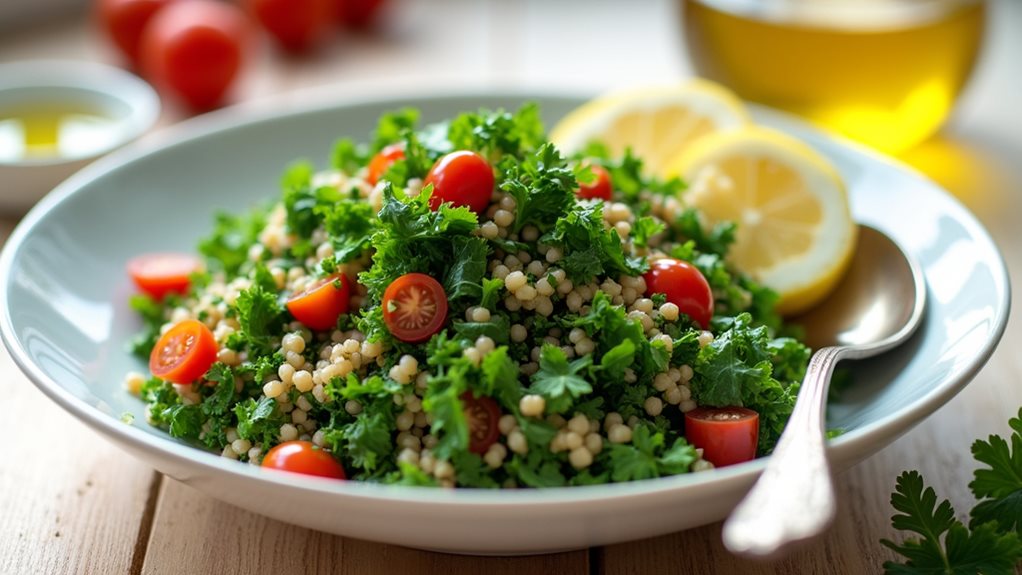
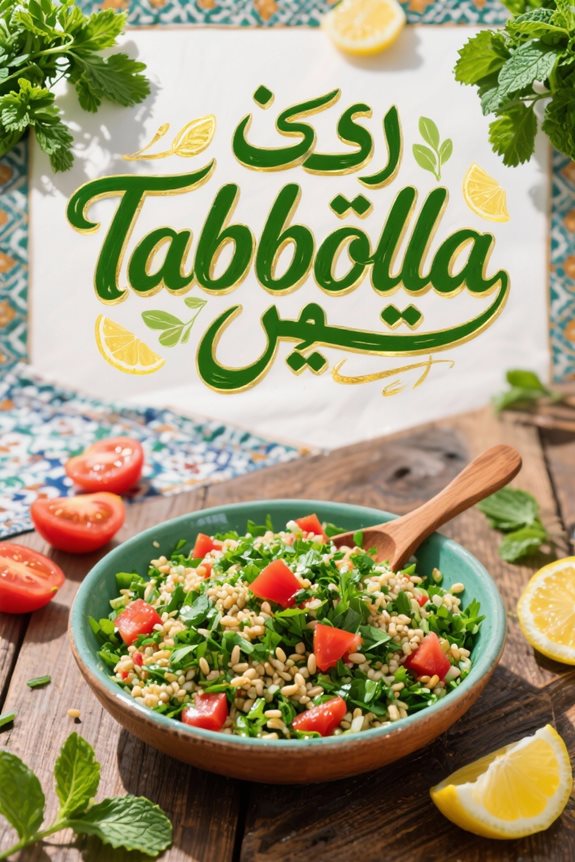
I’ve discovered that tabbouleh is the perfect solution for using up those abundant fresh herbs in my garden. This vibrant Middle Eastern salad combines parsley, mint, and bulgur wheat with a tangy lemon dressing that awakens the senses. It’s not only invigorating—it’s also incredibly versatile. Whether you’re looking for a healthy side dish or a light meal, tabbouleh delivers both nutrition and flavor. Let me show you how simple ingredients transform into something extraordinary.
Key Takeaways
- Tabbouleh is a vibrant Middle Eastern salad featuring finely chopped parsley, mint, bulgur wheat, tomatoes, and onions.
- The salad is dressed with olive oil and fresh lemon juice, creating a refreshing and tangy flavor profile.
- Traditional tabbouleh uses minimal bulgur wheat, allowing the fresh herbs to be the star ingredients.
- Preparation involves soaking bulgur in boiling water, then combining with finely chopped herbs and vegetables.
- Tabbouleh pairs excellently with grilled meats, falafel, hummus, and can be served as a side dish or light meal.
Why You’ll Love this Fresh Herb Tabbouleh
While many salads rely on lettuce as their base, this vibrant tabbouleh stands apart with its abundant use of fresh parsley and mint.
I’ve found that the combination of these aromatic herbs creates a revitalizing flavor profile that’s both bold and invigorating. The bulgur wheat adds a delightful chewy texture while absorbing the bright lemon juice and olive oil dressing.
What I particularly love about this dish is its versatility—it works beautifully as a side dish alongside grilled meats or as a light vegetarian main course.
The preparation process, with its methodical chopping and mixing, becomes almost meditative. Plus, the vibrant colors of the parsley, tomatoes, and onions make for a visually stunning presentation that’ll impress anyone at your table.
What Ingredients are in Fresh Herb Tabbouleh?
Traditional tabbouleh is a revitalizing Middle Eastern salad that bursts with fresh herbs and zingy flavors. The beauty of this dish lies in its simplicity and the vibrant colors from the parsley, tomatoes, and bulgur wheat.
A properly made tabbouleh should have parsley as the star ingredient, with the bulgur taking a supporting role, not the other way around.
- 3 bunches flat leaf parsley, finely chopped (stems discarded)
- 1 medium onion, finely chopped
- 6 medium tomatoes, finely chopped and seeded
- 2 teaspoons salt
- 1/2 teaspoon black pepper
- Juice of 3 lemons
- 4 ounces fine bulgur (cracked wheat)
- 9 full ounces boiling water
- 1 tablespoon mint, finely chopped
- Olive oil (amount not specified in the original recipe)
When shopping for these ingredients, quality matters tremendously. The freshest parsley you can find will make all the difference in your final dish.
Look for bright green, perky leaves rather than wilted ones. And don’t be tempted to substitute curly parsley for flat-leaf (Italian) parsley—the flavors are quite different.
For the tomatoes, choose ripe but firm ones that won’t turn your tabbouleh watery. In a pinch, you could use cherry tomatoes, which tend to have less moisture and more concentrated flavor.
How to Make this Fresh Herb Tabbouleh
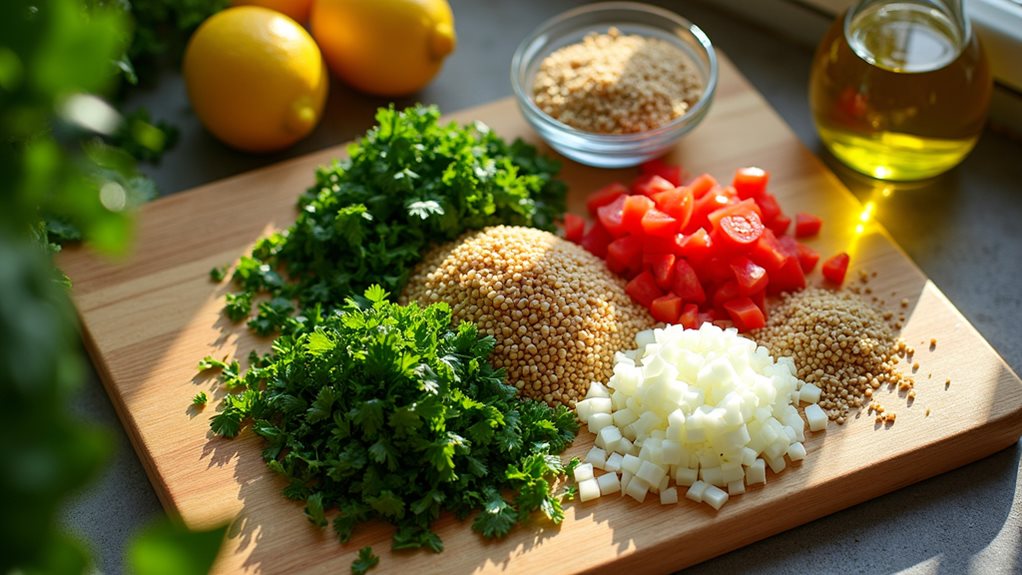
Making tabbouleh starts with preparing all your fresh ingredients first—this is definitely one of those recipes where mise en place matters.
Begin by finely chopping 3 bunches of flat leaf parsley (remember to discard those stems), 1 medium onion, and 6 medium tomatoes (which you’ll want to seed before chopping). You’ll also need to finely chop about 1 tablespoon of mint, which gives this salad its distinctive vibrancy.
While you’re chopping away, place 4 ounces of fine bulgur (that’s cracked wheat) in a large bowl and pour 9 full ounces of boiling water over it. Let it soak for about 15 minutes—this softens the bulgur without cooking it completely.
Meanwhile, combine your chopped parsley, mint, onions, and tomatoes in another large bowl, and season with 2 teaspoons of salt and 1/2 teaspoon of black pepper.
Once the bulgur has soaked up the water, drain it well—I mean really squeeze out that excess moisture—and add it to your herb and vegetable mixture.
The final touch? The juice of 3 lemons and a generous pour of olive oil (though the recipe doesn’t specify exactly how much, I’d suggest about 1/3 cup).
Mix everything thoroughly, and voilà! Your tabbouleh can be served chilled from the fridge or at room temperature, depending on your preference and the weather outside.
Perfect for summer gatherings or as a revitalizing side dish any time of year.
For larger gatherings or restaurant-style preparation, commercial rice cookers designed for Indian cuisine can efficiently prepare the bulgur in bulk while you focus on chopping the fresh ingredients.
Fresh Herb Tabbouleh Substitutions and Variations
Although tabbouleh follows a traditional Lebanese recipe, you can adapt it to suit your taste preferences or dietary needs with several creative substitutions.
If you’re gluten-free, quinoa or cauliflower rice work beautifully in place of bulgur wheat. I’ve found that mint can be increased for a more invigorating flavor, or you might try adding a handful of dill or cilantro for an interesting twist.
For a protein boost, I recommend folding in chickpeas or white beans. You can also customize the acidity level by adjusting the lemon juice or substituting lime juice for a different citrus note.
When tomatoes aren’t in season, try diced cucumbers or red bell peppers for crunch and color. These variations maintain the spirit of tabbouleh while allowing for personal expression in your kitchen.
What to Serve with Fresh Herb Tabbouleh
Now that you’ve mastered the art of tabbouleh variations, let’s explore the perfect pairings for this vibrant Lebanese salad.
I love serving tabbouleh alongside grilled meats, particularly lamb kebabs or chicken skewers, where the bright acidity cuts through the richness beautifully.
For a vegetarian spread, pair it with warm pita bread, hummus, baba ganoush, and falafel to create an authentic mezze platter.
The cool, lemony flavors of tabbouleh also complement spicy dishes like shakshuka or harissa-spiced vegetables.
Don’t forget about stuffed grape leaves (dolmas) and labneh (strained yogurt) as traditional accompaniments.
For a complete meal, I’ll often serve tabbouleh with grilled fish or as a side to kebabs with yogurt sauce, creating a balanced, Mediterranean-inspired feast.
Final Thoughts
As I’ve explored the world of tabbouleh throughout this guide, I’ve come to appreciate how this vibrant Lebanese salad represents more than just a dish—it’s a celebration of fresh herbs, bright flavors, and Mediterranean culinary tradition.
What makes tabbouleh special is its perfect balance of textures and tastes, from the tender bulgur wheat to the crisp parsley and the bright acidity of fresh lemon juice.
I encourage you to make this recipe your own. Don’t hesitate to adjust the proportions of herbs or add a personal touch with ingredients like cucumber or a sprinkle of sumac.
Remember that authentic tabbouleh is primarily an herb salad—the parsley should always be the star.
Whether served as a side or enjoyed as a light meal, tabbouleh brings Mediterranean sunshine to any table.
For a delightful summer variation, consider adding fresh strawberries with a drizzle of balsamic glaze to create a refreshing sweet-savory fusion.