I’ve been cooking minestrone for twenty years, and I’m still amazed by its incredible versatility. This classic Italian soup transforms humble ingredients into something truly special—a hearty, nourishing meal that adapts to whatever vegetables you have on hand. Whether you’re looking for comfort on a cold day or trying to use up produce before it spoils, minestrone delivers with its rich broth and satisfying texture. Let’s explore how this centuries-old recipe can become your new go-to dinner solution.
Key Takeaways
- Minestrone is a hearty Italian soup featuring vegetables, pasta (typically spaghetti), and often salt pork as a flavor base.
- The soup develops complex flavors through slow simmering, allowing ingredients to blend beautifully together.
- Traditional ingredients include tomatoes, zucchini, cabbage, green beans, onions, and garlic, with optional Parmesan cheese.
- Minestrone offers flexibility for substitutions with seasonal vegetables, protein additions like beans, or alternative pasta shapes.
- It pairs excellently with crusty Italian bread and makes a complete meal when served with a simple green salad.
Why You’ll Love this Hearty Italian Minestrone
There are three compelling reasons why you’ll fall in love with this hearty Italian minestrone soup.
First, it’s incredibly versatile, combining salt pork’s savory depth with fresh vegetables like zucchini, cabbage, and green beans to create a balanced, nutritious meal in one pot.
Second, I’ve found that the slow-simmered broth develops remarkable complexity as the ingredients meld together, creating a flavor profile that’s both comforting and sophisticated.
Finally, this minestrone offers exceptional value, transforming simple, affordable ingredients into a substantial dish that can feed a family with potential leftovers.
The addition of thin spaghetti gives this soup a satisfying texture, while the optional Parmesan cheese provides a traditional finishing touch that enhances the entire experience with its nutty, salty notes.
What Ingredients are in Hearty Italian Minestrone?
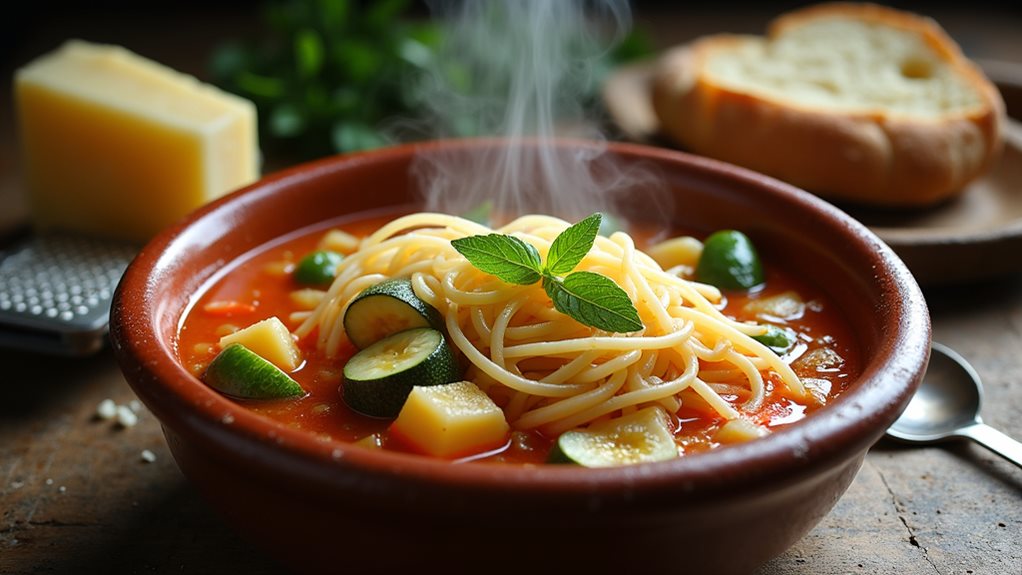
Minestrone is the ultimate Italian comfort soup, packed with vegetables, beans, and pasta that creates a meal in a bowl. This hearty version combines fresh and frozen vegetables with savory salt pork for a rich flavor base that will warm you from the inside out. The ingredients blend together during a slow simmer, allowing all those wonderful flavors to meld into a satisfying soup that’s perfect for lunch or dinner.
Ingredients:
- 1/4 pound salt pork, diced
- 3 large onions, chopped
- 2 cloves garlic, crushed
- 1 pound zucchini, sliced
- 1/2 pound cabbage, cut in chunks
- 1 large bay leaf
- 2 quarts water
- 1 (10 oz.) package frozen green beans
- 1 (28 oz.) can tomatoes
- 1 cup thin spaghetti
- Salt and pepper to taste
- Grated Parmesan cheese (optional, for serving)
When shopping for these ingredients, quality matters but don’t worry about breaking the bank. Regular grocery store vegetables work perfectly fine. You might consider using low-sodium chicken broth instead of water for extra flavor, though the recipe doesn’t call for it. The salt pork provides plenty of savory depth, but bacon could be substituted in a pinch. And while the recipe suggests thin spaghetti, any small pasta shape like ditalini or elbow macaroni would work beautifully in this rustic soup.
How to Make this Hearty Italian Minestrone
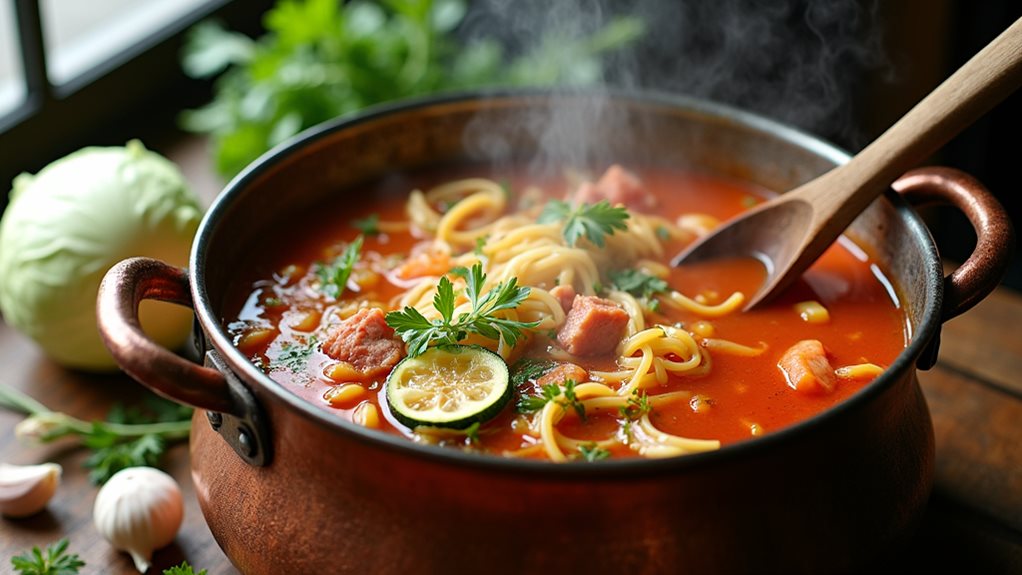
To create this soul-warming minestrone, start by browning 1/4 pound of diced salt pork in a large kettle until it’s perfectly crisp. This creates a flavorful foundation that’ll make your soup sing.
Once the pork is done, toss in 3 large chopped onions and 2 crushed garlic cloves, sautéing them until the onions become soft and translucent. The kitchen will start smelling absolutely heavenly at this point—isn’t that aroma just the best part of cooking?
Next, add 1 pound of sliced zucchini, 1/2 pound of cabbage cut into chunks, a large bay leaf, and 2 quarts of water. Bring this mixture to a boil, then cover and let it simmer for about 45 minutes. This slow cooking allows all those flavors to meld together beautifully.
After the vegetables have softened, stir in a 10-ounce package of frozen green beans, a 28-ounce can of tomatoes, and 1 cup of thin spaghetti broken into pieces. Season with salt and pepper to taste. Let everything cook for another 15 minutes until the pasta reaches that perfect tender texture.
Using a stainless steel cookware set provides superior heat distribution and durability when preparing complex dishes like minestrone.
Don’t forget to remove the bay leaf before serving! For an authentic Italian touch, offer some grated Parmesan cheese on the side—it adds a salty, nutty finish that takes this rustic soup to the next level.
Hearty Italian Minestrone Substitutions and Variations
While you’ve mastered the basic minestrone recipe, I’m excited to share how you can customize this classic Italian soup to suit your preferences or pantry availability.
The beauty of minestrone lies in its flexibility—feel free to substitute vegetables based on seasonality or what you have on hand.
For a vegetarian version, replace salt pork with olive oil and add a parmesan rind for depth.
Don’t have zucchini? Try yellow squash or eggplant instead. Kidney beans or chickpeas make excellent additions for extra protein, while different pasta shapes like orzo or ditalini work perfectly in place of spaghetti.
Consider adding kale or spinach in the final minutes for added nutrition. For deeper flavor, a splash of white wine during the sautéing stage creates a more complex taste profile.
What to Serve with Hearty Italian Minestrone
Since minestrone stands as a complete meal on its own, pairing it with complementary sides improves the dining experience to truly authentic Italian heights.
I always serve my minestrone with crusty Italian bread or garlic bread for dipping into that flavorful broth. A simple green salad dressed with olive oil and balsamic vinegar provides a fresh counterpoint to the hearty soup.
For a more substantial meal, I’ll add a platter of antipasto featuring cured meats, olives, and marinated vegetables.
Don’t forget about beverages—a medium-bodied Italian red wine like Chianti pairs beautifully with the tomato-based broth.
For dessert, keep it light with fresh fruit or biscotti.
Remember to serve extra grated Parmesan at the table, allowing guests to add their desired amount.
Final Thoughts
After exploring the rich tradition of minestrone, I’ve come to appreciate how this humble Italian soup represents much more than a simple recipe.
It embodies the Italian philosophy of transforming simple ingredients into something extraordinary through patience and care. The flexibility of minestrone means you can adapt it to whatever vegetables are in season or already in your pantry.
I encourage you to make this recipe your own. Don’t hesitate to substitute ingredients based on what’s available or adjust cooking times to suit your taste preferences. Like the classic Summer Vegetable Ratatouille, minestrone improves in flavor over time, making it perfect for meal preparation and enjoyable leftovers.
Whether served as a starter or main course, minestrone nourishes both body and soul with its hearty, vegetable-packed goodness.