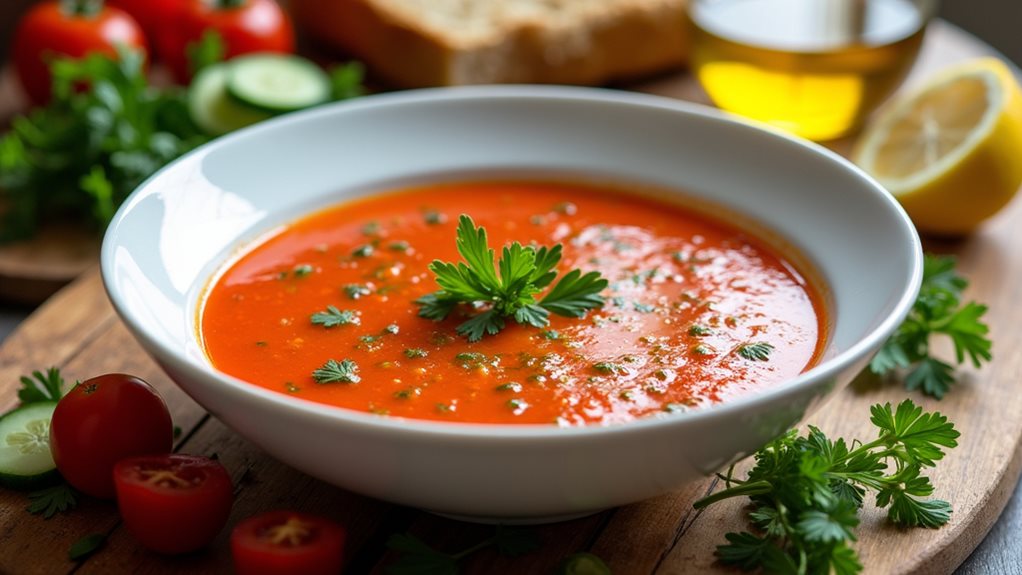
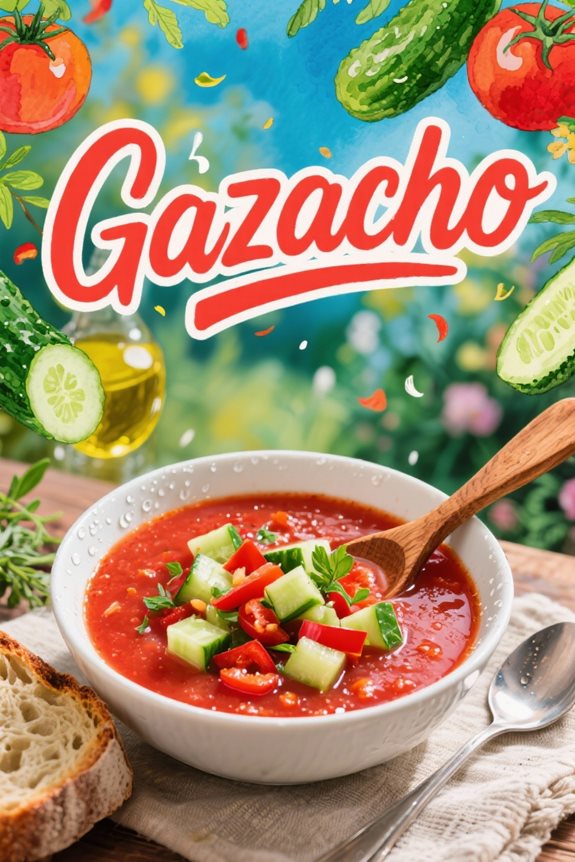
I’m thrilled to share my ultimate gazpacho recipe with you today. This invigorating Spanish cold soup has been my summer salvation for years, combining ripe tomatoes, crisp cucumbers, and vibrant bell peppers into a silky, flavor-packed dish. Don’t let its simplicity fool you—the perfect gazpacho balances acidity, sweetness, and depth in every spoonful. Wait until you discover my secret ingredient that transforms this classic from good to absolutely unforgettable.
Key Takeaways
- Gazpacho is a cold Spanish soup made primarily with raw vegetables, tomatoes, and refreshing seasonings.
- Traditional ingredients include tomatoes, cucumbers, peppers, onions, garlic, olive oil, vinegar, and bread for thickness.
- The soup requires no cooking—just blend or process vegetables to desired consistency and chill thoroughly.
- Gazpacho should refrigerate for at least several hours, ideally 24 hours, to fully develop flavors.
- It’s typically served with garnishes like diced vegetables, croutons, or a drizzle of olive oil as a summer refreshment.
Why You’ll Love this Soul-Warming Gazpacho
While most people think of gazpacho as a revitalizing summer soup, this vibrant Spanish classic offers so much more than simple cooling relief.
I’ve found that gazpacho’s complex flavor profile—combining the acidity of tomatoes, the crunch of fresh vegetables, and the subtle heat from Anaheim peppers and Tabasco—creates a surprisingly satisfying experience in any season.
What makes this recipe truly special is the 24-hour refrigeration period, which allows the red sherry wine vinegar, white wine, and spices to fully permeate the vegetables.
The result is a harmonious blend where every ingredient contributes to the whole. You’ll appreciate how the cumin and basil work together to create depth, while the Worcestershire sauce adds that umami quality that makes you crave another spoonful.
What Ingredients are in Soul-Warming Gazpacho?
Gazpacho is a revitalizing, no-cook soup that packs a punch of flavors with its vibrant vegetable medley. This classic Spanish dish is perfect for hot summer days, but can honestly be enjoyed year-round when you’re craving something light yet satisfying. The beauty of gazpacho lies in its fresh ingredients, which blend together to create a harmonious balance of tangy, savory, and slightly spicy notes.
- 1 cup tomato
- 1/2 cup red and green onion
- 1 cup cucumber
- 1 cup red and green pepper
- 1/3 cup Anaheim pepper
- 1 cup celery
- 1/3 cup fresh parsley, finely chopped
- 2 cloves garlic, minced or crushed
- 2 cups tomato juice
- 3 tablespoons red sherry wine vinegar
- 1/2 cup white wine
- 1/2 tablespoon cumin
- 2 tablespoons basil
- 1 tablespoon lemon juice
- 1 teaspoon salt
- 1/2 teaspoon white pepper
- 1 teaspoon Worcestershire sauce
- Dash of Tabasco
When shopping for gazpacho ingredients, freshness is absolutely key. The vegetables should be firm and aromatic, as they’re the stars of this uncooked soup. Don’t skimp on quality tomatoes and tomato juice—they form the base of the flavor profile. And while the recipe calls for specific measurements, gazpacho is wonderfully forgiving. Want it spicier? Add more Tabasco. Prefer it tangier? A splash more vinegar might be just the thing. Remember that letting the soup refrigerate for a full 24 hours allows the flavors to meld together into something truly magical.
How to Make this Soul-Warming Gazpacho
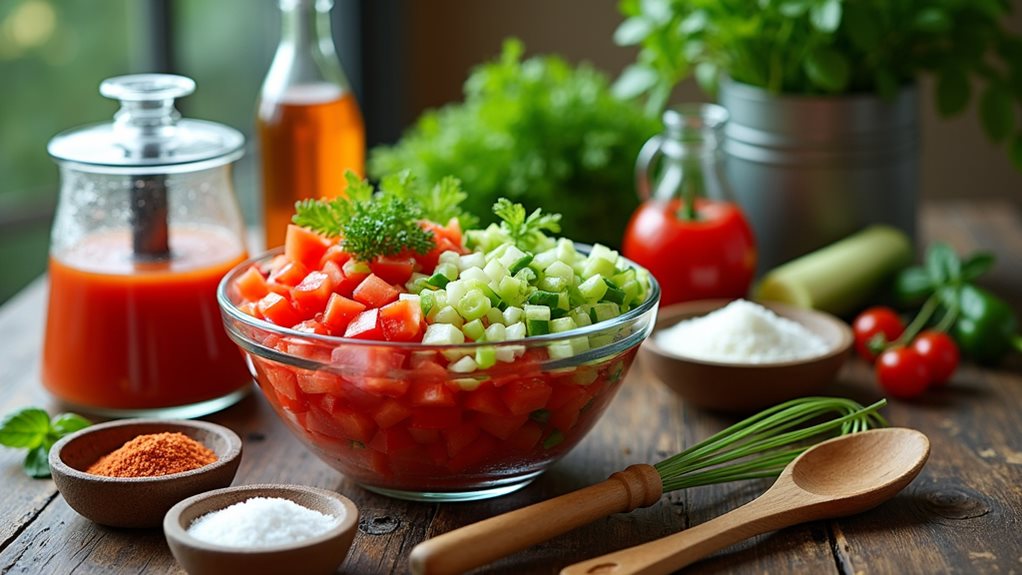
Making gazpacho is all about embracing the medley of fresh vegetables and letting them mingle with zesty seasonings. Start by finely chopping all your vegetables—1 cup of tomato, 1/2 cup of red and green onion, 1 cup of cucumber, 1 cup of red and green pepper, 1/3 cup of Anaheim pepper, 1 cup of celery, and 1/3 cup of fresh parsley.
A food processor makes this task a breeze, creating that perfect consistency where the vegetables are small enough to blend their flavors but still retain their individual character. For the best results, consider using a commercial food processor that can handle large batches while maintaining consistent texture. Then mince or crush 2 cloves of garlic and add them to your vegetable mixture.
Now comes the liquid magic that transforms these chopped veggies into a cohesive soup. Pour in 2 cups of tomato juice, 3 tablespoons of red sherry wine vinegar, and 1/2 cup of white wine.
Season with 1/2 tablespoon of cumin, 2 tablespoons of basil, 1 tablespoon of lemon juice, 1 teaspoon of salt, 1/2 teaspoon of white pepper, 1 teaspoon of Worcestershire sauce, and just a dash of Tabasco for that subtle heat.
Mix everything thoroughly—this is where patience pays off. The flavors need time to get acquainted, so refrigerate your gazpacho for a full 24 hours before serving.
This waiting period might feel like forever when you’re craving that invigorating taste, but trust me, it’s worth every minute as the flavors deepen and harmonize into something truly spectacular.
Soul-Warming Gazpacho Substitutions and Variations
The perfect gazpacho recipe offers endless possibilities for personalization. I find that substituting white wine with a dry sherry deepens the flavor profile, while red wine vinegar works beautifully in place of sherry vinegar.
Don’t have Anaheim peppers? Poblanos or even jalapeños (use less!) create wonderful variations.
For a creamier texture, I sometimes add half an avocado or a slice of soaked bread to the mixture before blending.
Roasting some of the vegetables—particularly the peppers and tomatoes—creates a smoky dimension that transforms this traditionally cold soup into something truly soul-warming.
If you’re avoiding alcohol, replace the wine with additional tomato juice or vegetable broth.
The key is maintaining the balance between acidity, sweetness, and savory elements that makes gazpacho so invigorating.
What to Serve with Soul-Warming Gazpacho
While enjoying a bowl of vibrant gazpacho, I’ve discovered that the right accompaniments can elevate this Spanish classic from a mere appetizer to a complete meal.
My favorite pairing is crusty bread, particularly a rustic sourdough or garlic-rubbed baguette for dipping into the flavorful soup.
For a heartier option, consider adding protein elements like grilled shrimp skewers, which complement the soup’s acidity beautifully, or a Spanish tortilla (potato omelet) cut into small squares.
A simple side salad with arugula, toasted pine nuts, and shaved manchego cheese provides textural contrast.
To create a proper Spanish experience, serve small plates of olives, marcona almonds, and thin slices of jamón ibérico alongside your chilled gazpacho.
Final Thoughts
After exploring the world of gazpacho in all its vibrant glory, I’ve come to appreciate how this simple Spanish soup represents culinary perfection at its most accessible.
The beauty lies in its balance—fresh vegetables, acidic vinegar, and aromatic herbs creating harmony in every spoonful.
What makes gazpacho truly special is its adaptability. You can adjust ingredients to suit your taste, experiment with different peppers for heat, or vary the texture from chunky to silky. I encourage you to make this recipe your own.
Remember that patience rewards the gazpacho maker; those 24 hours of refrigeration allow flavors to meld into something greater than their parts.
In our busy world, there’s something deeply satisfying about creating a dish that requires nothing more than fresh ingredients and time.
Like its cousin Harvest Vegetable Soup, gazpacho has evolved through centuries of culinary tradition to become a celebration of seasonal bounty.