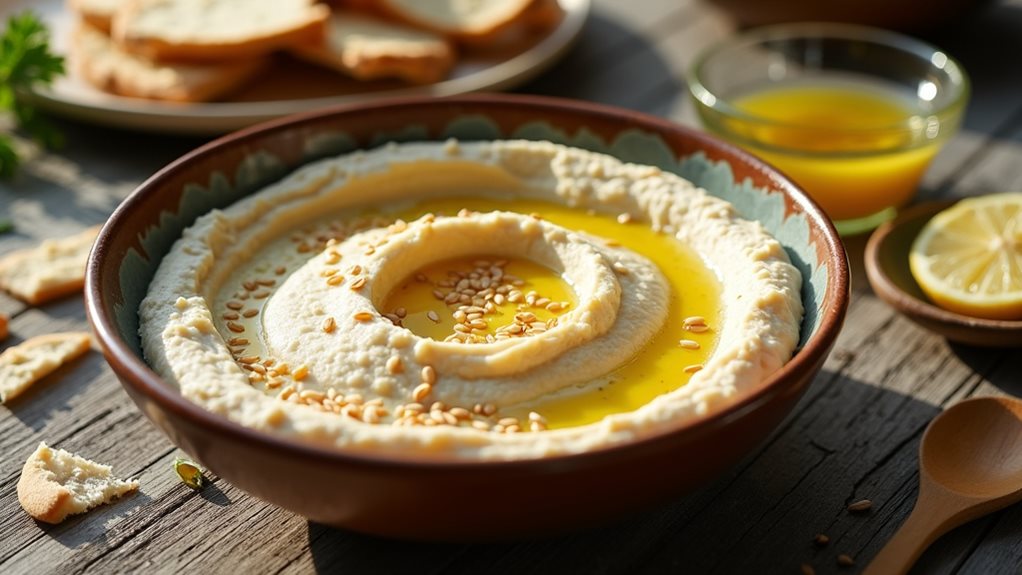

I’ve fallen in love with hummus over the years, and I’m excited to share my Mediterranean-inspired recipe with you. This creamy, protein-packed dip transforms humble garbanzo beans into something truly spectacular with just a few simple ingredients. Whether you’re hosting friends or looking for a healthy snack option, homemade hummus delivers restaurant-quality flavor at a fraction of the cost. Once you discover how easy it is to customize this versatile classic, you’ll never go back to store-bought versions again.
Key Takeaways
- Hummus is a Middle Eastern dip made primarily from mashed chickpeas (garbanzo beans), tahini, olive oil, lemon juice, and garlic.
- Making homemade hummus creates a silkier texture and richer flavor than store-bought versions, with adjustable consistency using reserved bean liquid.
- Traditional hummus requires simple ingredients: chickpeas, tahini (or toasted sesame seeds), olive oil, lemon juice, garlic, and salt.
- Hummus can be customized with additions like roasted red peppers, olives, or sun-dried tomatoes for different flavor variations.
- Serve hummus with warm pita bread, fresh vegetables, olives, or use as a nutritious sandwich spread alternative to mayonnaise.
Why You’ll Love this Creamy Mediterranean Hummus
This homemade Mediterranean hummus delivers a silky texture and rich flavor profile that store-bought varieties simply can’t match.
I’ve perfected this recipe through countless iterations, balancing the nutty richness of toasted sesame seeds with the earthy creaminess of garbanzo beans.
What sets this hummus apart is the careful toasting of sesame seeds rather than using pre-made tahini, creating a deeper, more authentic flavor.
The combination of fresh lemon juice and garlic provides that signature tangy bite, while the olive oil drizzle adds a sleek finish.
I’ve found that reserving and adding back some of the bean liquid creates the perfect consistency—thick enough to hold its shape but smooth enough to spread effortlessly.
It’s incredibly versatile as a dip, spread, or centerpiece for your Mediterranean-inspired table.
What Ingredients are in Creamy Mediterranean Hummus?
Making your own hummus at home is surprisingly simple, and the results are so much fresher than store-bought versions. This creamy Mediterranean dip requires just a handful of ingredients that you might already have in your pantry. The combination of protein-rich garbanzo beans, nutty sesame seeds, and bright lemon creates that classic hummus flavor we all love.
- 1/4 cup sesame seeds
- 1 can (15 oz.) garbanzo beans (chickpeas), drained with liquid reserved
- 4 tablespoons olive oil
- 3 tablespoons lemon juice
- 2 cloves garlic
- Salt and pepper to taste
- Reserved liquid from garbanzo beans (about 6 tablespoons)
When shopping for these ingredients, quality matters—especially for the olive oil and lemon juice. Fresh-squeezed lemon juice will give your hummus a brighter flavor than bottled varieties. And while the recipe calls for whole sesame seeds that you’ll toast yourself, you could substitute tahini (sesame paste) if you’re short on time. Just remember that the consistency might need adjusting with a bit more of the reserved bean liquid to achieve that perfectly velvety, creamy texture that makes homemade hummus so irresistible.
How to Make this Creamy Mediterranean Hummus
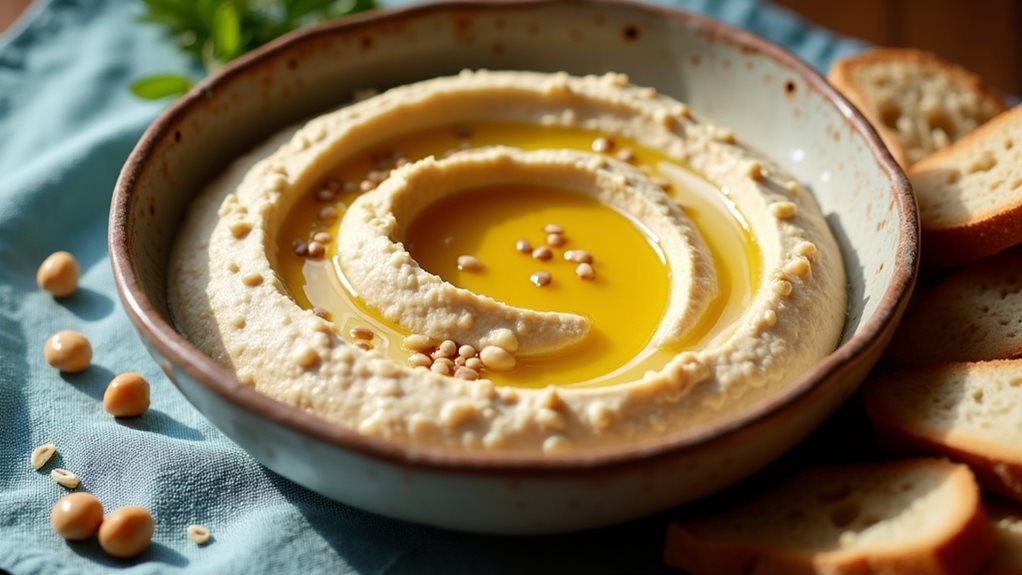
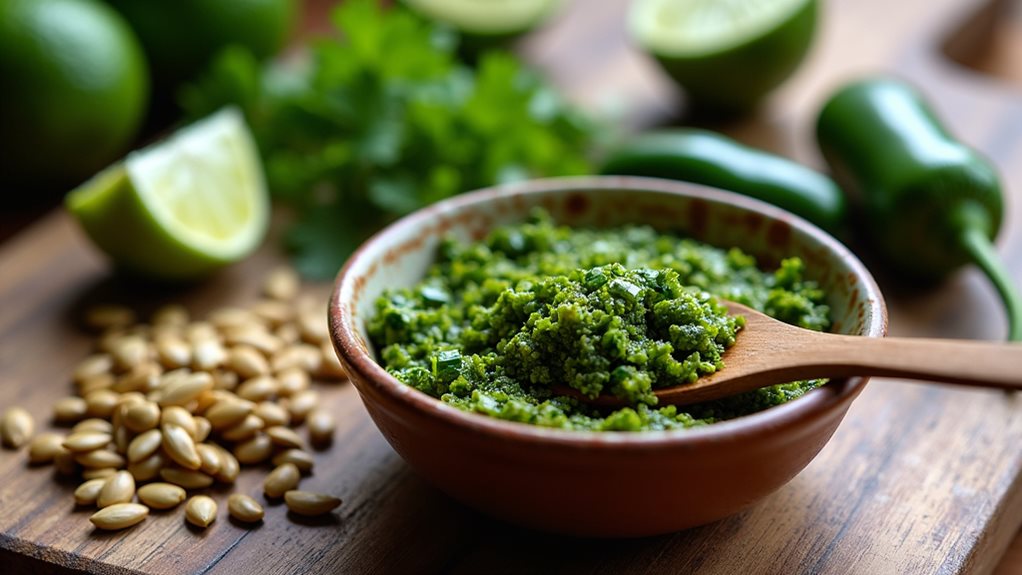
Creating silky, restaurant-worthy hummus at home starts with toasting your sesame seeds. Begin by heating 1/4 cup of sesame seeds in a small frying pan over low heat. This step requires your attention—shake that pan frequently to guarantee even browning without burning those tiny seeds.
After about three minutes, they’ll transform into a gorgeous golden brown, releasing their nutty aroma that signals they’re ready for the next step.
Now for the blending magic. Transfer those toasted seeds to your food processor or blender, then add a 15-ounce can of drained garbanzo beans (chickpeas), reserving that starchy liquid—it’s liquid gold for perfect texture.
Add 2 tablespoons of olive oil, 3 tablespoons of fresh lemon juice, and 2 cloves of garlic for that signature zing. Pour in about 6 tablespoons of the reserved bean liquid, then let your machine work its magic.
The key to heavenly hummus is processing until completely creamy, adding more of that reserved liquid tablespoon by tablespoon if it seems too thick. You’re looking for a texture that’s creamy but still holds its shape when scooped.
Season your creation with salt and pepper to taste—don’t be shy here, proper seasoning makes all the difference.
For serving, transfer your hummus to a shallow bowl and create a little well in the center with the back of a spoon. Drizzle the remaining 2 tablespoons of olive oil over the top, watching it pool in that little depression.
This final touch isn’t just for looks—it adds richness and that authentic Mediterranean presentation that makes everyone reach for the pita bread first.
For an even healthier preparation method, consider using a Premium Air Fryer XL to toast your sesame seeds more evenly without adding extra oil.
Creamy Mediterranean Hummus Substitutions and Variations
While the classic hummus recipe delivers exceptional flavor, you’ll find endless possibilities for customizing this Mediterranean staple to suit your taste preferences or dietary needs.
I recommend experimenting with tahini (sesame paste) as a silkier alternative to toasted sesame seeds, or using white beans instead of garbanzo beans for a milder flavor profile.
For additional variations, try incorporating roasted red peppers, sun-dried tomatoes, or olives for Mediterranean-inspired twists.
You can easily adjust the garlic intensity according to your preference—roasting the cloves first creates a sweeter, more mellow flavor.
For those avoiding olive oil, avocado oil makes an excellent substitute, while lime juice can replace lemon juice in a pinch.
Remember to save extra bean liquid for adjusting consistency to your desired thickness.
What to Serve with Creamy Mediterranean Hummus
Now that you’ve mastered the art of customizing your hummus, let’s explore the perfect accompaniments that elevate this creamy Mediterranean dip to star status on your table.
I always serve my hummus with warm pita triangles, fresh vegetables like cucumber spears, carrot sticks, and bell pepper strips. The contrast between the cool, creamy hummus and crisp veggies creates a textural masterpiece.
For a more substantial spread, I include olives, feta cheese cubes, and dolmas (stuffed grape leaves). You can also pair hummus with grilled meats or use it as a sandwich spread instead of mayonnaise.
When I’m hosting, I create a Mediterranean board with hummus as the centerpiece, surrounded by these complementary items. This arrangement invites guests to customize their bites while enjoying this versatile dip.
Final Thoughts
As I’ve traveled through the world of hummus-making over the years, I’ve come to appreciate this versatile Mediterranean dip not merely as a recipe, but as a canvas for culinary creativity.
The simple combination of toasted sesame seeds, garbanzo beans, olive oil, lemon juice, and garlic creates a foundation that’s both nourishing and adaptable.
Don’t be afraid to experiment with your hummus. Add roasted red peppers for sweetness, incorporate fresh herbs like cilantro or basil, or introduce heat with a dash of cayenne.
Remember that texture matters—process longer for silky sleekness or leave it slightly chunky for rustic appeal.
Whether you’re serving it with warm pita, using it as a sandwich spread, or enjoying it as a healthy snack with vegetables, hummus remains one of the most rewarding recipes in my culinary arsenal.
Much like the arborio rice technique in traditional risotto, properly preparing your chickpeas is essential for achieving the perfect hummus consistency.